
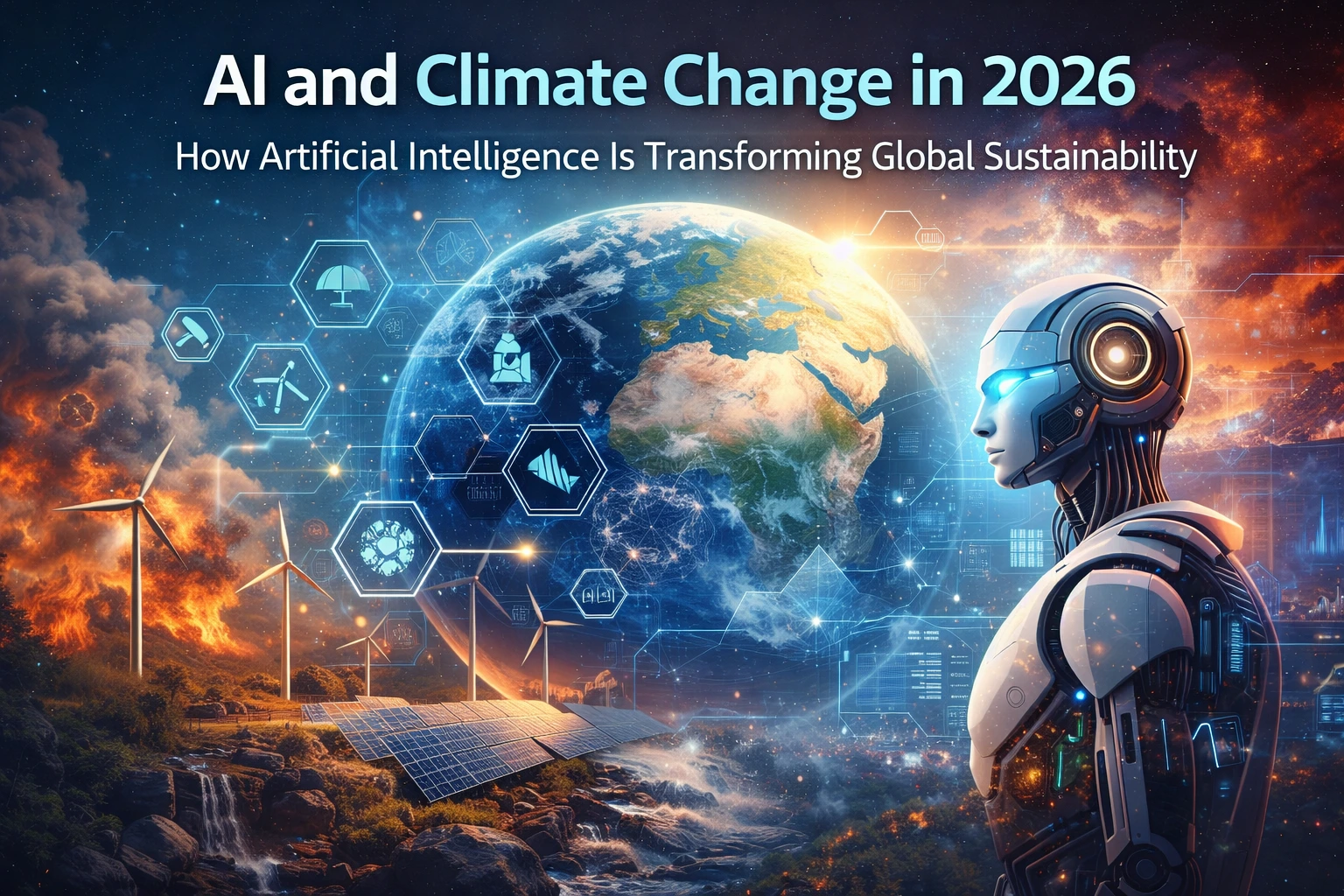

Climate change is no longer a distant threat, it is a present reality affecting ecosystems, economies, and communities across the globe. Rising temperatures, stronger storms, prolonged droughts, and increasing carbon emissions demand urgent and scalable solutions. In this critical moment, AI and Climate change in 2026 are becoming closely connected as technology steps into a central role in environmental protection. Artificial intelligence helps scientists analyze massive climate datasets, improve renewable energy forecasting, and predict extreme weather events with greater accuracy. By enabling faster decisions and smarter resource management, AI supports sustainable development and strengthens global resilience against accelerating climate risks.
Why AI Is Critical for Climate Action
The climate system generates enormous volumes of data every day from satellite imagery and ocean temperature readings to atmospheric measurements and energy consumption statistics. Traditional analysis methods are often too slow to keep pace with the complexity of these datasets.
This is where AI and Climate change in 2026 play a transformative role. Machine learning algorithms can process decades of environmental data in minutes, uncovering hidden patterns and forecasting potential climate scenarios. Governments and research institutions now rely on predictive AI models to simulate the long-term effects of policy decisions.
For example:
- AI forecasts temperature shifts and precipitation changes.
- Machine learning models predict drought and flood probabilities.
- Data-driven insights guide climate adaptation strategies.
By combining computational power with environmental science, AI enhances global climate resilience.
Renewable Energy Optimization and Smart Grids
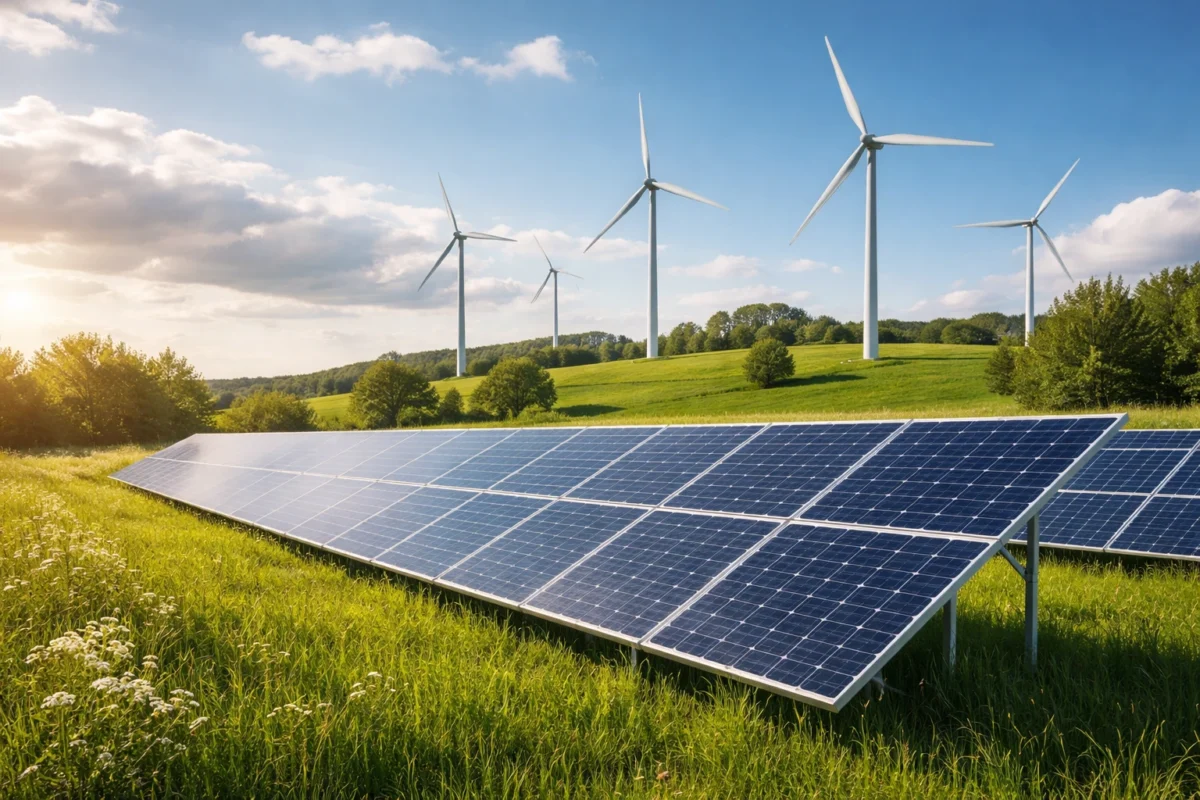
One of the most impactful applications of AI lies in renewable energy management. Solar and wind energy are essential for reducing dependence on fossil fuels, but their output fluctuates based on weather conditions.
Through intelligent forecasting, AI and Climate change in 2026 technologies optimize renewable energy generation. AI predicts sunlight intensity, wind patterns, and electricity demand in real time. This ensures stable energy distribution and reduces reliance on carbon-intensive backup systems.
Smart grids powered by AI further enhance efficiency. These grids automatically balance supply and demand, detect outages instantly, and reduce transmission losses. As more countries transition to renewable energy, the role of AI and Climate change in 2026 becomes increasingly central to grid modernization.
In addition, AI-driven battery storage systems store excess renewable energy during peak production and redistribute it when demand increases, improving overall grid stability.
Reducing Carbon Emissions in Transportation
Transportation contributes significantly to global greenhouse gas emissions. AI is helping modernize mobility systems to make them cleaner and more efficient.
Innovations linked to AI and Climate change in 2026 include:
- Traffic flow optimization to reduce congestion
- Electric vehicle battery performance enhancement
- Smart route planning for logistics fleets
- Public transport demand forecasting
Smart route planning for logistics fleets, public transport demand forecasting, and AI-powered traffic systems adjust signal timings dynamically, reducing idle time and fuel consumption. Electric vehicles use AI algorithms to improve battery efficiency and extend lifespan, lowering overall carbon impact.
These intelligent transportation systems reduce urban emissions while supporting sustainable economic growth.
Climate-Smart Agriculture and Food Sustainability
Agriculture faces mounting pressure due to population growth and climate variability. At the same time, it contributes to methane emissions and land degradation.
The evolution of AI and Climate change in 2026 has introduced precision farming techniques that improve productivity while reducing environmental harm. AI-powered tools analyze soil health, crop conditions, and moisture levels using satellite imagery and ground sensors.
Farmers can:
- Apply water more efficiently through smart irrigation
- Reduce fertilizer overuse
- Detect crop diseases early
- Improve livestock management
These technologies decrease resource waste and greenhouse gas emissions while ensuring food security. By aligning agricultural efficiency with sustainability, AI strengthens climate mitigation efforts.
Disaster Prediction and Climate Monitoring
Extreme weather events such as hurricanes, wildfires, and floods are increasing in frequency and intensity. Early detection is crucial for minimizing human and economic losses.
Advancements in AI and Climate Change in 2026 have significantly improved disaster forecasting models. AI systems analyze atmospheric pressure changes, ocean temperature fluctuations, and historical storm data to provide earlier and more accurate warnings.
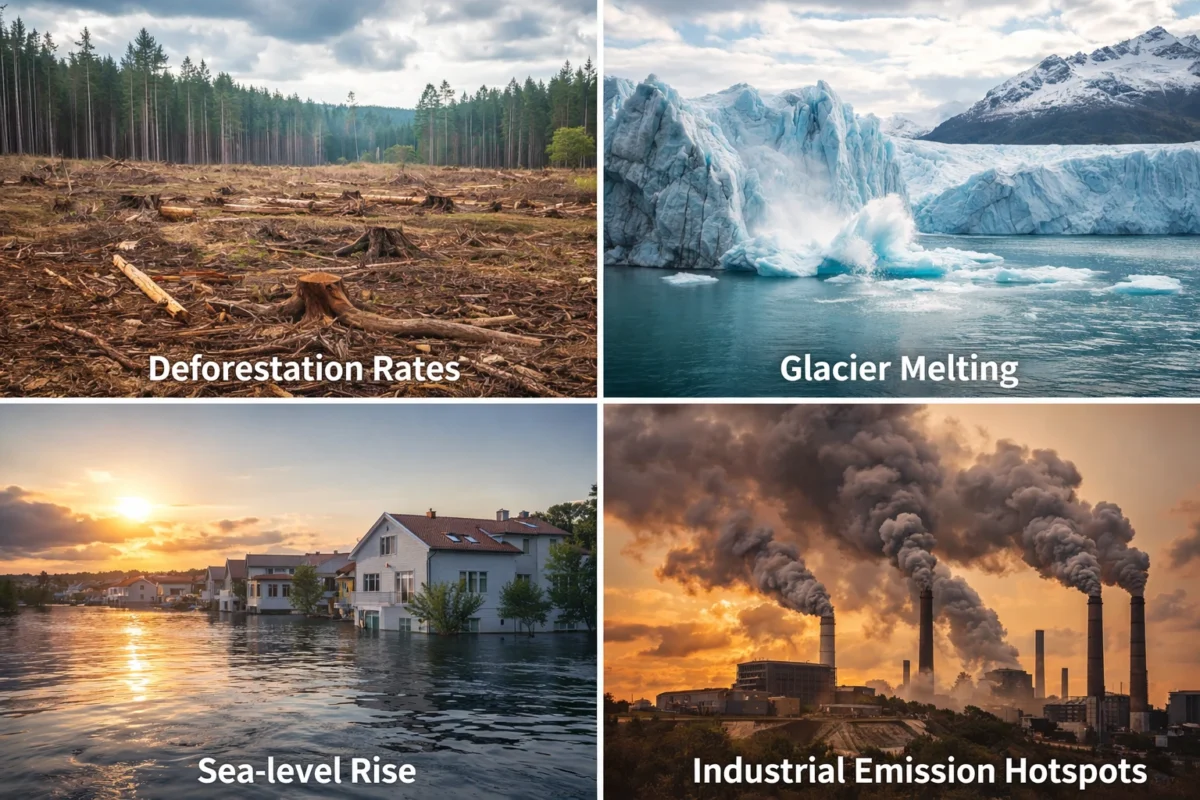
Satellite-based AI monitoring also tracks:
- Deforestation rates
- Glacier melting
- Sea-level rise
- Industrial emission hotspots
This real-time monitoring enables governments to enforce environmental regulations more effectively and design better climate policies.
Carbon Capture and Emission Transparency
Limiting atmospheric CO₂ levels requires both emission reduction and carbon removal strategies. AI enhances carbon capture technologies by optimizing chemical reactions and storage processes.
The expansion of AI and Climate change in 2026 solutions has improved industrial emission tracking. Companies can now measure carbon output in real time using AI-powered sensors and analytics platforms.
This transparency promotes accountability and helps organizations meet sustainability targets. Data-driven monitoring ensures that climate commitments are measurable and verifiable.
The Challenge of Energy-Intensive AI Systems
While AI contributes to sustainability, it also consumes significant computational power. Training advanced AI models requires energy-intensive data centers.
To ensure long-term environmental benefits, Green AI initiatives focus on:
- Energy-efficient algorithms
- Renewable-powered data centers
- Low-carbon computing infrastructure
Balancing innovation with sustainability is essential to maximize the positive impact of AI and Climate change in 2026 strategies.
Ethical and Global Considerations
Climate solutions must be equitable and inclusive. Some regions lack reliable environmental data, which limits AI accuracy. International collaboration is necessary to ensure equal access to technology and datasets.
As AI and Climate change in 2026 initiatives expand, ethical governance becomes increasingly important. Transparent algorithms and responsible policy frameworks help prevent misuse and ensure fair decision-making.
The integration of AI into climate strategies must prioritize both environmental and social sustainability.
The Future of AI-Driven Climate Innovation
Looking ahead, innovation in AI and Climate change in 2026 is expected to accelerate. Emerging technologies include:
- Climate digital twins for ecosystem simulation
- AI-designed sustainable urban infrastructure
- Biodiversity monitoring systems
- Ocean cleanup robotics
- Advanced direct air carbon removal technologies
As global net-zero goals approach, AI will remain a cornerstone of climate resilience strategies. Collaboration between governments, academia, and private technology firms will shape the next generation of environmental solutions.
Conclusion
The climate crisis demands intelligent, scalable, and data-driven solutions. Artificial intelligence offers powerful tools to analyze environmental data, optimize energy systems, improve agriculture, and predict disasters.
The rapid development of AI and Climate change in 2026 demonstrates how technology can support global sustainability efforts. While AI alone cannot solve climate change, it significantly enhances humanity’s ability to respond effectively.
By combining innovation, responsible governance, and renewable-powered infrastructure, AI can help reduce carbon emissions and build a more resilient and sustainable future.
Frequently Asked Questions (FAQs)
1) What is AI and Climate Change in 2026?
AI and Climate change in 2026 refers to how artificial intelligence is being used to fight global warming by improving renewable energy, cutting carbon emissions, enhancing climate monitoring, and supporting sustainability solutions worldwide.
2) How does AI help reduce carbon emissions?
AI reduces carbon emissions by optimizing renewable energy forecasting, improving smart grid efficiency, reducing fuel waste through traffic and route optimization, and helping industries monitor and lower their energy consumption.
3) What are the best examples of AI climate solutions?
Common examples include AI-powered smart grids, renewable energy prediction systems, climate disaster forecasting tools, precision agriculture, and emission tracking through satellite monitoring.
4) Is AI itself harmful to the environment?
AI can consume high energy, especially during training of large models. However, Green AI focuses on energy-efficient models and renewable-powered data centers to reduce environmental impact.
5) What is the future of AI in climate change solutions?
The future includes climate digital twins, AI-optimized carbon capture, AI-designed smart cities, biodiversity monitoring, and smarter policy simulations to support net-zero goals.
Call To Action
Want to explore how AI is transforming sustainability? Keep reading Writac for expert insights, actionable ideas, and the latest updates on climate innovation. Subscribe today and join the movement toward a sustainable future.