
Artificial intelligence has rapidly become an integral part of modern society, influencing how people live, work, and interact with technology. From smartphones and smart homes to healthcare systems and online shopping, the advantages and disadvantages of artificial intelligence in daily life are increasingly visible across the UK. While AI offers efficiency, convenience, and innovation, it also raises concerns about privacy, employment, and ethical responsibility.
Understanding how artificial intelligence in daily life affects individuals and society is essential as technology continues to evolve. This article explores the key benefits, drawbacks, real-life examples, and the future impact of AI, helping readers form a balanced and informed perspective.
What Is Artificial Intelligence?
Artificial intelligence (AI) refers to computer systems designed to perform tasks that typically require human intelligence. These tasks include learning from data, recognizing patterns, understanding language, solving problems, and making decisions. In modern society, the advantages and disadvantages of artificial intelligence in daily life are becoming increasingly visible as AI continues to develop and expand.
How Artificial Intelligence Works in Everyday Life
AI systems rely on algorithms, machine learning, and large datasets. In daily life, AI works behind the scenes in many familiar technologies, such as:
- Voice assistants like Alexa and Google Assistant
- Recommendation systems on Netflix, Spotify, and Amazon
- Navigation apps that predict traffic and suggest faster routes
These applications demonstrate how deeply embedded artificial intelligence has become in everyday activities, offering benefits such as time efficiency, personalization, and improved decision-making. At the same time, they also highlight challenges including privacy concerns, over-dependence on technology, and ethical issues, which reflect the broader advantages and disadvantages of artificial intelligence in daily life..
Advantages of Artificial Intelligence in Daily Life
The benefits of AI are wide-ranging and continue to expand as technology advances.
1. Time Efficiency and Automation
One of the main advantages of artificial intelligence is its ability to automate routine and repetitive tasks. AI-powered tools can handle scheduling, reminders, email filtering, and customer support, saving significant time for individuals and businesses.
For example, navigation apps use AI to analyze traffic data in real time, helping commuters in the UK choose faster routes and reduce travel stress.
2. Personalised User Experience
Artificial intelligence enhances personalization by analyzing user behavior and preferences. Streaming platforms recommend shows, music apps suggest playlists, and online retailers display products based on browsing history.
This personalized experience improves convenience and user satisfaction, making digital services more relevant and engaging.
3. Improved Healthcare and Safety
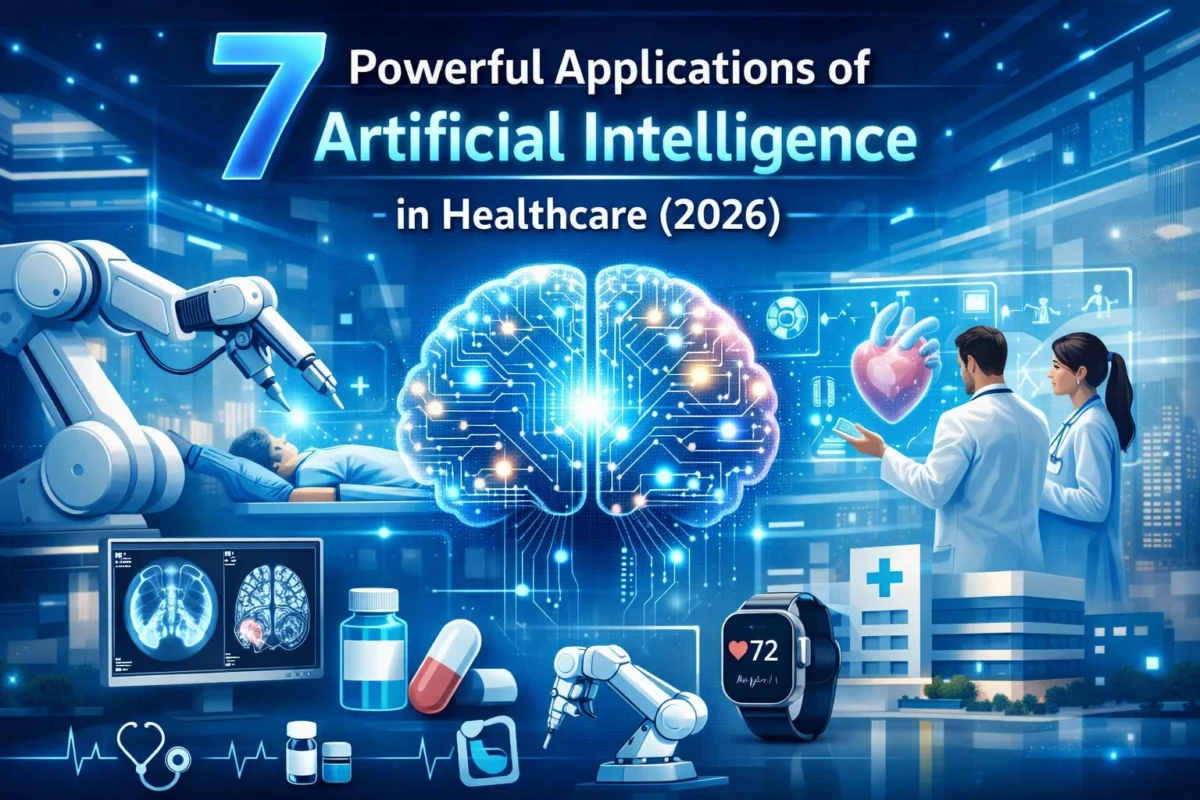
AI plays a growing role in healthcare across the UK. From analyzing medical images to predicting disease risks, artificial intelligence supports doctors in diagnosis and treatment planning.
AI-powered wearable devices can monitor heart rate, sleep patterns, and physical activity, helping individuals manage their health more effectively. In public safety, AI is also used in surveillance systems and fraud detection to enhance security.
4. Better Accessibility and Inclusion
Artificial intelligence has significantly improved accessibility for people with disabilities. Features such as speech-to-text, text-to-speech, facial recognition, and real-time translation allow individuals to communicate and interact more easily.
For example, visually impaired users benefit from AI-powered screen readers, while language translation tools help break communication barriers in multicultural communities.
Disadvantages of Artificial Intelligence in Daily Life
Despite its many benefits, artificial intelligence also presents several challenges and risks.
1. Privacy and Data Security Risks
One of the biggest disadvantages of artificial intelligence is the collection and use of personal data. AI systems often rely on large amounts of user information to function effectively, raising concerns about privacy and data protection.
In the UK, strict regulations such as the GDPR aim to protect user data, but risks of data breaches and misuse still exist, especially when AI systems are poorly managed.
2. Job Loss and Automation Concerns
Automation driven by AI has the potential to replace certain jobs, particularly those involving repetitive or manual tasks. Industries such as manufacturing, retail, and customer service are increasingly adopting AI-powered solutions.
While AI also creates new job opportunities, workers may need to reskill or adapt to changing roles, which can be challenging for some segments of the workforce.
3. Bias and Ethical Issues
Artificial intelligence systems learn from existing data, which may contain biases. As a result, AI can unintentionally reinforce discrimination in areas such as hiring, lending, and law enforcement.
Ethical concerns arise when AI decisions lack transparency or accountability. Ensuring fairness and responsible use of AI remains a major challenge for developers and policymakers.
4. Over-Dependence on Technology
As AI becomes more embedded in daily life, people may become overly dependent on technology. Reliance on AI for navigation, memory, or decision-making can reduce critical thinking and problem-solving skills over time.
Maintaining a balance between convenience and independent thinking is essential to avoid excessive dependence on artificial intelligence.
Artificial Intelligence in Daily Life: Real-Life Examples
Artificial intelligence is already shaping everyday experiences across multiple sectors in the UK.
AI in Smart Homes
Smart thermostats, lighting systems, and security cameras use AI to learn user habits and improve energy efficiency and safety. These systems make homes more comfortable while reducing energy consumption.
AI in Education
AI-powered learning platforms personalize educational content based on student progress and learning styles. Virtual tutors and automated assessments support both students and teachers, making education more flexible and accessible.
AI in Banking and Finance
Banks use artificial intelligence to detect fraud, assess credit risk, and provide personalized financial advice. Chatbots handle customer queries efficiently, improving service availability.
Impact of Artificial Intelligence on Society in the UK
The impact of artificial intelligence on society extends beyond individual convenience.
Economic Impact
AI contributes to economic growth by increasing productivity and encouraging innovation. Many UK businesses are adopting AI to streamline operations, reduce costs, and remain competitive in global markets.
Social Impact
While AI improves accessibility and efficiency, it also raises concerns about inequality and digital divides. Not everyone has equal access to AI-powered tools, which can widen social and economic gaps.
Balancing innovation with inclusivity is crucial for ensuring that AI benefits society as a whole.
Future of Artificial Intelligence in Daily Life
The future of artificial intelligence in daily life is expected to bring even more advanced and integrated technologies, further shaping the advantages and disadvantages of artificial intelligence in daily life as AI becomes more deeply embedded in everyday activities.
Growth of AI Technologies
AI is likely to become more intuitive, context-aware, and autonomous. Developments in robotics, healthcare, and smart cities will further transform how people interact with their environment.
Responsible and Ethical AI Use
As AI continues to evolve, ethical considerations will become increasingly important. Governments, businesses, and developers must work together to ensure transparency, fairness, and accountability in AI systems.
In the UK, ongoing discussions around AI regulation aim to promote innovation while protecting individual rights and societal values.
Advantages and Disadvantages of Artificial Intelligence: A Balanced View
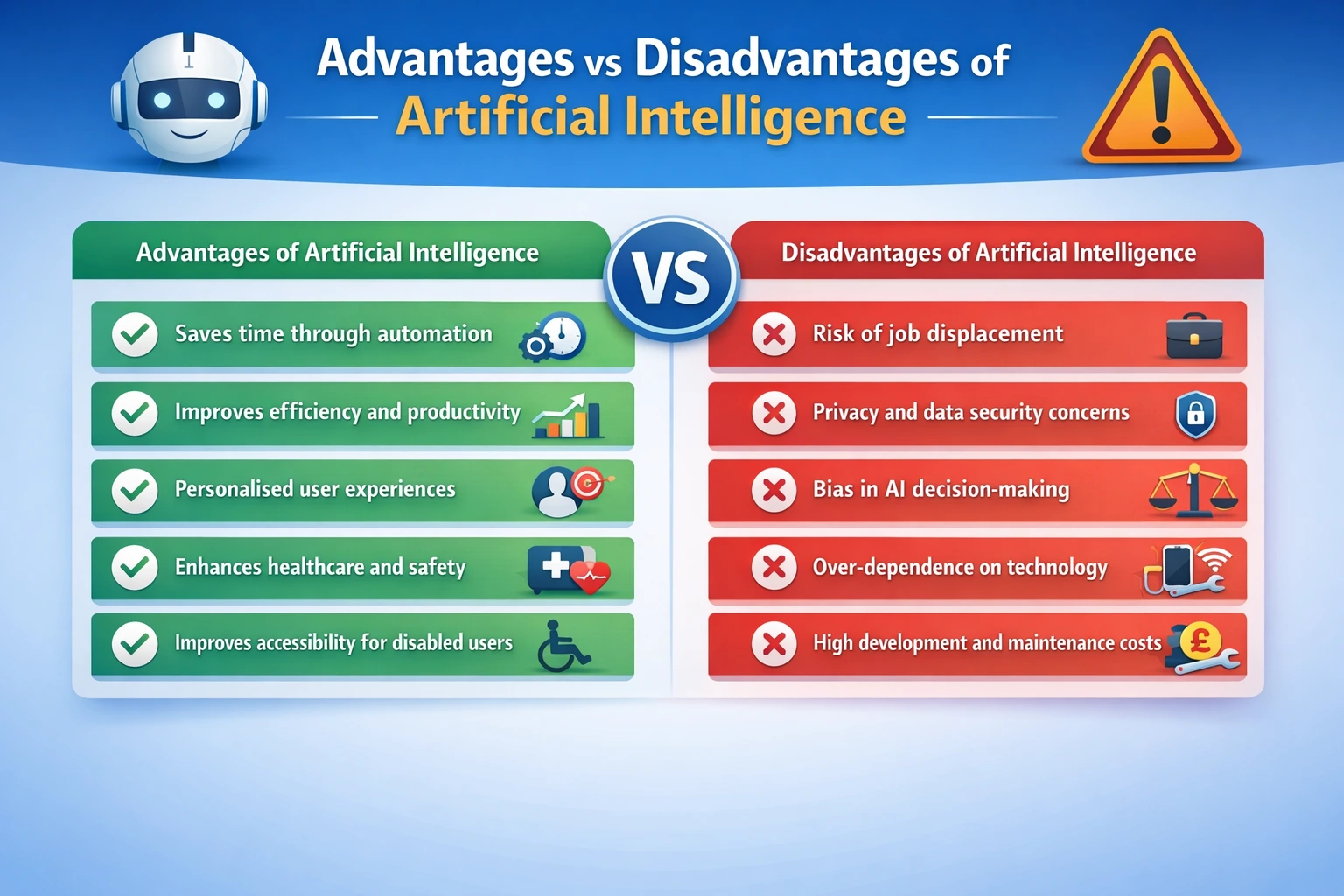
Artificial intelligence offers significant advantages, including efficiency, personalisation, improved healthcare, and accessibility. However, it also presents disadvantages such as privacy risks, job displacement, bias, and over-dependence on technology. These points clearly explain the advantages and disadvantages of artificial intelligence in daily life and its growing impact on modern society.
A balanced approach to AI adoption focuses on maximizing benefits while addressing risks through responsible design, regulation, and education.
Conclusion
The advantages and disadvantages of artificial intelligence in daily life highlight the transformative power of this technology. AI has the potential to improve quality of life, drive innovation, and support economic growth in the UK. At the same time, it requires careful management to address ethical, social, and privacy concerns.
By understanding how artificial intelligence works and how it affects everyday life, individuals and society can make informed decisions about its use. When implemented responsibly, artificial intelligence can remain a powerful tool that supports progress while respecting human values.
FAQs: Artificial Intelligence in Daily Life
1. What are the advantages and disadvantages of artificial intelligence in daily life?
Artificial intelligence improves efficiency, automation, personalization, and accessibility in daily life. However, it also presents challenges such as privacy risks, job displacement, bias, and over-dependence on technology.
2. How is artificial intelligence used in everyday life?
Artificial intelligence is used in everyday life through smart assistants, navigation apps, online shopping recommendations, healthcare systems, banking services, and smart home devices.
3. Is artificial intelligence good or bad for society?
Artificial intelligence is neither entirely good nor bad. Its impact on society depends on how it is developed and used. When applied responsibly, AI benefits society, but misuse can lead to ethical and social concerns.
4. What are the risks of using artificial intelligence?
The main risks of using artificial intelligence include data privacy issues, security breaches, biased decision-making, loss of jobs due to automation, and reduced human interaction.
5. What is the future of artificial intelligence in daily life?
The future of artificial intelligence in daily life includes smarter automation, improved healthcare, advanced personalization, and wider adoption across industries, alongside stronger regulations and ethical frameworks in the UK.