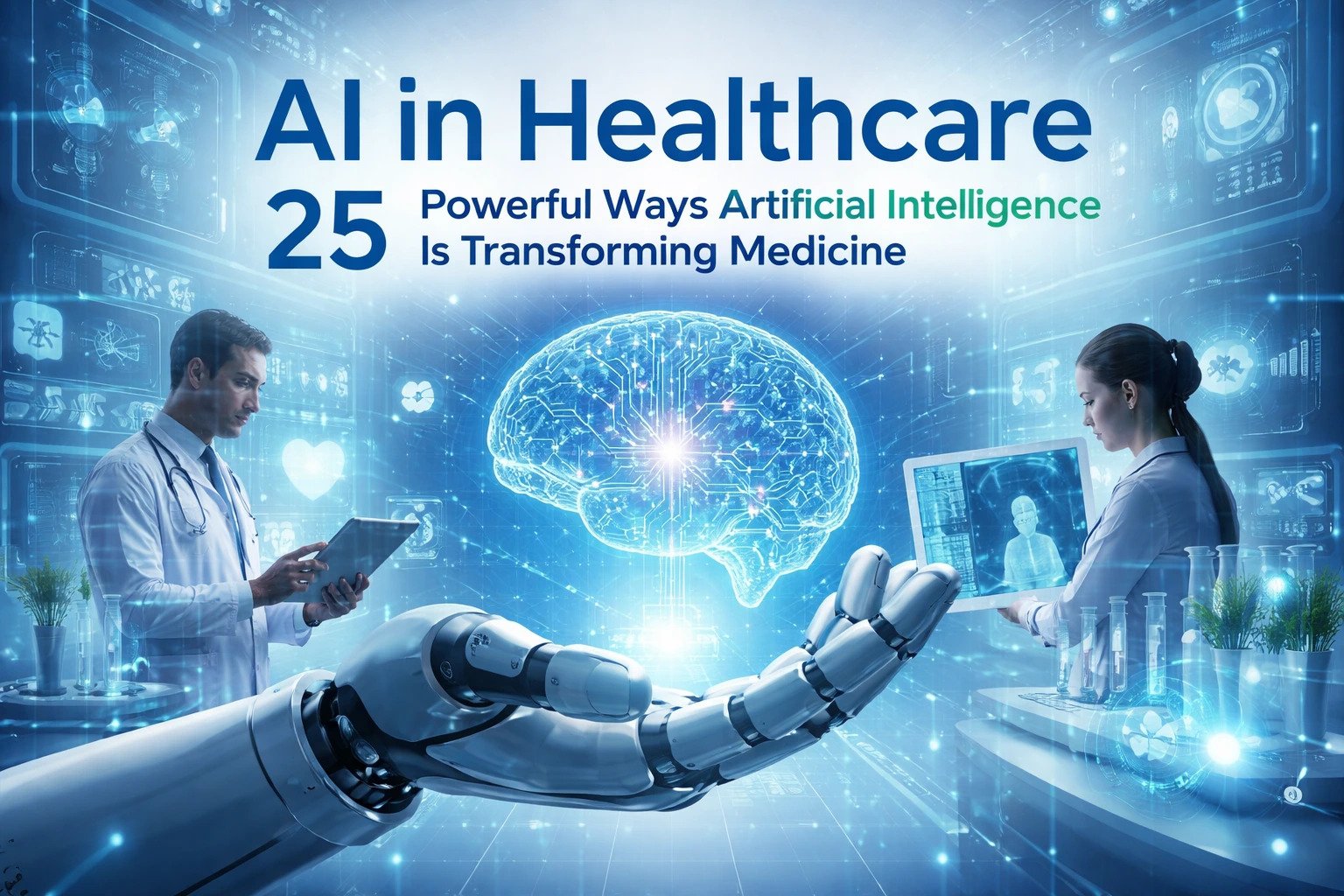

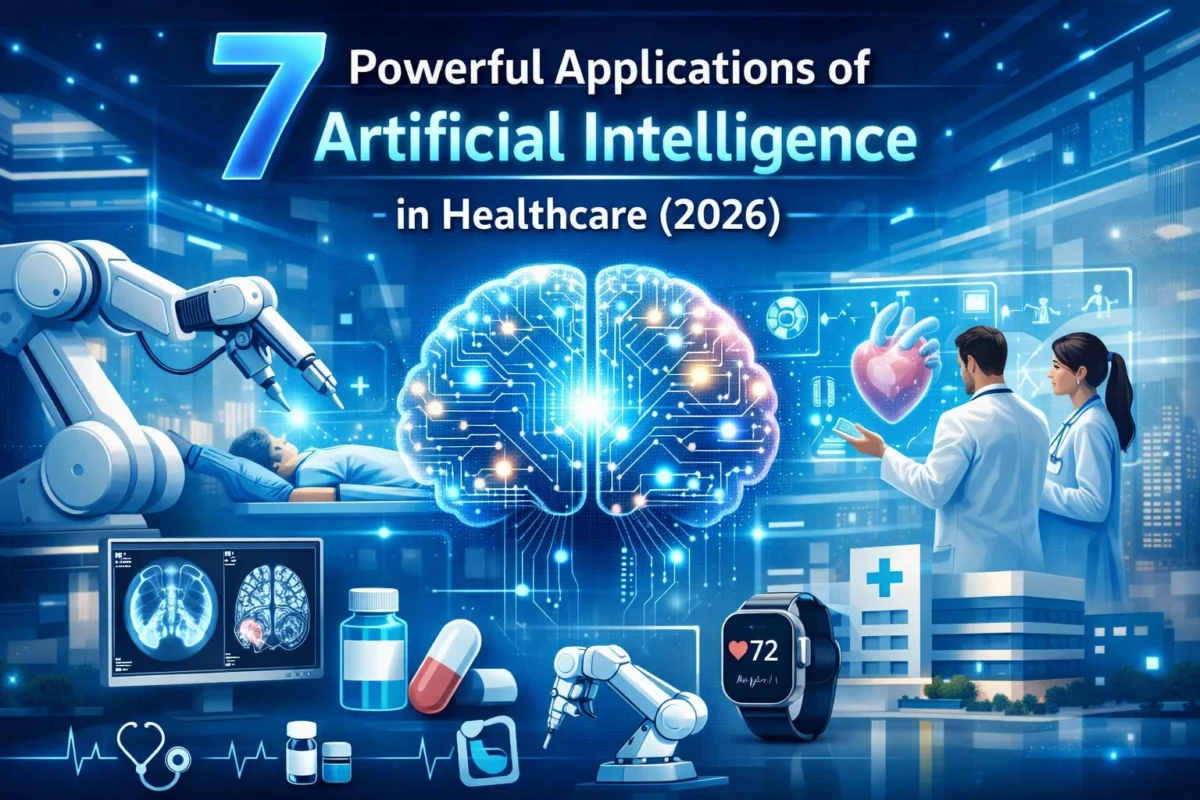
How is artificial intelligence shaping the future of healthcare as we know it? Artificial Intelligence (AI) is transforming the way healthcare is delivered, managed, and experienced worldwide. From enhancing diagnostic accuracy to speeding up drug discovery, AI in healthcare enables medical professionals to make quicker, smarter, and more precise decisions. By processing vast volumes of medical data, artificial intelligence minimizes human error, boosts operational efficiency, and improves patient outcomes.
As healthcare systems struggle with rising costs, staff shortages, and increasing patient demands, artificial intelligence in healthcare offers scalable, cost-effective, and data-driven solutions. Healthcare providers, research institutions, and digital health innovators are rapidly adopting AI technologies to streamline workflows, support clinical decisions, and deliver personalized, high-quality patient care across every stage of the medical journey./artificial-intelligence-in-healthcare/
What Is AI in Healthcare?
Artificial intelligence in healthcare refers to the use of advanced algorithms, machine learning models, natural language processing, and data analytics to simulate human intelligence in medical tasks. These AI systems analyze complex healthcare data,such as medical images, electronic health records, genetic information, and real-time patient data,to support diagnosis, treatment planning, patient monitoring, and administrative workflows.
Unlike traditional software, AI systems continuously learn and improve over time, making healthcare processes more accurate, efficient, and personalized./machine-learning-in-healthcare/
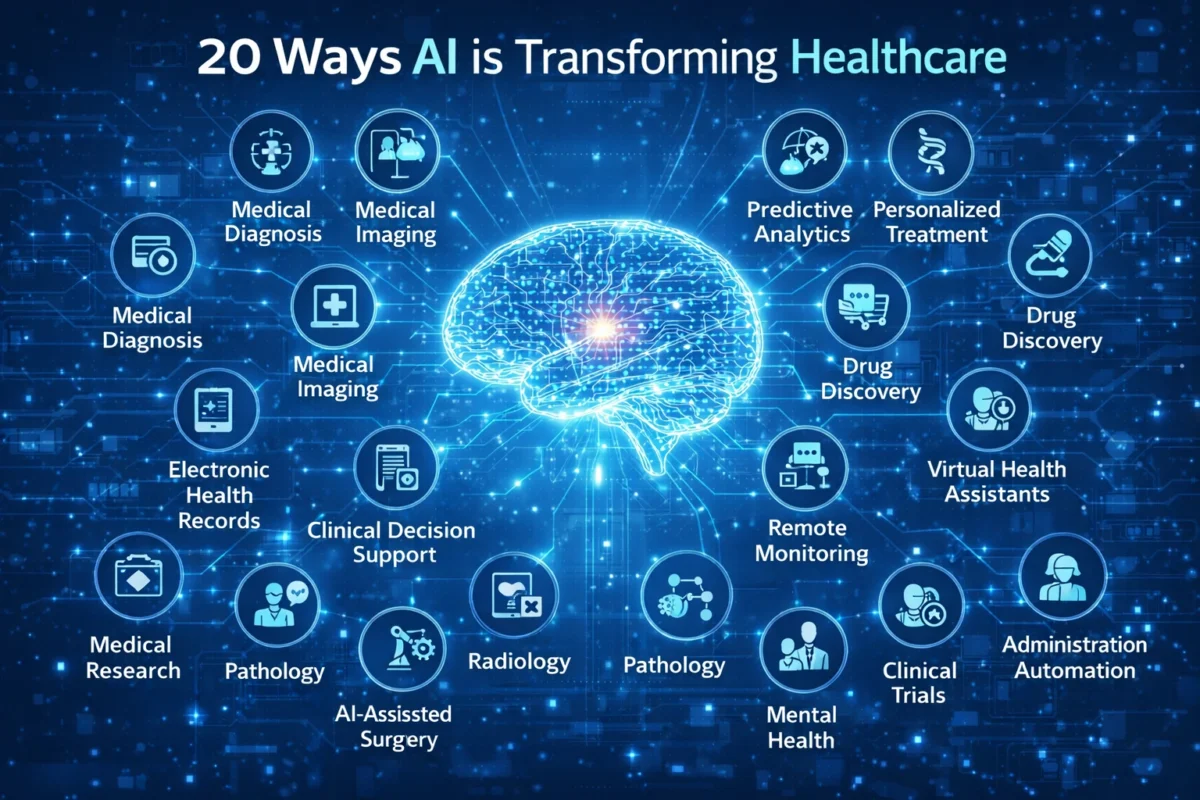
20 Ways AI Is Transforming Healthcare
1. AI in Medical Diagnosis
1.1 Early and Accurate Detection
AI analyzes symptoms, lab results, and patient history to detect diseases at earlier stages, often before visible symptoms appear.
Example: AI systems can detect breast cancer from mammograms with accuracy comparable to experienced radiologists.
2. AI in Medical Imaging
2.1 Faster Image Interpretation
AI processes X-rays, MRIs, and CT scans within seconds, significantly reducing diagnosis time.
Example: AI detects lung abnormalities in chest scans faster than manual review.
3. Predictive Analytics in Healthcare
3.1 Preventing Critical Conditions
AI predicts potential health risks by identifying hidden patterns in patient data.
Example: Hospitals use AI models to predict sepsis hours before symptoms become life-threatening.
4. Personalized Treatment Plans
4.1 Patient-Specific Care
AI designs treatment plans based on genetics, lifestyle, and medical history.
Example: AI helps oncologists select personalized cancer therapies for better outcomes.
5. AI in Drug Discovery
5.1 Faster Research and Development
Artificial intelligence speeds up drug development by examining molecular structures and biological datasets to identify promising treatment candidates more efficiently.
Example: AI models helped identify potential COVID-19 treatments in record time.
6. Virtual Health Assistants
6.1 24/7 Patient Support
AI-powered chatbots provide instant medical guidance and reminders.
Example: Virtual assistants answer health questions and send medication reminders.
7. Remote Patient Monitoring
7.1 Continuous Health Tracking
AI monitors patients through wearable devices and connected sensors.
Example: Smartwatches detect irregular heart rhythms and alert users early.
8. AI-Assisted Surgery
8.1 Improved Precision
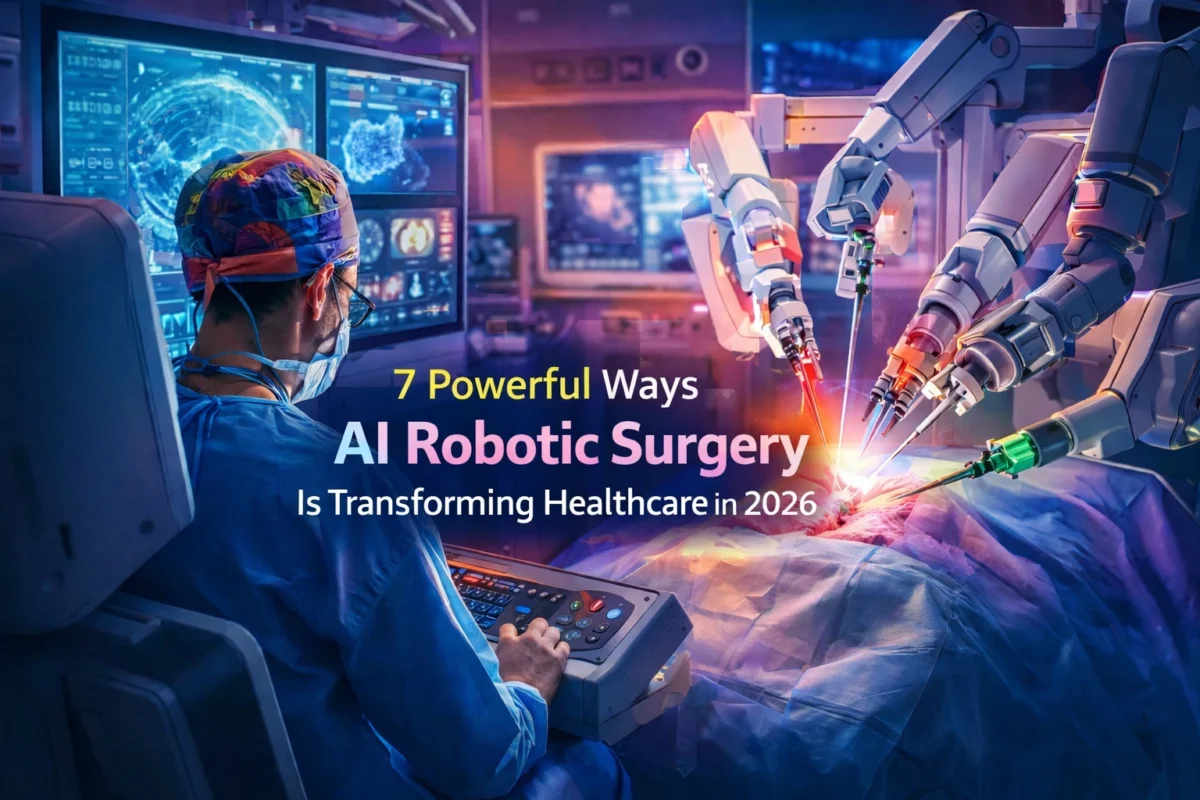
AI supports robotic surgeries with enhanced accuracy and control.
Example: Surgeons use AI-guided robotic systems for minimally invasive procedures.
9. AI in Electronic Health Records
9.1 Automated Documentation
AI reduces administrative burden by automating clinical documentation.
Example: Voice recognition AI converts doctor-patient conversations into medical notes.
10. Clinical Decision Support
10.1 Evidence-Based Recommendations
AI assists doctors by suggesting data-backed treatment options.
Example: AI compares patient outcomes to recommend the most effective therapies.
11. AI in Pathology
11.1 Faster Lab Analysis
AI identifies abnormalities in tissue samples with high precision.
Example: AI detects cancer cells in pathology slides more efficiently.
12. AI in Mental Health
12.1 Early Detection of Disorders
AI analyzes speech patterns, facial expressions, and behavior.
Example: Mental health apps identify early signs of depression and anxiety.
13. AI in Telemedicine
13.1 Smarter Virtual Care
AI enhances remote healthcare services and digital consultations.
Example: AI symptom checkers assist doctors before virtual appointments.
14. Healthcare Administration Automation
14.1 Reduced Operational Costs
AI automates scheduling, billing, and insurance claims.
Example: AI reduces appointment no-show rates and administrative delays.
15. AI in Medical Research
15.1 Faster Data Processing
AI analyzes massive datasets to accelerate scientific discoveries.
Example: AI helps identify genetic markers linked to rare diseases.
16. Disease Outbreak Prediction
16.1 Early Warning Systems
AI predicts disease spread using population data and trends.
Example: AI models forecast flu outbreaks before peak seasons.
17. AI in Radiology
17.1 Second Opinion Support
AI acts as a safety net by double-checking scans.
Example: Radiologists use AI as a second reader to reduce errors.
18. AI in Elderly Care
18.1 Assisted Living Monitoring
AI ensures safety and independence for elderly patients.
Example: AI sensors detect falls and immediately alert caregivers.
19. AI in Clinical Trials
19.1 Faster Patient Recruitment
AI identifies ideal candidates for clinical trials.
Example: AI shortens clinical trial timelines significantly.
20. AI in Medical Coding
20.1 Improved Billing Accuracy
AI converts clinical notes into standardized billing codes.
Example: AI reduces insurance claim denials and errors.
Benefits of AI in Healthcare
- Higher diagnostic accuracy
- Reduced healthcare costs
- Faster clinical decision-making
- Personalized patient care
- Improved long-term patient outcomes /benefits-of-ai-in-healthcare/
Conclusion
AI in healthcare enhances efficiency, accuracy, and decision-making while reducing costs and errors. As adoption grows, artificial intelligence will continue to shape smarter, more personalized, and future-ready healthcare systems worldwide.https://writac.com/
FAQs
1. What is AI in healthcare?
AI in healthcare uses artificial intelligence to improve diagnosis, treatment, and healthcare management.
2. Can AI replace doctors?
No, AI supports doctors by improving efficiency and accuracy, not replacing human expertise.
3. Is AI in healthcare safe?
Yes, when implemented responsibly, ethically, and with proper regulations.
4. How accurate is AI diagnosis?
AI can match or exceed human accuracy in specific medical applications.
5.What role will artificial intelligence play in the future of healthcare?
The future includes predictive care, personalized medicine, and intelligent healthcare systems.
Very informative ❤️