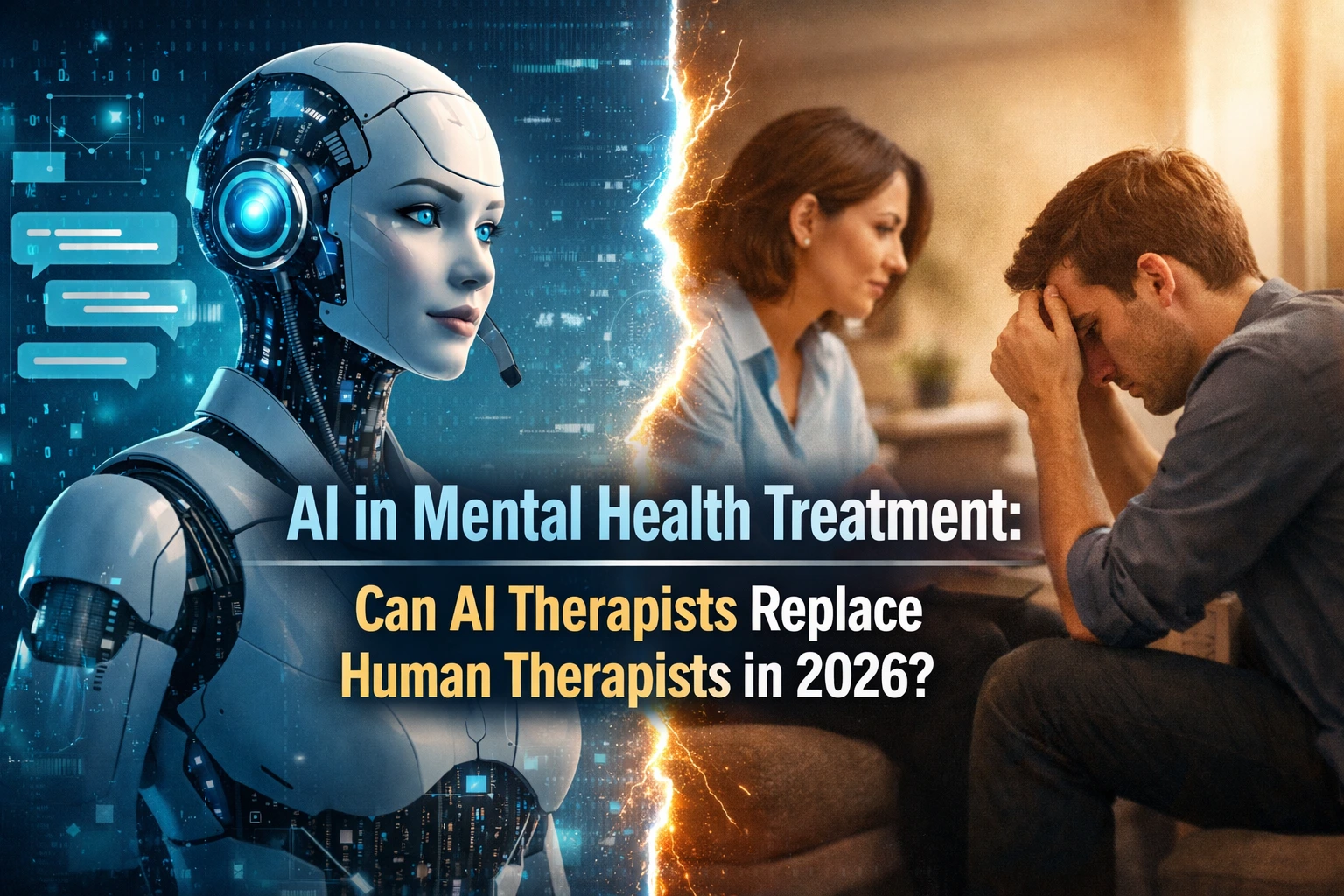

As psychologists with over ten years of clinical experience, we have witnessed a profound shift in how mental health is discussed and addressed. Conversations that were once avoided are now happening openly, reflecting growing awareness and reduced stigma. At the same time, technology has entered the therapeutic space, contributing to the rise of AI in Mental Health Treatment. AI-powered tools offer accessibility and immediate support, which can be valuable for many individuals. However, clinical practice consistently shows that empathy, nuanced assessment, and the therapeutic relationship remain central to lasting healing. The future lies in collaboration, not replacement.
Example
Late one night, when anxiety felt overwhelming, Maria opened a mental health app instead of calling someone. The AI chatbot responded instantly, guiding her through breathing exercises and calming techniques. It helped her steady her thoughts and get through the moment.
But the deeper sadness didn’t fade. Weeks later, she met a licensed therapist. During one session, the therapist noticed her hesitation while speaking about family. A gentle question unlocked emotions Maria hadn’t faced before.
The app helped her cope at the moment. The therapist helped her understand the root of her pain. That human connection made the real difference.
The Growing Demand for Digital Mental Health Support
Millions worldwide struggle with anxiety, depression, and stress.
Access to professional therapy is limited and often expensive.
Social stigma still prevents many from seeking help.
AI in Mental Health Treatment is helping bridge this gap.
AI mental health apps provide instant, judgment-free support anytime.
These tools combine psychology with technology to offer affordable guidance.
While not a replacement for therapists, they help people take the first step toward healing
AI vs Human Therapist Tools
| Aspect | AI Tools | Human Therapist Tools |
| Core Function | Automated support & guidance | Personalized human counseling |
| Emotional Understanding | Basic sentiment detection | Deep emotional empathy |
| Availability | 24/7 access | Scheduled sessions |
| Cost | Lower / Free options | Higher (insurance or out-of-pocket) |
| Response Depth | General coping strategies | Tailored therapeutic insight |
| Context Awareness | Limited by programming | Highly nuanced |
| Body Language Insight | Not possible | Possible |
| Crisis Handling (Severe) | Limited | Strongest & essential |
| Diagnostic Capability | Preliminary, supportive | Clinical diagnosis possible |
| Treatment Planning | Guided exercises | Personalized therapy roadmap |
| Privacy & Confidentiality | Depends on platform | Professional clinical standards |
| Human Connection | Lacking | Central |
| Best For | Early support, tracking, coping tools | Deep healing, clinical recovery |
How AI Works in Mental Health Treatment
AI in Mental Health Treatment uses natural language processing and advanced data analysis to support emotional well-being.
When users interact with a chatbot, the system analyzes text patterns, emotional cues, and behavioral responses.
Over time, AI in Mental Health Treatment platforms learn from interactions and provide more personalized feedback.
Some AI platforms deliver structured therapy approaches such as cognitive behavioral therapy (CBT).
Others focus on mood tracking, journaling, and guided breathing exercises to help manage stress and anxiety.
Advanced systems within AI in Mental Health Treatment are being tested for early depression detection.
These tools analyze speech tone, word choice, and interaction frequency to identify potential warning signs.
While AI in Mental Health Treatment technology is impressive, questions remain about whether it can truly match human emotional depth and understanding.
Benefits of AI in Mental Health Treatment
There are clear advantages to integrating AI into psychological support systems.
1. Accessibility
One of the most compelling reasons for using AI in Mental Health Treatment is accessibility. Not all people have access to a licensed therapist in their area. Rural areas, developing nations, and busy professionals have difficulty accessing therapy on a regular basis. AI apps eliminate geography as an issue.
2. Affordability
Therapy can be expensive. Digital platforms typically cost significantly less than in-person counseling. Some AI mental health apps even offer free basic features.
3. 24/7 Availability
Mental health challenges don’t follow office hours. AI chatbots are available anytime, providing immediate coping strategies during moments of stress or panic.
4. Reduced Stigma
Many individuals feel more comfortable opening up to a non-human system. Talking to an AI therapy chatbot may feel less intimidating than speaking face-to-face with a therapist.
These benefits explain why digital mental health AI tools are expanding rapidly.
The Limitations of AI Therapy
Despite its advantages, AI in Mental Health Treatment has important limitations that cannot be ignored.
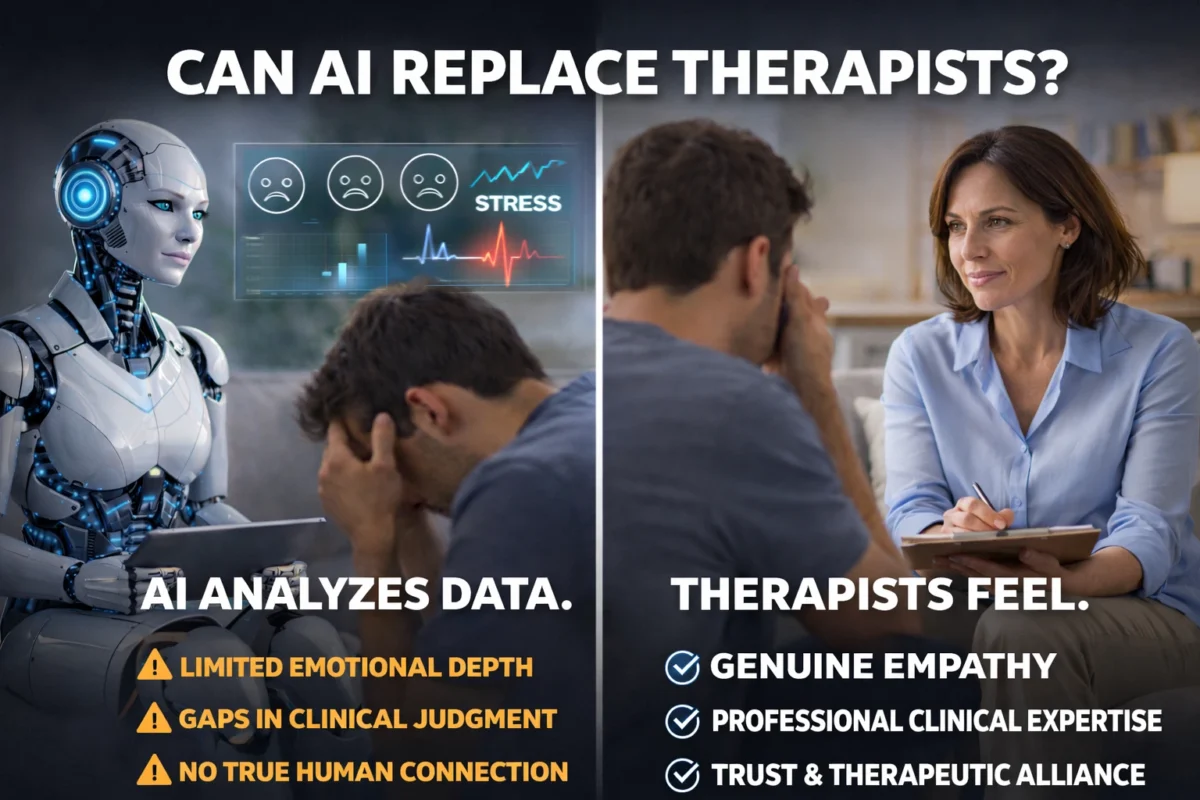
Human therapists provide empathy, emotional intuition, and the ability to adjust treatment in real time.
AI in Mental Health Treatment tools operate within programmed frameworks and cannot genuinely experience emotion.
These systems may misinterpret cultural context or individual nuances due to limited training data.
In severe situations, such as trauma or suicidal ideation, AI in Mental Health Treatment cannot replace professional clinical intervention.
Can AI Therapists Replace Human Therapists?
The short answer is: not entirely.
AI can enhance mental health services, but replacing human therapists is unlikely in the near future. Instead, the most realistic future involves collaboration.
Many experts predict a hybrid model. In this system, AI handles routine monitoring, mood tracking, and preliminary assessments. Human therapists focus on deeper therapeutic work that requires emotional intelligence and complex judgment.
Think of AI as an assistant rather than a replacement.
Real-World Applications in 2026
By 2026, AI mental health technology is becoming more integrated into mainstream healthcare.
Hospitals are using AI screening tools to identify patients at risk of depression. Employers are offering digital mental health subscriptions as part of wellness benefits. Universities are adopting AI chatbots to provide student support during high-stress periods.
These developments highlight how AI in Mental Health Treatment is shifting from experimental innovation to practical implementation.
However, ethical concerns remain important.
Privacy and Ethical Considerations
Mental health data is deeply personal. When individuals share emotional struggles with an AI therapy chatbot, that information must be protected.
Developers must ensure strong encryption, transparent data policies and responsible AI practices. Without trust, digital mental health systems cannot succeed.
There is also the issue of algorithm bias. AI models trained on limited demographic data may produce inaccurate responses for diverse populations. Inclusive datasets and ongoing monitoring are essential.
The Future of AI Psychology Tools
Looking ahead, AI systems will likely become more sophisticated. Emotion recognition technology, voice analysis, and biometric tracking may enhance digital therapy experiences.
Imagine wearable devices detecting stress levels and automatically suggesting coping strategies. Or AI systems predicting depressive episodes before symptoms intensify.
These advancements could transform early intervention strategies.
But even as technology improves, human connection remains central to healing.
Human Connection Still Matters
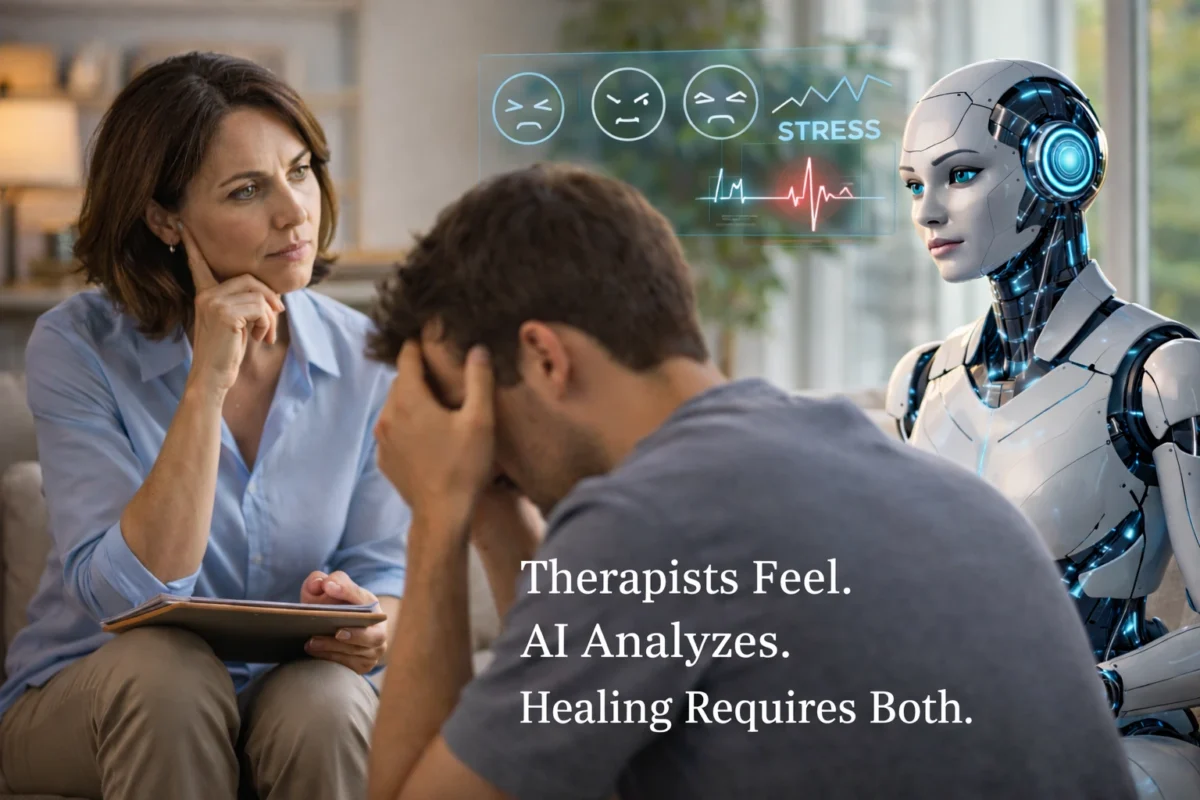
Therapy is not only about structured exercises. It’s about trust, rapport, and shared understanding. A therapist’s tone of voice, facial expression, and attentive listening create a safe space for vulnerability.
AI can assist. It can guide. It can support. But it cannot replicate genuine human empathy.
For many people, the ideal approach may combine digital tools with traditional therapy. AI handles daily emotional check-ins. A human therapist provides deeper guidance.
Real-Life Example: Why Human Connection Still Matters
- Sarah, is a 28-year-old girl, began experiencing severe anxiety after losing her job. She is a teacher by profession.
- In the starting of the symptoms she takes help of ai.
- The AI therapy chatbot helped her:
- Track her daily mood
- Practice breathing exercises
- Follow cognitive behavioral therapy (CBT) prompts
- Any time available for her.
- Initially, the app gave her a sense of structure and comfort.
- However, as her anxiety started affecting:
- Her sleep patterns, relationship. Mood.
- She decided to consult a licensed therapist.
- During therapy sessions, the therapist noticed:
- Subtle hesitation in her speech
- Deep-rooted self-doubt
- Unresolved childhood pressures
- Through empathy, active listening, and personalized guidance, Sarah began understanding the deeper causes of her anxiety.
- While the AI tool was helpful for daily check-ins, it was the human therapist who helped her process complex emotions and rebuild her confidence.
Final Thoughts
The growth of AI in Mental Health Treatment reflects technological progress and greater awareness of emotional well-being. While AI apps improve accessibility and affordability, they cannot replace licensed professionals. Effective therapy requires clinical judgment, ethical responsibility, and genuine empathy. As psychologists, we view AI as a supportive tool, not a substitute. True healing depends on human connection and relational depth.
FAQs
1. What is AI in Mental Health Treatment?
AI in Mental Health Treatment refers to the use of artificial intelligence technologies such as chatbots, mood-tracking apps, and predictive analytics to support emotional well-being. These tools use natural language processing and data analysis to provide coping strategies, symptom monitoring, and early mental health screening.
2. Can AI therapists replace human therapists?
No, AI therapists cannot fully replace licensed human therapists. While AI tools can offer guidance and structured exercises, they lack genuine empathy, emotional depth, and clinical judgment required for complex psychological care.
3. Are AI mental health apps effective?
AI mental health apps can be effective for managing mild stress, anxiety, and mood tracking. They are particularly useful for daily check-ins and cognitive behavioral therapy (CBT) exercises. However, severe mental health conditions require professional intervention.
4. Is AI safe to use for mental health support?
Most AI mental health platforms prioritize data privacy and encryption. However, users should choose reputable platforms and understand their data policies before sharing personal information.
5. What is the future of AI in Mental Health Treatment?
In 2026 and beyond, AI in Mental Health Treatment is expected to work alongside human therapists. The future model will likely combine AI-powered monitoring and human clinical expertise for better accessibility and personalized care.
Call To Action
Ready to explore more insights like this?
Visit Writac for expert-driven content on AI, technology, and the future of mental health. Stay informed. Stay ahead.