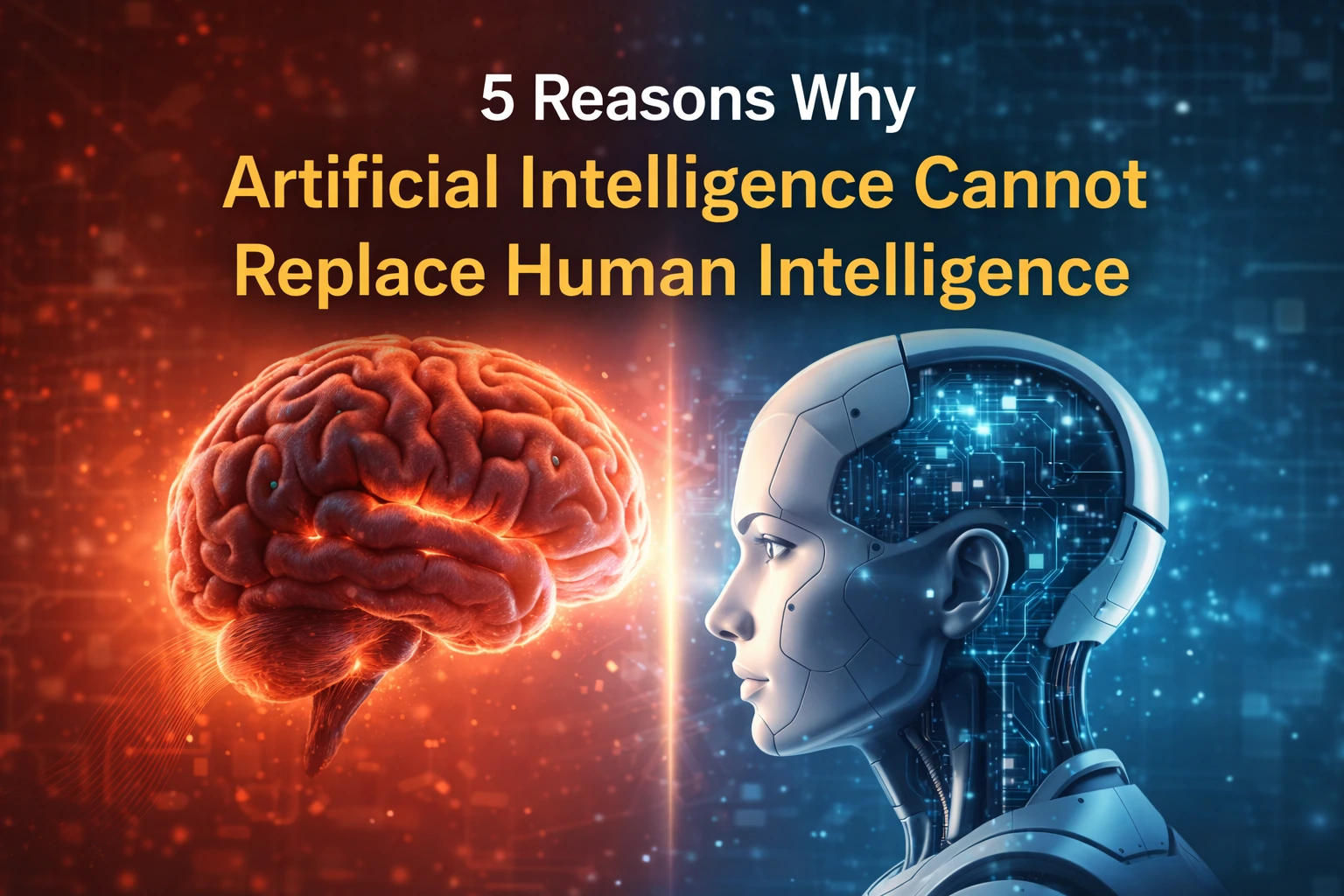
5 Reasons Why Artificial Intelligence Cannot Replace Human Intelligence

Ten years ago, artificial intelligence hardly existed in our daily lives. But if we look at today, one question is on everyone’s mind: in the coming years, will AI do all the work? This is why people keep asking again and again, can artificial intelligence replace human intelligence?
Artificial intelligence cannot replace human intelligence, and this is a logical fact because AI itself is created by humans. In reality, if we look closely, AI is very important in today’s life, but it cannot take the place of humans
In this blog, I will explain with examples how AI cannot replace humans, and I will also share 5 reasons why it cannot take the place of human intelligence.
Understanding AI vs Human Intelligence (Before We Start)
Before comparing, let’s get one thing straight.
- Artificial Intelligence works on data, patterns, and instructions.
- Human intelligence works on experience, emotions, judgment, creativity, and values.
This difference is at the heart of the debate between human intelligence vs artificial intelligence.
AI can assist. Humans decide.
AI vs Human Intelligence (Core Difference)
| Aspect | Artificial Intelligence (AI) | Human Intelligence |
| Nature | Man-made technology | Natural intelligence |
| Learning | Based on data & algorithms | Based on experience & emotions |
| Emotions | No emotions | Emotions & empathy |
| Creativity | Limited, pattern-based | Original & imaginative |
| Decision Making | Rule-based | Ethical & value-based |
1. Humans Have Emotions, AI Does Not
This is the biggest and most obvious reason.
Humans feel:
- Empathy
- Fear
- Joy
- Intuition
- Moral responsibility
AI doesn’t feel anything. It only processes information.
Real-life example:
Imagine a doctor delivering bad news to a patient. The words matter, but so does tone, timing, facial expression, and empathy.
An AI system can suggest a diagnosis. But only a human can:
- Sense emotional readiness
- Offer comfort
- Adjust communication based on feelings
This emotional intelligence is something AI cannot replace humans in.
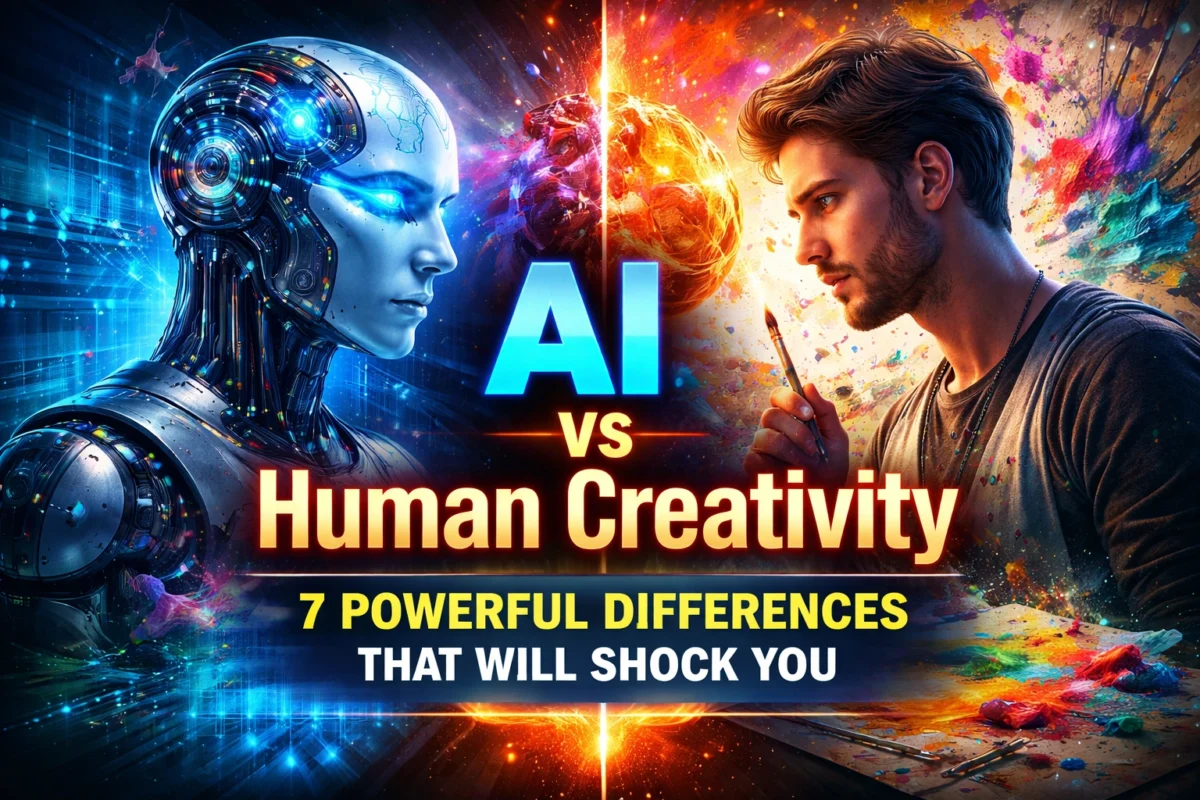
2. Creativity Comes From Experience, Not Data
AI can generate content, art, or music, but let’s be honest.
It’s remixing what already exists.
Human creativity comes from:
- Life experiences
- Failures and success
- Culture and emotions
- Personal perspective
Personal observation:
As a blogger, I’ve noticed this clearly. Tools can help with structure or ideas, but the stories that truly connect come from lived experience , not algorithms.
That’s a major limitation in the limitations of artificial intelligence.
Creativity isn’t just combining words. It’s meaning.
3. Humans Make Ethical and Moral Decisions
AI doesn’t understand right or wrong. It understands the rules.
That’s dangerous if left unchecked.
Example:
- Should a self-driving car prioritize passengers or pedestrians in an accident?
- Should an algorithm deny a loan based purely on past data?
These decisions involve:
- Ethics
- Social values
- Cultural understanding
Only humans can weigh consequences properly. That’s why Artificial Intelligence Cannot Replace Human Intelligence in leadership, law, governance, and judgment-based roles.
4. AI Depends on Humans to Function
Here’s something people often forget.
AI does not:
- Set its own goals
- Understand purpose
- Improve without human direction
Every AI system:
- Is designed by humans
- Trained on human-created data
- Controlled by human-defined rules
Without humans, AI is just code sitting idle.
5. Humans Adapt to New, Unknown Situations
AI works well in predictable environments.
Humans shine in chaos.
Example:
During crises like pandemics, natural disasters, or social conflicts:
- Humans adapt instantly
- Break rules creatively
- Make intuitive decisions
AI struggles when:
- Data is incomplete
- Situations are entirely new
- Context changes suddenly
This adaptability is why, in the future of AI and humans, collaboration matters more than replacement.
Pros and Cons: A Balanced View
Pros of Artificial Intelligence
- Fast data processing
- Handles repetitive tasks
- Reduces human workload
- Improves efficiency
Cons of Artificial Intelligence
- No emotions or ethics
- Limited creativity
- Bias from training data
- Overdependence risk
Understanding both sides helps avoid fear and unrealistic expectations
Best Practices: How Humans Can Stay Relevant
If you’re a student, professional, or blogger, here are practical tips:
- Focus on creative and strategic skills
- Improve communication and emotional intelligence
- Learn to use AI as a tool, not fear it
- Build personal branding and voice
- Stay adaptable and curious
In my experience, those who treat AI as a partner, not a competitor, grow faster.
The Future of AI and Humans: Collaboration, Not Competition
The future isn’t: AI vs Humans
It’s: AI + Humans
AI will handle:
- Speed
- Scale
- Automation
Humans will handle:
- Vision
- Values
- Creativity
- Responsibility
That balance is unstoppable.
Conclusion
After working with technology and seeing the real impact it has on the world, one thing is certain:
Artificial Intelligence will never replace human intelligence.
AI is extremely powerful when it comes to automation, speed, and data processing. However, it lacks emotions, ethical judgment, creativity, and deep understanding, qualities that are essential to being human. Humans don’t just analyze information; they add meaning, context, and purpose, something a machine can never truly achieve.
For more blogs and informative content on technology, AI, and human-centered insights, platforms like Writac provide valuable resources and perspectives that focus on meaningful, well-researched writing rather than hype-driven narratives.
FAQs
1. Can Artificial Intelligence Replace Human Intelligence completely?
No. AI can assist humans but cannot replace emotional, ethical, and creative intelligence.
2. What is the main difference between AI vs Human Intelligence?
AI processes data; humans understand context, emotions, and values.
3. Is AI dangerous for human jobs?
AI changes job roles but also creates new opportunities when used wisely.
4. What are the biggest limitations of artificial intelligence?
Lack of emotions, ethics, creativity, and independent thinking.
5. What is the future of AI and humans?
The future is collaboration, where AI supports humans, not replaces them.