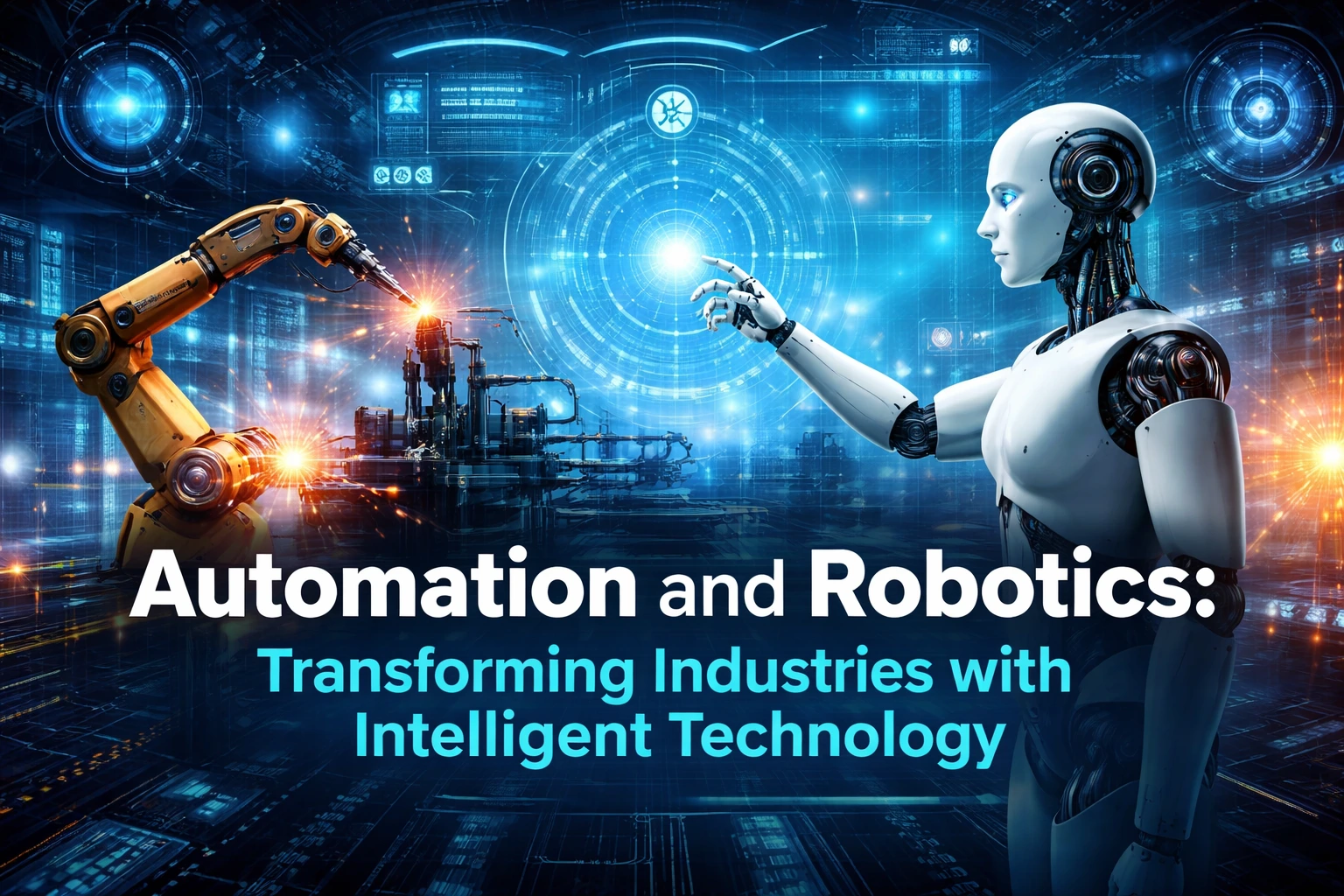
Automation and Robotics: Transforming Industries with Intelligent Technology

Automation and robotics are no longer futuristic concepts confined to science fiction, they are powerful technologies actively transforming industries worldwide. By integrating intelligent machines, advanced software, and artificial intelligence, automation and robotics are redefining how businesses operate, innovate, and compete in the digital age. From smart manufacturing plants and autonomous logistics systems to precision healthcare solutions and intelligent agriculture, these technologies are driving unprecedented levels of efficiency, accuracy, and scalability. As organizations seek faster production, reduced costs, and improved decision-making, automation and robotics are becoming essential tools for sustainable growth and long-term success. In this in-depth guide, we explore the fundamentals of automation and robotics, how they work together, their real-world applications across industries, key benefits and challenges, and the future trends shaping intelligent technology.
What Is Automation and Robotics?
Automation and robotics refer to the use of intelligent machines, software, and control systems to perform tasks with minimal or no human intervention.
- Automation focuses on using technology to execute repetitive processes efficiently.
- Robotics involves the design and use of programmable machines capable of carrying out complex physical tasks.
When combined, automation and robotics create intelligent systems that can analyze data, make decisions, and adapt to changing environments.
How Automation and Robotics Work Together
Automation provides the logic and control, while robotics delivers the physical execution. Together, they form the backbone of modern intelligent systems.
Key Components of Automation and Robotics Systems
Sensors and Data Collection
Robots rely on sensors to gather real-time information such as temperature, motion, pressure, and vision data.
Control Systems and Software
Automation software processes sensor data and sends commands to robotic systems using predefined rules or AI algorithms.
Artificial Intelligence Integration
AI enables robots to learn from experience, recognize patterns, and improve performance over time.
Applications of Automation and Robotics Across Industries
Automation and robotics are transforming nearly every sector.
Automation and Robotics in Manufacturing
Manufacturing is the largest adopter of automation and robotics.
Benefits in Manufacturing
- Faster production cycles
- Reduced human error
- Improved workplace safety
- Lower operational costs
Robotic arms, automated assembly lines, and smart factories are key examples of Industry 4.0 automation.
Robotics in Healthcare
Healthcare automation is improving patient outcomes and operational efficiency.
Key Use Cases
- Robotic surgery systems
- Automated diagnostic tools
- Pharmacy dispensing robots
- Rehabilitation robots
These technologies allow medical professionals to focus more on patient care and less on repetitive tasks.
Automation in Logistics and Supply Chain
Logistics companies use automation and robotics to optimize inventory management and delivery.
Examples
- Automated warehouses
- Robotic picking systems
- Autonomous delivery robots
Companies like Amazon have revolutionized logistics using robotic automation.
https://www.automationworld.com/
Automation and Robotics in Agriculture
Smart farming uses robotics for planting, harvesting, and crop monitoring.
Advantages
- Precision farming
- Reduced labor dependency
- Higher crop yields
Autonomous tractors and drone-based monitoring are changing modern agriculture.
Benefits of Automation and Robotics
Automation and robotics deliver measurable advantages for businesses and society.
Increased Productivity
Machines operate 24/7 without fatigue, dramatically boosting output.
Enhanced Accuracy and Quality
Robots perform tasks with consistent precision, reducing defects and waste.
Cost Efficiency
Although initial investment is high, long-term operational costs are significantly reduced.
Improved Workplace Safety
Dangerous and repetitive tasks are handled by machines, minimizing workplace injuries.
Challenges and Limitations of Automation and Robotics
Despite the benefits, challenges remain.
High Initial Costs
Advanced robotic systems require significant upfront investment.
Workforce Skill Gaps
Employees must be reskilled to work alongside automated systems.
Ethical and Job Concerns
Automation raises concerns about job displacement and ethical AI usage.
Learn more about responsible automation: https://www.weforum.org/
The Future of Automation and Robotics
The future of automation and robotics is driven by AI, machine learning, and connectivity.
Key Trends Shaping the Future
Collaborative Robots (Cobots)
Cobots work safely alongside humans, enhancing productivity without replacing workers.
Autonomous Systems
Self-learning robots capable of independent decision-making are becoming mainstream.
Smart Factories
Fully connected production environments using IoT, AI, and robotics.
For more insights, explore our internal guide on AI and Emerging Technologies:https://writac.com/
FAQs
1. What is automation and robotics in simple terms?
Automation uses technology to perform tasks automatically, while robotics involves machines that physically carry out those tasks.
2. How are automation and robotics different?
Automation focuses on processes and software, whereas robotics focuses on physical machines. Together, they create intelligent systems.
3. Are automation and robotics replacing human jobs?
They replace repetitive tasks but also create new jobs requiring technical and analytical skills.
4. Which industries benefit most from automation and robotics?
Manufacturing, healthcare, logistics, agriculture, and automotive industries benefit the most.
5. What skills are needed to work in automation and robotics?
Skills include programming, AI, data analysis, robotics engineering, and system maintenance.
Conclusion
Automation and robotics are transforming industries with intelligent technology that enhances productivity, accuracy, and innovation. While challenges such as cost and workforce adaptation exist, the long-term benefits far outweigh the risks.
As industries continue to embrace automation and robotics, businesses that invest early and adapt strategically will gain a competitive edge in the digital economy.To stay ahead of the curve, explore more in-depth technology insights on Writac and be part of the future of intelligent innovation.






One thought on “Automation and Robotics: Transforming Industries with Intelligent Technology”