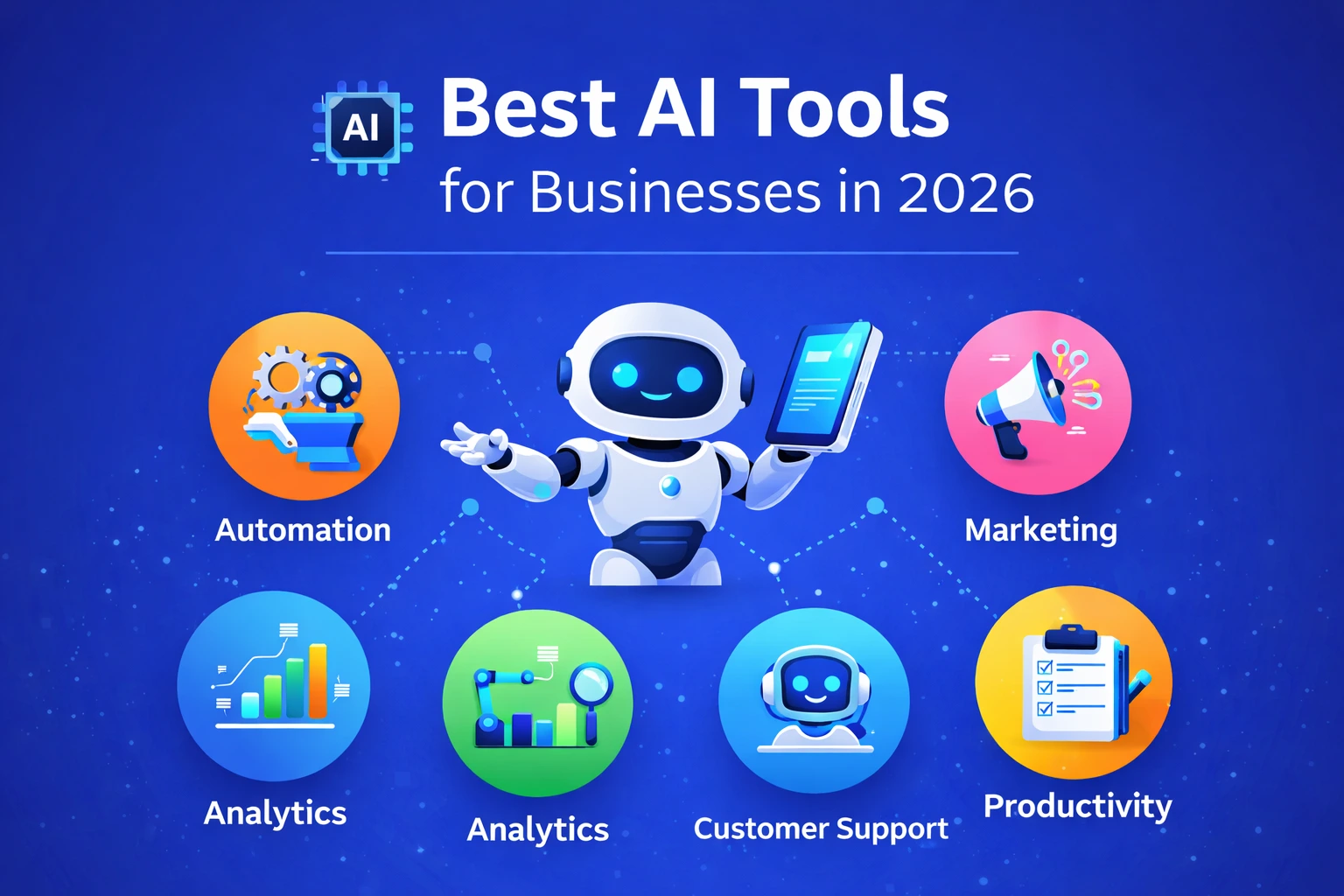

AI is now used in almost everything, and in 2026 it has become a core tool for every business. If you want to survive in business, work on growth, or stay on top of trends, AI is no longer optional, it’s essential.
If you are running a business today, it’s very likely that you are already using AI, even if you don’t fully realize it.
The best AI tools for businesses in 2026 are not just helping with daily tasks, but are playing a major role in business development. In today’s fast-paced world, if you want to run your business in a better and smarter way, you need to take help from AI.
Whether it’s website SEO, replying to emails, or any task where you would normally need external help, most people now turn to AI first instead of waiting for an expert or paying someone.
However, not every AI tool suits every business.
Some AI tools are free, some are paid,but that doesn’t mean all of them work effectively. Many tools only waste time and provide little to no real value.
AI should be used as an assistant, not something you depend on completely.
In this blog, I’ll explain which AI tools are worth using in 2026 and which are not. I’ll also highlight AI tools that are purely hype-driven and deliver no real results, so you can make smarter decisions for your business
Why Businesses Are Seriously Using AI in 2026
In the first 100 days of using AI tools inside a business, most teams notice three immediate changes:
- Less time wasted on repetitive work
- Faster decision-making
- Better consistency across tasks
AI tools don’t magically grow your business. What they do is remove friction.
When boring work disappears, people focus on strategy, creativity, and customers. That’s where growth comes from.
EXAMPLE : How a Small Business Used AI in 2026
I run a small business on Shopify, which is a book brand, and I used to face many difficulties with customer support and order management.
Every day, I spent nearly 4 to 5 hours replying to customers, mostly questions related to orders, shipping, and returns. It was exhausting and took up most of my time.
At the start of 2026, I implemented an AI chatbot on my business website. Now, AI handles customer queries and all order-related information. As a result, around 60% of my business operations are managed by AI.
Tasks that used to take entire days are now completed in just a few hours, giving me more time to focus on growing my business.
This reduces the time required and removes unnecessary workload pressure.
This example clearly shows that AI is meant to support humans and make work easier, not replace them. It helps save time and reduces stress, but AI cannot take the place of people, it simply enables them to work more efficiently and focus on what truly matters
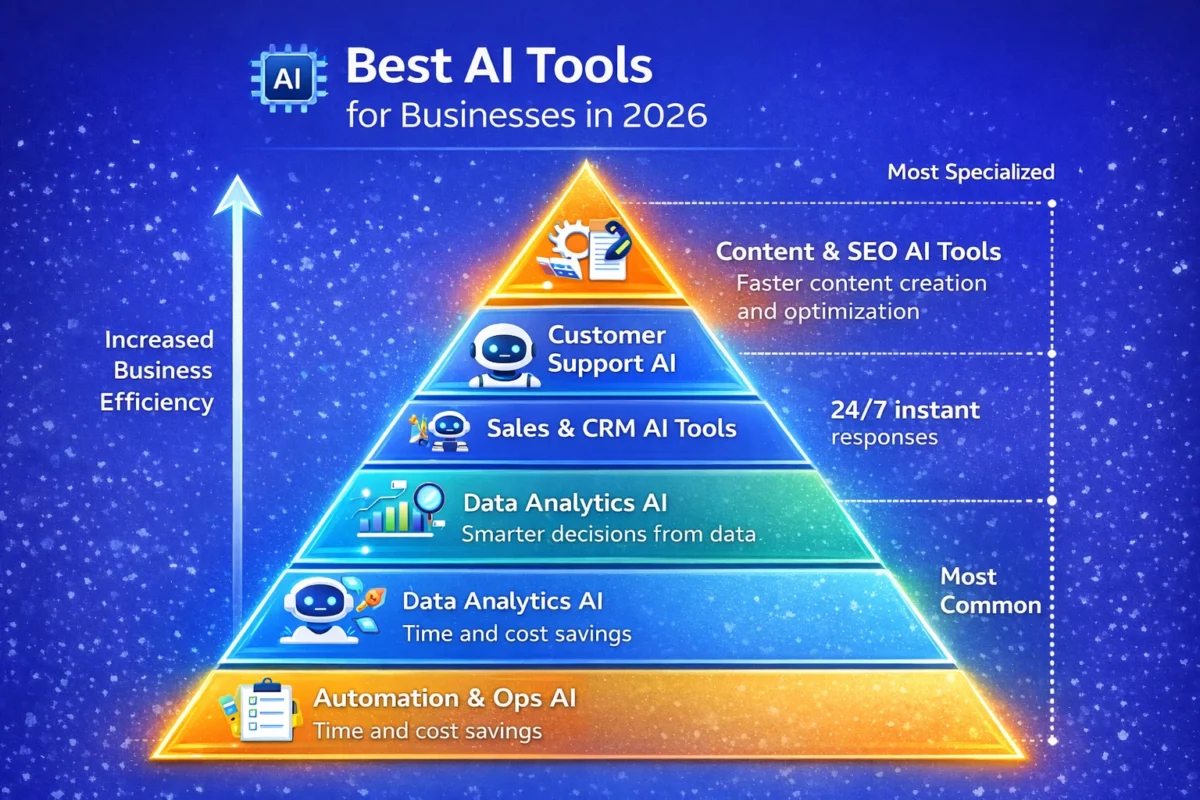
Best AI Tools for Businesses in 2026 by Use Case
Instead of listing random software, let’s talk about AI tools based on real business needs.
AI Tools for Content Marketing and SEO
Content is still one of the strongest growth channels. The difference in 2026 is speed and competition.
- Write blog drafts
- Optimize SEO structure
- Generate social media posts
- Refresh old content
Real Blogger Insight
The businesses ranking well are not publishing AI content blindly. They use AI for structure and speed, then add human experience and opinions.
Pros
- Faster publishing
- Easier SEO optimization
- Consistent tone
Cons
- Needs human editing
- Generic output if prompts are weak
Best Practice
Always add:
- Personal examples
- Case studies
- Opinions
Google rewards content that feels lived-in, not manufactured.
AI Tools for Customer Support and Chatbots
Customers in 2026 expect replies within minutes, not hours.
AI-powered chatbots handle:
- FAQs
- Order tracking
- Appointment booking
- Lead qualification
What I’ve Seen Work Best
Chatbots trained on real customer conversations, not just help documents.
When businesses skip this step, bots feel robotic and annoying.
Pros
- 24/7 availability
- Lower support costs
- Faster response times
Cons
- Poor setup hurts trust
- Not ideal for emotional issues
AI Tools for Sales and CRM Automation
Sales teams love AI quietly , because it makes them look better.
AI tools now:
- Score leads automatically
- Predict buying intent
- Automate follow-ups
Practical Observation
In 2026, top sales teams won’t chase everyone. They let AI tell them who is most likely to convert.
Pros
- Higher conversions
- Less manual work
- Better forecasting
Cons
- Needs clean data
- Initial setup takes time
AI Tools for Data Analysis and Business Decisions
Most businesses are drowning in data but starving for insight.
AI tools turn dashboards into:
- Plain-language summaries
- Trend predictions
- Risk alerts
Real Advice
Don’t track everything. Track what affects:
- Revenue
- Retention
- Costs
Pros
- Faster decisions
- Competitive advantage
- Fewer blind guesses
Cons
- Learning curve
- Over-analysis risk
AI Tools for Business Automation and Operations
These tools don’t get hype ,but they save the most time.
Common automation areas:
- Invoicing
- Scheduling
- Inventory updates
- HR workflows
Blogger’s Take
Most businesses don’t need advanced AI. They need simple automation done consistently.
Pros
- Fewer errors
- Time savings
- Better efficiency
Cons
- Setup effort
- Over-automation feels impersonal
AI Tools Comparison Table (Quick Overview)
Below is a simple comparison table to help you quickly understand which type of AI tools fit different business needs. This is especially useful if you’re short on time and want clarity before diving deeper.
| AI Tool Category | Best For | Main Benefit | Potential Limitation |
| Content & SEO AI Tools | Bloggers, marketers, SaaS teams | Faster content creation and optimization | Needs human editing |
| Customer Support AI | eCommerce, service businesses | 24/7 instant responses | Poor setup can frustrate users |
| Sales & CRM AI Tools | B2B, agencies, sales teams | Better lead prioritization | Requires clean data |
| Data Analytics AI | Growing businesses, enterprises | Smarter decisions from data | Learning curve |
| Automation & Ops AI | Small to mid-size businesses | Time and cost savings | Initial setup effort |
How to Choose the Best AI Tools for Businesses in 2026
Before buying any AI tool, ask:
- What exact problem does this solve?
- Will my team actually use it?
- Does it integrate with existing tools?
- Is there human support available?
Simple Rule
If an AI tool doesn’t:
- Save time
- Reduce cost
- Improve decisions
It’s not worth it.
Conclusion:Best AI Tools for Businesses in 2026
The best AI tools for businesses in 2026 are not about shortcuts.
They help:
- Teams work smarter
- Businesses scale sustainably
- Owners focus on growth instead of busywork
AI is powerful, but only when paired with human judgment.
Use it as a partner, not a replacement.
If you’re interested in learning more about AI, SEO, and modern business tools, explore our related guides on Writac, where we cover real-world AI use cases, comparisons, and practical strategies. These resources are designed to help you stay updated with AI trends and make smarter decisions for your business.
FAQs
What are the best AI tools for businesses in 2026?
The best AI tools are those that support content marketing, customer support, sales automation, data analysis, and operations without replacing human decision-making.
Are AI tools suitable for small businesses?
Yes. In fact, small businesses benefit the most because AI helps them compete with larger teams using fewer resources.
Can AI tools replace employees?
No. AI replaces repetitive tasks, not strategy, creativity, or human relationships.
How much should a business invest in AI tools?
Start small. Choose one or two tools that solve real problems before expanding.
Is AI-generated content safe for SEO?
Yes, if it’s edited, improved with experience, and written for users, not search engines.










One thought on “Best AI Tools for Businesses in 2026”