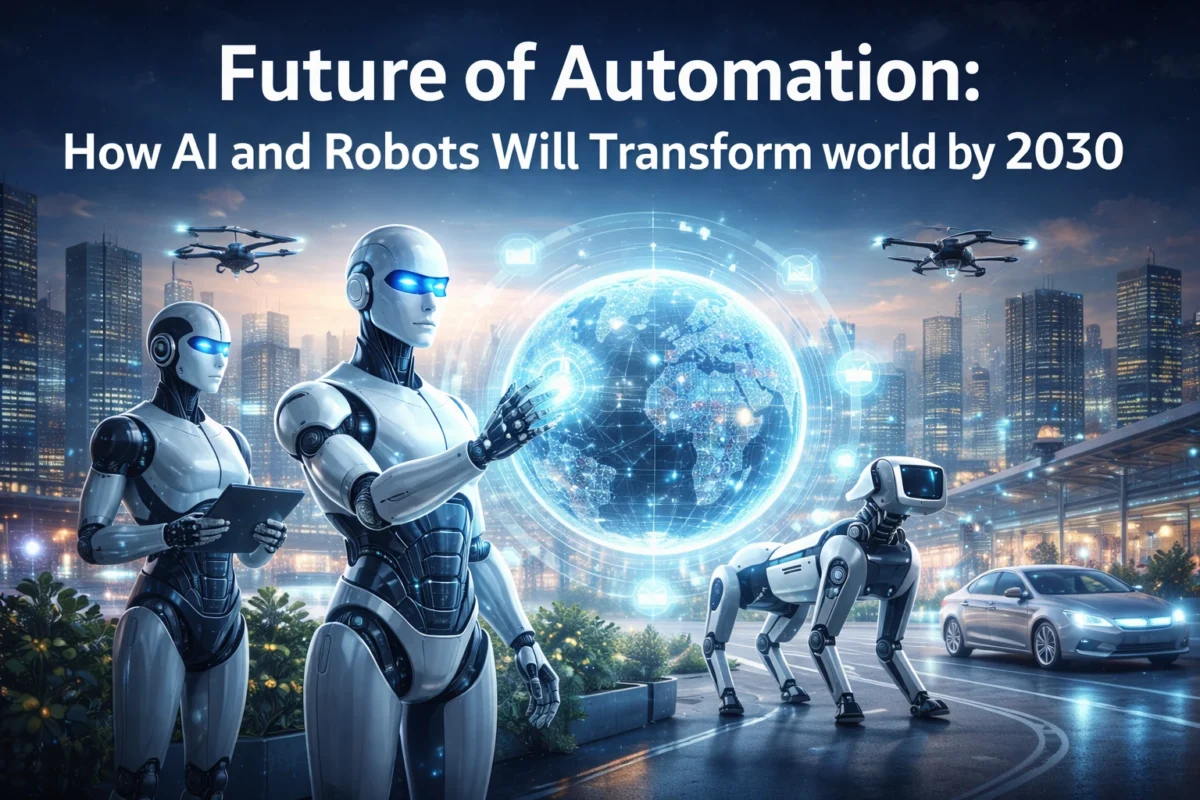
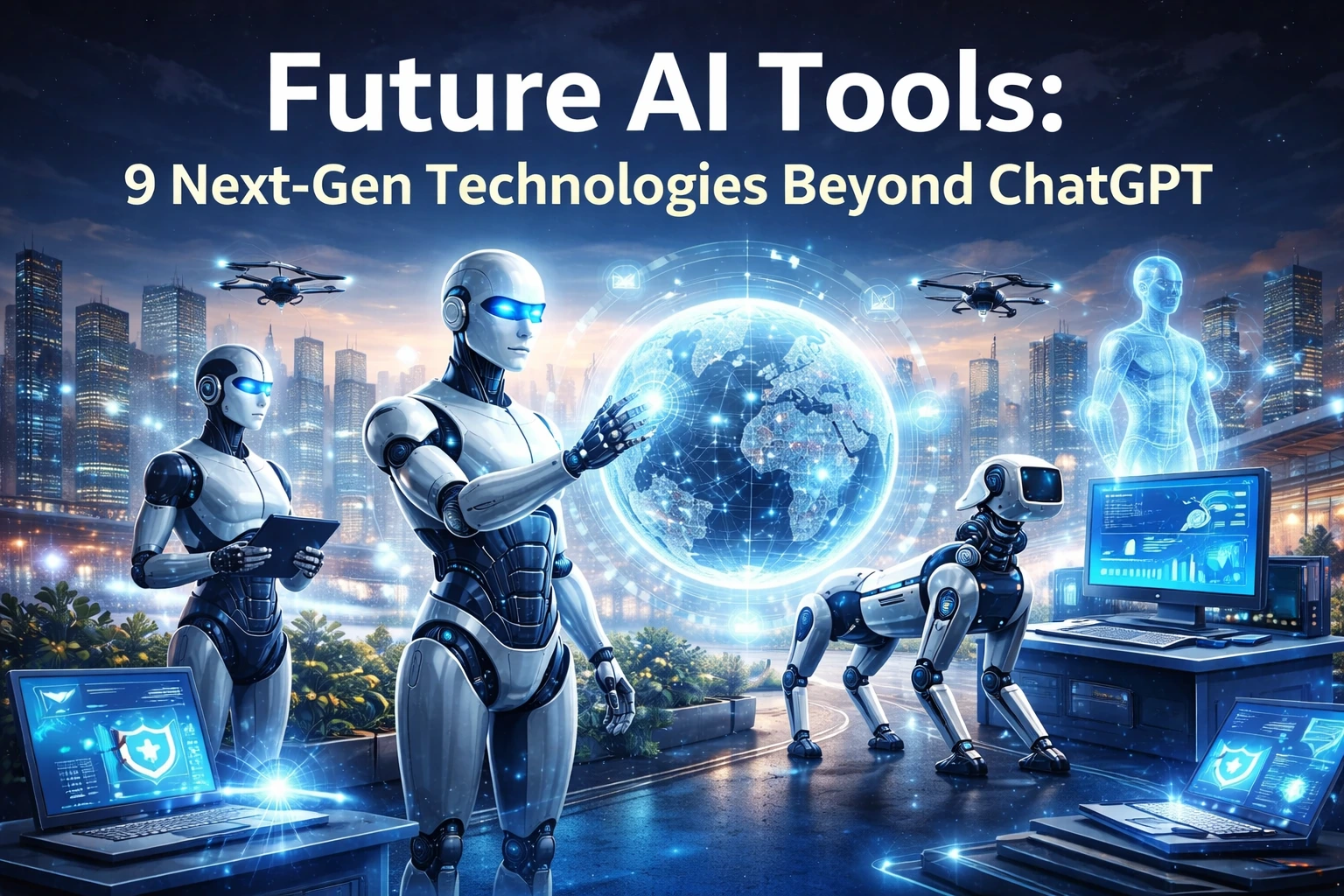

Artificial Intelligence is evolving faster than ever and while tools like Chat GPT have revolutionized how we interact with machines, they are only the beginning. The next wave of innovation is powered by Future AI Tools that go far beyond simple conversations. These advanced systems are designed to think, act and solve real-world problems with minimal human input.
From autonomous agents to intelligent robotics, the future of AI is transforming industries, reshaping jobs and redefining how we live and work. In this blog, we’ll explore 9 next-generation AI technologies beyond Chat GPT, along with their real-world applications, benefits and future impact.
What Are Future AI Tools?
Future AI Tools are advanced systems that combine intelligence, automation and adaptability to perform complex tasks. Unlike traditional AI, which focuses on narrow functions, these tools are designed to operate across multiple domains.
Key Features:
- Autonomous decision-making
- Multimodal capabilities (text, voice, image, video)
- Continuous learning and adaptation
- Real-world task execution
Example:
Instead of just answering questions, AI can now manage workflows, analyze data and even run businesses.
Why AI Is Moving Beyond ChatGPT
Chat GPT introduced conversational AI to the world, but modern demands require more than just responses. Businesses and individuals now need AI systems that can take action, not just provide suggestions.
Key Advancements:
- Automation of complete processes
- Integration with physical systems
- Real-time decision-making
Example:
Future AI Tools can create, test and launch software without human intervention.
Future AI Tools vs Traditional AI (Chat GPT)
| Feature | Future AI Tools | Traditional AI (ChatGPT) |
| Functionality | Perform real-world tasks | Mainly text-based responses |
| Capability | Multi-domain intelligence | Limited to specific tasks |
| Automation Level | Fully autonomous | Semi-automated |
| Learning | Continuous learning & adaptation | Pre-trained + updates |
| Integration | Works with robots, systems, apps | Mostly software-based |
| Output Type | Text, image, video, actions | Mostly text |
| Decision Making | Independent decisions | Suggestive responses |
| Example | AI agents, robotics, automation | ChatGPT, chatbots |
9 Next-Gen Technologies Beyond Chat GPT
1. Autonomous AI Agents
Autonomous AI agents are one of the most powerful developments in AI.
What They Do:
- Perform tasks independently
- Learn from outcomes
- Execute goals without supervision
Example:
An AI agent can manage your emails, schedule meetings and even handle customer service automatically.
2. AI-Powered Robotics
Robotics combined with AI is transforming physical industries.
Applications:
- Healthcare
- Manufacturing
- Logistics
Example:
AI-driven robots assisting doctors in surgeries with high precision.
3. Generative Video AI
Generative AI is no longer limited to text and images.
Capabilities:
- Create videos from text prompts
- Generate animations
- Produce marketing content
Example:
Businesses can create professional video ads without hiring production teams.
4. Multimodal AI Systems
Multimodal AI understands multiple forms of data simultaneously.
Features:
- Image + text + voice analysis
- Context-aware responses
Example:
An AI system analyzing a medical scan and explaining it in simple language.
5. Advanced AI Code Generators
Coding is becoming more automated than ever.
Features:
- Full application development
- Debugging and testing
- Deployment automation
Example:
AI building an entire mobile app from a simple idea.
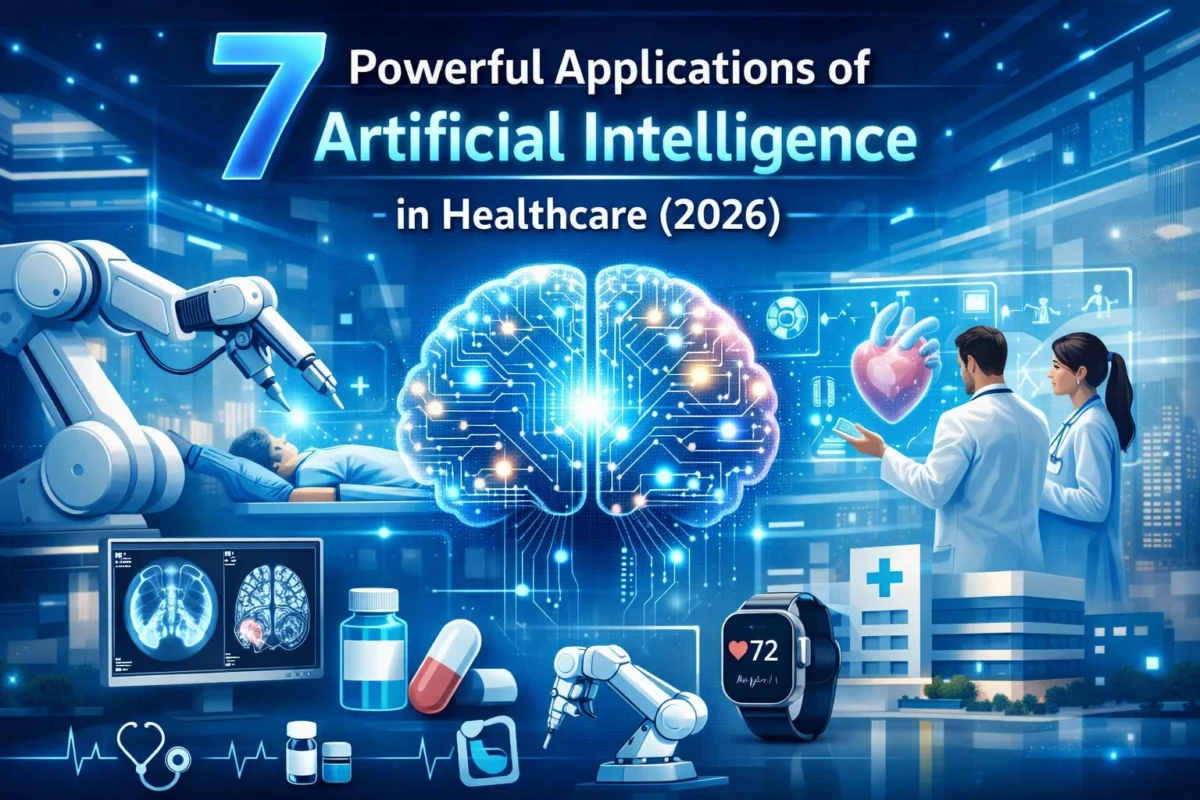
6. AI in Healthcare Diagnostics
Healthcare is one of the biggest beneficiaries of AI.
Benefits:
- Faster diagnosis
- Early detection
- Personalized treatment
Example:
AI detecting cancer in early stages using imaging data.
7. Digital Humans (AI Avatars)
Digital humans are AI-powered virtual personalities.
Use Cases:
- Customer support
- Education
- Virtual influencers
Example:
AI teachers interacting with students in real time.
8. AI for Cybersecurity
Cyber threats are increasing and AI is the solution.
Capabilities:
- Detect threats instantly
- Prevent attacks
- Monitor systems 24/7
Example:
AI systems stop hacking attempts before they occur.
9. AI Personal Assistants 2.0
Next-gen assistants go beyond reminders.
Features:
- Workflow automation
- Business management
- Decision-making
Example:
AI manages your entire business operations.
Benefits
Why Future AI Tools Matter
Future AI Tools are not just about convenience, they are about transformation.
Key Benefits:
- Increased productivity
- Faster decision-making
- Cost efficiency
- Innovation acceleration
Example:
Companies using AI tools can automate repetitive tasks and focus on strategic growth.
Benefits vs Limitations of Future AI Tools
| Benefits | Limitations |
| High productivity | Job displacement risk |
| Faster decision-making | Ethical concerns |
| Automation of tasks | Data privacy issues |
| Innovation growth | High development cost |
| Real-time problem solving | Dependence on AI |
Challenges of Future AI Tools
Risks and Concerns
Despite their advantages, Future AI Tools also present challenges.
Major Concerns:
- Job displacement
- Ethical issues
- Data privacy risks
- Over-reliance on AI
Example:
AI misuse can lead to misinformation or security vulnerabilities.
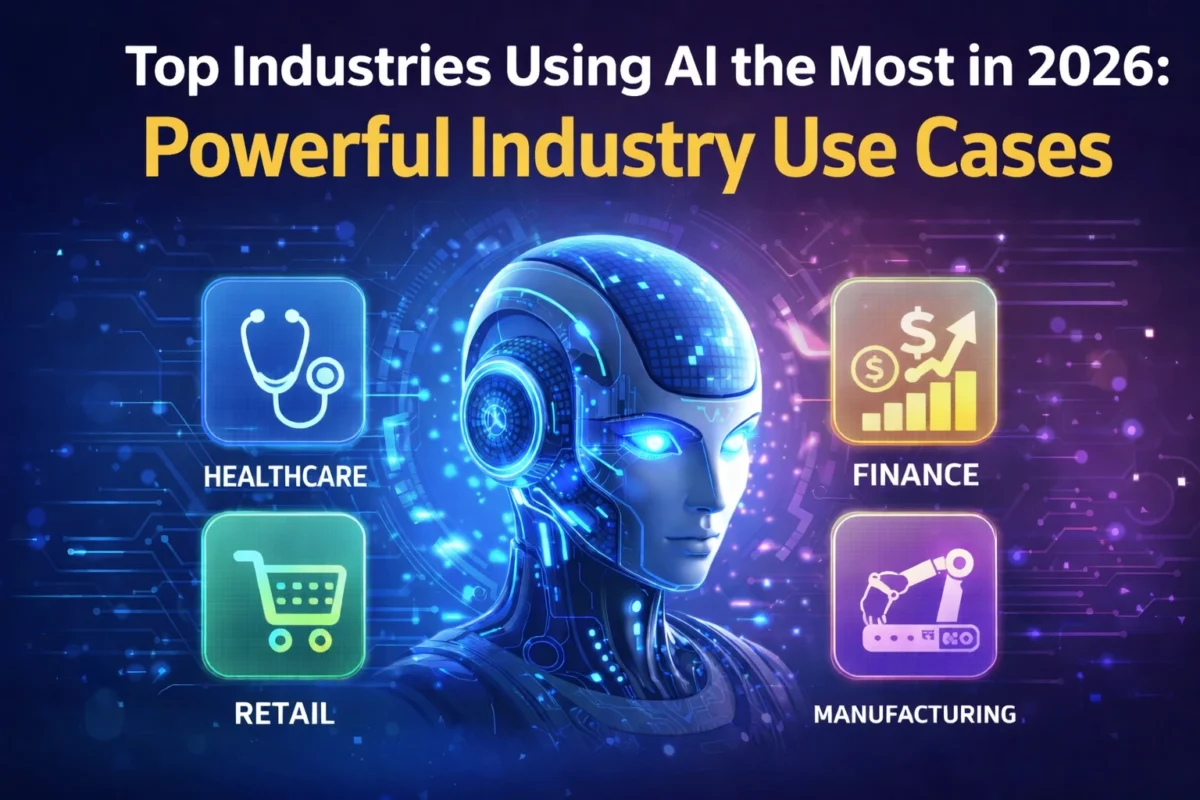
Real-World Applications of Future AI Tools
Future AI Tools are already being used across industries.
Key Sectors:
- Healthcare
- Finance
- Education
- Retail
Example:
Retail companies using AI to personalize customer experiences and boost sales.
The Future of AI Innovation
The future of AI is not just about smarter machines, it’s about collaboration between humans and AI.
What to Expect:
- Fully autonomous systems
- Human-AI partnerships
- Smarter decision-making
- AI-driven economies
Example:
Businesses run by AI with minimal human involvement.
FAQs
1. What are Future AI Tools?
Future AI Tools are advanced AI systems capable of performing complex tasks autonomously across multiple domains.
2. How are Future AI Tools different from Chat GPT?
Chat GPT focuses on conversations, while Future AI Tools can perform real-world tasks like automation, coding and decision-making.
3. Are Future AI Tools Safe?
They are generally safe, but require proper regulation and ethical guidelines.
4. Will Future AI Tools replace jobs?
Some jobs may be replaced, but new opportunities will also be created.
5. Which industries benefit the most?
Healthcare, finance, education and manufacturing benefit the most from AI advancements.
Conclusion
The rise of Future AI Tools marks a new era in technology. These systems are not just improving efficiency, they are redefining how we solve problems and interact with the world. From autonomous agents to intelligent robotics, AI is becoming more powerful, more independent and more integrated into everyday life.
As we move forward, embracing these innovations will be key to staying competitive in a rapidly evolving digital landscape.
Call to Action
Ready to explore the power of Future AI Tools? Visit Writac to discover expert insights on AI, technology, and future trends. Stay ahead by bookmarking our site for the latest updates and innovations. Don’t forget to share this blog with others who are passionate about the future of AI. Join the Writac community today and be part of the next wave of digital transformation.