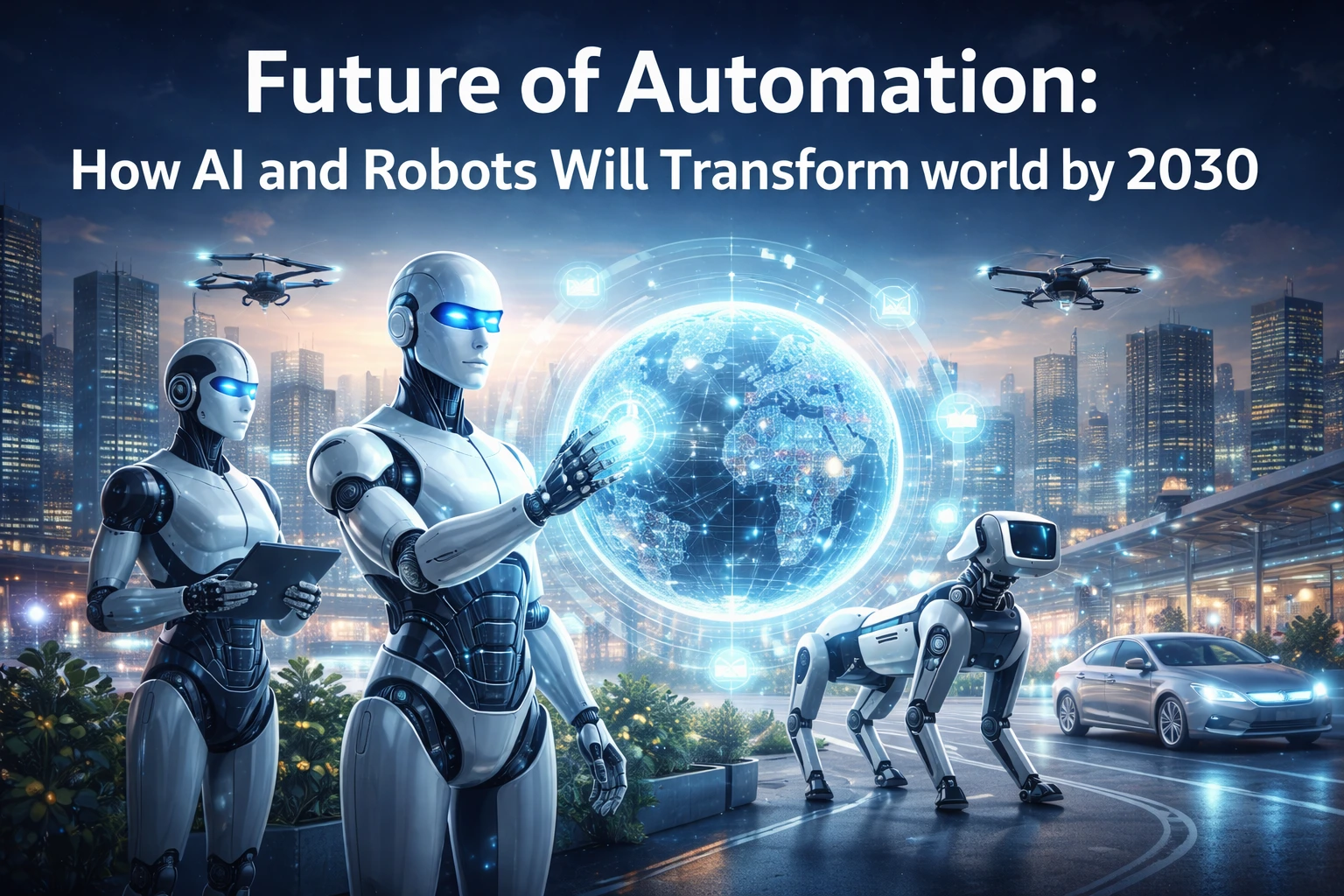
Future of Automation: How AI and Robots Will Transform the World by 2030

Introduction to the Future of Automation
The Future of Automation is transforming the way industries operate and how people live and work. Over the past decade, technologies such as artificial intelligence (AI), robotics and machine learning have advanced rapidly, allowing machines to perform tasks that once required human intelligence.
Automation is no longer limited to factory assembly lines. Today, automated systems are used in healthcare, finance, transportation, retail and many other industries. These intelligent systems can analyze data, make decisions and complete complex tasks with minimal human involvement.
By 2030, the Future of Automation is expected to reshape the global economy. Businesses will rely on automated technologies to improve productivity, reduce operational costs and deliver better customer experiences. As automation continues to evolve, it will become a central part of modern society and digital transformation.
What is Automation?
Automation refers to the use of technology, machines and software systems to perform tasks automatically without constant human supervision. Traditionally, automation was mainly used in manufacturing industries where machines performed repetitive tasks such as assembling products or packaging goods.
However, the Future of Automation goes far beyond industrial machines. Today, automation includes advanced technologies such as artificial intelligence, robotic process automation (RPA), cloud computing and smart data analytics.
Key Characteristics of Automation
Automation systems typically provide the following benefits:
- Reduced human involvement in repetitive work
- Increased productivity and operational efficiency
- Higher accuracy and fewer human errors
- Faster processing of large volumes of data
- Ability to operate continuously without breaks
These capabilities allow businesses to streamline operations and focus on strategic growth.
Why Automation is Growing Rapidly
The rapid growth of automation is driven by technological advancements and the increasing demand for efficient business operations. Organizations across the world are investing heavily in automation technologies to remain competitive in a digital economy.
Key Factors Driving Automation Growth
Several factors are accelerating the Future of Automation, including:
- Advances in artificial intelligence and machine learning
- Expansion of cloud computing and big data technologies
- Increasing demand for faster digital services
- Rising need to reduce operational and labor costs
- Global digital transformation across industries
Automation also improves customer experiences.
For example
Automated chatbots can provide instant responses to customer questions, improving service efficiency and satisfaction.
Role of Artificial Intelligence in Automation
Artificial intelligence plays a crucial role in shaping the Future of Automation. AI enables machines to analyze information, recognize patterns and make intelligent decisions based on data.
When AI is combined with automation systems, machines can learn from past experiences and continuously improve their performance.
Examples of AI-Driven Automation
Many industries already use AI-powered automation technologies, including:
- Customer support chatbots that answer queries instantly
- Fraud detection systems used by banks
- Product recommendation systems in online shopping platforms
- Predictive maintenance systems used in manufacturing
- Autonomous vehicles powered by AI algorithms
These technologies demonstrate how the Future of Automation is creating smarter and more efficient systems.
Key Automation Trends Shaping the Future
Several technological trends are driving the Future of Automation and changing how organizations operate.
1. AI-Powered Decision Making
Artificial intelligence is transforming business decision-making processes by analyzing large datasets and providing valuable insights.
Key advantages include:
- Faster and more accurate data analysis
- Improved forecasting and predictions
- Better strategic planning for businesses
- Real-time insights for decision makers
AI-powered analytics tools help companies make smarter and faster decisions.
2. Rise of Intelligent Robots
Modern robots are becoming increasingly advanced and capable of performing complex tasks. These robots use sensors, AI software and machine learning to interact with their environment.
Intelligent robots can:
- Perform detailed industrial tasks
- Work safely alongside human employees
- Adapt to new environments and situations
- Improve production efficiency and accuracy
Collaborative robots, also known as cobots, are expected to play an important role in the Future of Automation.
3. Automation in Cloud and Data Processing
Cloud computing has accelerated the Future of Automation by enabling businesses to manage large amounts of data efficiently.
Benefits of Cloud Automation
- Scalable computing infrastructure
- Automated data monitoring and analysis
- Improved data security and storage
- Real-time system monitoring
- Reduced IT infrastructure costs
Cloud-based automation platforms help businesses operate more efficiently and flexibly.
4. Hyperautomation and Smart Workflows
Hyperautomation is an emerging concept that combines multiple technologies such as:
- Artificial intelligence
- Robotic process automation
- Machine learning
- Advanced data analytics
This approach allows organizations to automate entire workflows rather than individual tasks.
Advantages of Hyperautomation
- Faster and more efficient business processes
- Reduced manual workload
- Higher operational efficiency
- Better customer experiences
Hyperautomation is expected to play a major role in the Future of Automation across industries.
Industries That Will Be Transformed by Automation
The Future of Automation will transform many industries by improving efficiency, productivity, and service quality.
Automation in Healthcare
Automation technologies are improving healthcare systems around the world.
Key applications include:
- AI-powered medical image analysis
- Robotic surgery systems for precise procedures
- Automated patient data management
- Smart health monitoring devices
- AI-driven drug discovery systems
These innovations help healthcare professionals diagnose diseases faster and improve patient outcomes.
Automation in Manufacturing
Manufacturing has been one of the earliest adopters of automation technologies. Smart factories now use robots, sensors, and AI systems to manage production lines.
Benefits include:
- Increased production efficiency
- Reduced manufacturing errors
- Improved product quality
- Predictive maintenance of machines
- Lower production costs
The Future of Automation will lead to highly connected smart factories.
Automation in Transportation
Automation is revolutionizing transportation systems worldwide.
Major developments include:
- Self-driving cars and trucks
- Autonomous delivery drones
- Automated logistics management systems
- AI-powered traffic management
These technologies could make transportation safer and more efficient.
Automation in Retail and E-commerce
Retail businesses are using automation to improve both operations and customer experiences.
Key applications include:
- Automated inventory management
- AI-based product recommendation systems
- Chatbots for customer support
- Smart warehouses for faster deliveries
- Automated order processing systems
Automation allows online retailers to handle millions of transactions efficiently.
Automation in Finance and Banking
Financial institutions are adopting automation technologies to improve security and efficiency.
Key uses include:
- AI-based fraud detection systems
- Robo-advisors for investment management
- Automated loan processing systems
- AI-powered financial analysis
- Risk management tools
Automation helps financial institutions manage complex financial data quickly and accurately.
Impact of Automation on Jobs
The Future of Automation will significantly impact the global workforce and how people work.
Jobs That May Disappear
Some routine jobs may become automated, including:
- Data entry roles
- Basic administrative tasks
- Certain manufacturing jobs
- Routine customer service tasks
However, automation does not necessarily mean widespread unemployment.
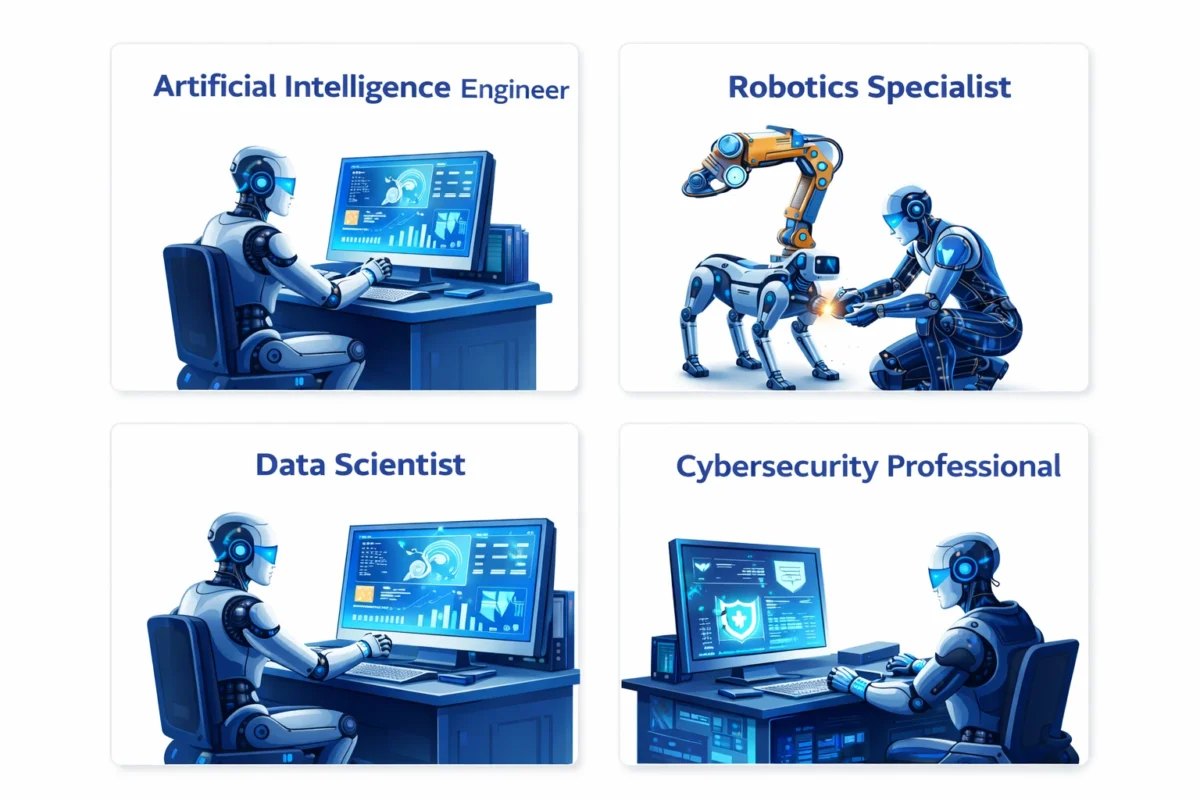
New Jobs Created by Automation
Automation will also create new career opportunities in emerging technologies.
Examples:
- Artificial intelligence engineers
- Robotics specialists
- Data scientists and analysts
- Automation consultants
- Cybersecurity professionals
These roles will become increasingly important in the Future of Automation.
Skills Needed for the Automated Future
To succeed in the automated world, individuals must develop modern digital skills.
Important skills include:
- Programming and technical knowledge
- Data analysis and AI understanding
- Critical thinking and problem solving
- Creativity and innovation
- Communication and emotional intelligence
Human abilities such as creativity and strategic thinking will remain valuable.
Benefits of Automation for Businesses
Businesses around the world are investing in automation because of its many advantages.
Increased Productivity
Automation allows machines to operate continuously without fatigue.
Benefits include:
- Faster production cycles
- Improved workflow efficiency
- Reduced downtime
Reduced Operational Costs
Automation helps organizations lower costs and improve efficiency.
Advantages include:
- Reduced labor costs
- Lower operational expenses
- Better use of resources
Improved Accuracy and Efficiency
Automated systems perform tasks with high precision.
Key benefits include:
- Reduced human errors
- Consistent performance
- Improved product quality
Automation allows businesses to scale operations more easily.
Challenges and Risks of Automation
Despite its benefits, the Future of Automation also presents several challenges.
Job Displacement Concerns
Automation may replace some traditional jobs. Governments and organizations must support workforce reskilling and education programs.
Security and Privacy Issues
Automated systems rely heavily on digital data, which increases cybersecurity risks such as:
- Data breaches
- Cyberattacks on automated systems
- Privacy violations
Strong security measures are essential.
Ethical Concerns in AI Automation
AI-powered automation raises ethical questions including:
- Bias in algorithms
- Lack of transparency in AI decisions
- Accountability for automated systems
Responsible AI regulations will be necessary.
What the World Will Look Like in 2030
By 2030, the Future of Automation could transform everyday life.
Smart Cities and Automated Transportation
Cities may use technologies such as:
- Automated traffic systems
- Self-driving public transportation
- Smart energy management systems
- AI-powered urban planning
AI-Driven Businesses
Businesses may rely heavily on automation tools for daily operations.
Possible developments include:
- Fully automated supply chains
- AI-powered customer service systems
- Automated marketing platforms
- Real-time data-driven decision making
Everyday Life with Robots
Robots may become common in homes and workplaces.
Examples include:
- Home cleaning robots
- Personal assistant robots
- Healthcare support robots
- Autonomous delivery robots
Automation will make everyday life more convenient and efficient.
Comparison Table: Human Work vs Automation vs AI Automation
To better understand the Future of Automation, the following comparison shows how human work, traditional automation and AI-powered automation differ in performance, efficiency and real-world applications.
| Feature | Human Work | Traditional Automation | AI Automation |
| Decision Making | Humans make decisions based on experience | Machines follow fixed instructions | AI analyzes large data and makes intelligent decisions |
| Example | A manager analyzing sales data manually | A machine filling bottles in a factory | AI predicting customer behavior in e-commerce |
| Speed | Slower compared to machines | Faster for repetitive tasks | Extremely fast with real-time data processing |
| Example | A person entering data manually | Automatic conveyor belt in a factory | AI processing millions of financial transactions |
| Accuracy | Errors possible | High accuracy | Very high accuracy with learning ability |
| Example | Human mistakes in calculations | Automated billing systems | AI detecting fraud in banking |
| Learning Ability | Humans learn from experience | No learning ability | AI learns through machine learning |
| Example | Employee training in a company | Basic programmed robot | AI chatbot improving responses over time |
| Work Hours | Limited working hours | Can work continuously | 24/7 intelligent operation |
| Example | Office workers working 8 hours | Automated manufacturing machines | AI customer support chatbots working all day |
Automation technologies are becoming increasingly intelligent and capable. While traditional automation focuses on repetitive tasks, AI automation can analyze complex data and adapt to changing environments. This evolution shows how the Future of Automation will combine speed, accuracy and intelligence to transform industries and business operations worldwide.
Conclusion
Preparing for the Automated Future
The Future of Automation represents one of the most transformative technological shifts of the 21st century. Automation powered by artificial intelligence and robotics will continue to reshape industries, economies and societies.
While automation brings challenges such as job displacement and ethical concerns, it also offers enormous opportunities for innovation and growth. Businesses, governments and individuals must invest in education, technology and digital skills to prepare for this transformation.
By embracing the Future of Automation, societies can build a smarter, more efficient and more innovative world by 2030.
Frequently Asked Questions (FAQs)
1. What is the Future of Automation?
The Future of Automation refers to the growing use of artificial intelligence, robotics and smart technologies to perform tasks automatically. These technologies help businesses improve efficiency, reduce operational costs and make faster data-driven decisions.
2. How will AI impact the Future of Automation?
Artificial intelligence plays a major role in the Future of Automation by enabling machines to analyze data, learn patterns and make intelligent decisions. AI allows automation systems to become smarter, more adaptive and capable of handling complex tasks.
3. Which industries will benefit most from automation?
Many industries will benefit from the Future of ai including:
- Healthcare
- Manufacturing
- Transportation
- Retail and e-commerce
- Banking and finance
Automation helps these industries increase productivity and improve service quality.
4. Will automation replace human jobs?
Automation may replace some repetitive tasks, but it will also create new career opportunities in fields such as AI engineering, robotics, data science and cybersecurity. The Future of Automation will require skilled professionals to manage and develop these technologies.
5. How can beginners prepare for the Future of Automation?
Beginners can prepare for the Future of Automation by learning modern technology skills such as:
- Programming (Python or JavaScript)
- Artificial intelligence and machine learning
- Data analysis and data science
- Robotics and automation tools
- Cybersecurity fundamentals
Developing these skills will help individuals succeed in automation-driven industries.
Call to Action
The future of automation is creating exciting opportunities for individuals and businesses. If you want to stay ahead in the digital world, it is important to learn new technologies and understand how automation is transforming industries.
At Writac, we publish informative content about emerging technologies, artificial intelligence, digital transformation, and future career skills to help readers stay updated with the latest trends.
👉 Explore more articles on Writac to learn about the latest innovations in AI, automation, and technology that are shaping the future.
Stay informed, keep learning and prepare yourself for the future.