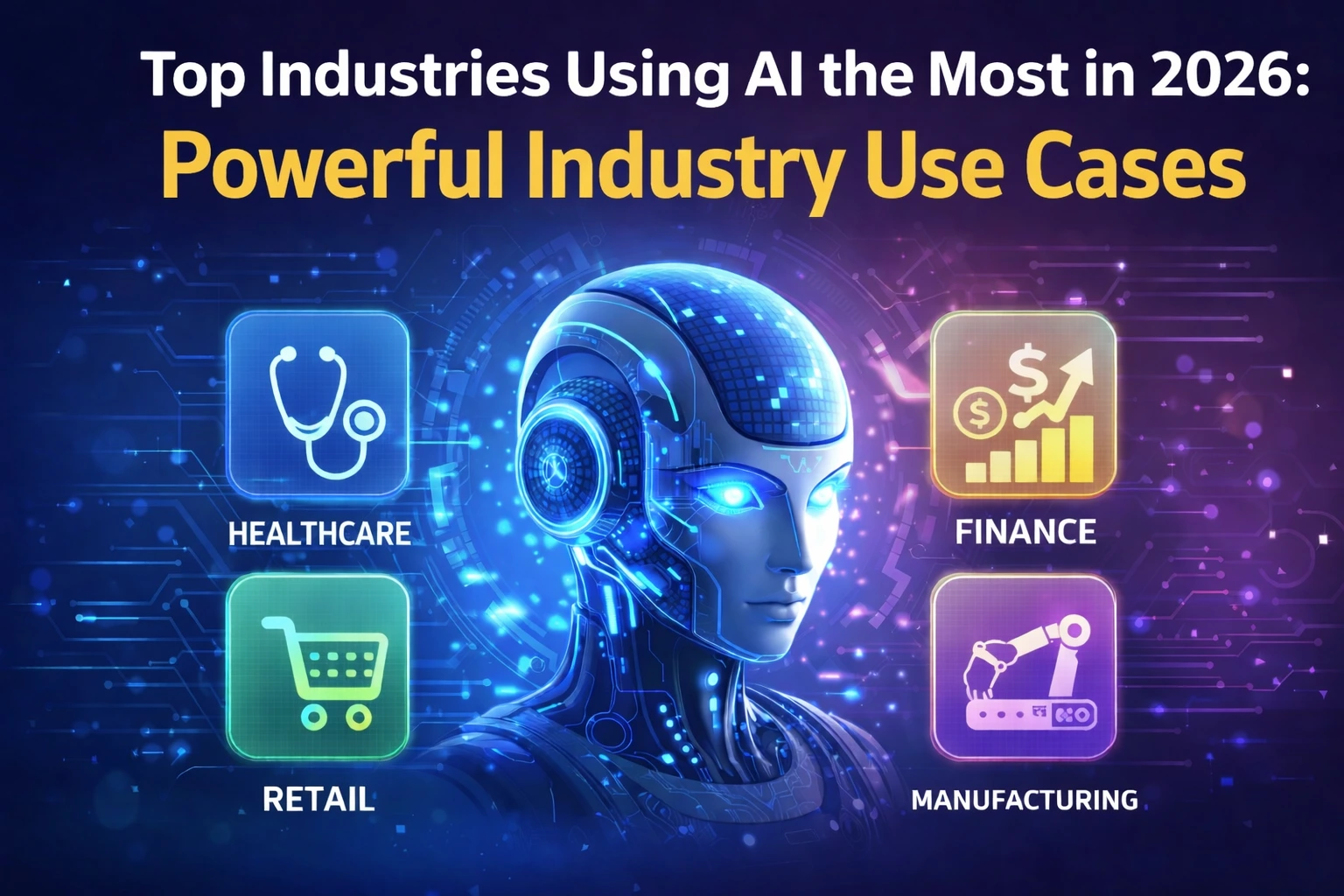
Top Industries Using AI the Most in 2026: Powerful Industry Use Cases

Artificial Intelligence (AI) is no longer just a competitive advantage, it has become a core driver of innovation in modern business. Companies across the globe are using AI to automate complex processes, analyze vast amounts of data, enhance customer experiences, and make smarter decisions in real time. What once seemed futuristic is now a daily operational reality, reshaping how organizations compete and grow in a digital-first economy.
The Industries Using AI the Most in 2026 include healthcare, finance, retail, manufacturing, logistics, marketing, and education. These sectors are leveraging intelligent systems not just to improve efficiency, but to reinvent traditional business models and unlock new revenue opportunities. As AI adoption accelerates, forward-thinking organizations are positioning themselves for long-term success in an increasingly competitive marketplace.
Why AI Adoption Is Growing Rapidly in 2026
Before exploring the Industries Using AI the Most in 2026, it is important to understand why artificial intelligence is expanding so quickly across global markets.
Increased Availability of Big Data
- Companies create large volumes of data every day from operations and customer interactions.
- AI processes different types of data rapidly and accurately.
- It detects meaningful patterns and emerging trends.
- These insights help businesses make informed and timely decisions.
Advances in Machine Learning Algorithms
- Modern machine learning models deliver higher accuracy.
- They scale efficiently across large datasets.
- Deep learning improves complex data analysis.
- Neural networks power innovation across industries.
Scalable Cloud Infrastructure
- Cloud computing reduces the need for expensive hardware.
- Organizations can deploy AI tools quickly and easily.
- It lowers upfront infrastructure costs.
- This makes AI adoption accessible for mid-sized companies.
Demand for Operational Efficiency
- AI minimizes repetitive manual tasks.
- It streamlines and automates workflows.
- Productivity increases across operations.
- Businesses reduce costs and improve performance.
1. AI in Healthcare
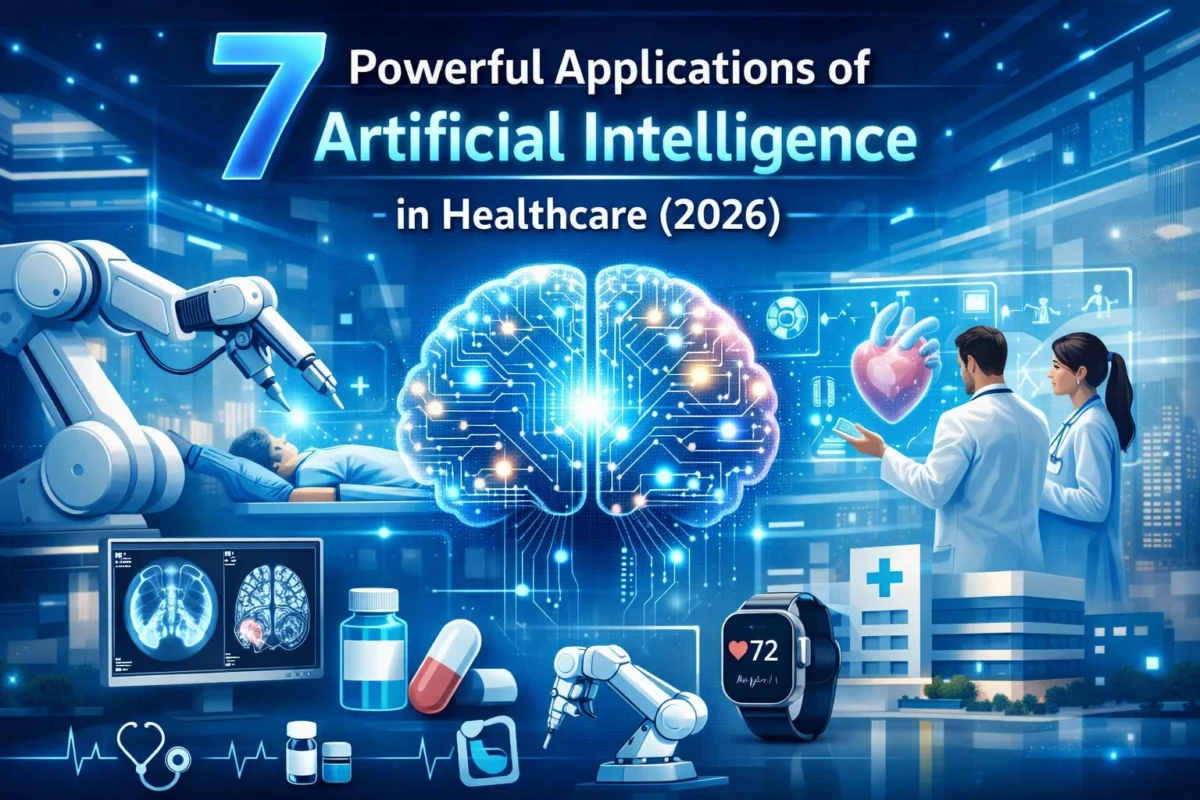
Healthcare consistently ranks among the Industries Using AI the Most in 2026 due to its data-intensive nature and critical need for precision.
AI-Powered Diagnostics
- AI analyzes MRIs, CT scans and X-rays with high precision.
- It helps detect diseases at earlier stages.
- Machine learning identifies hidden patterns in medical images.
- This supports doctors in making more accurate diagnoses.
Impact:
- Faster diagnoses
- Reduced human error
- Improved patient outcomes
Predictive Patient Monitoring
Hospitals use AI-driven monitoring systems to track patient vitals and predict potential health risks before emergencies occur.
Drug Discovery and Development
AI accelerates pharmaceutical research by analyzing molecular structures and predicting drug interactions, significantly reducing development timelines.
Administrative Automation
- AI automates appointment scheduling and medical documentation.
- It simplifies insurance claims and billing processes.
- Healthcare professionals can focus more on patient care.
- The sector continues improving outcomes while reducing operational costs.
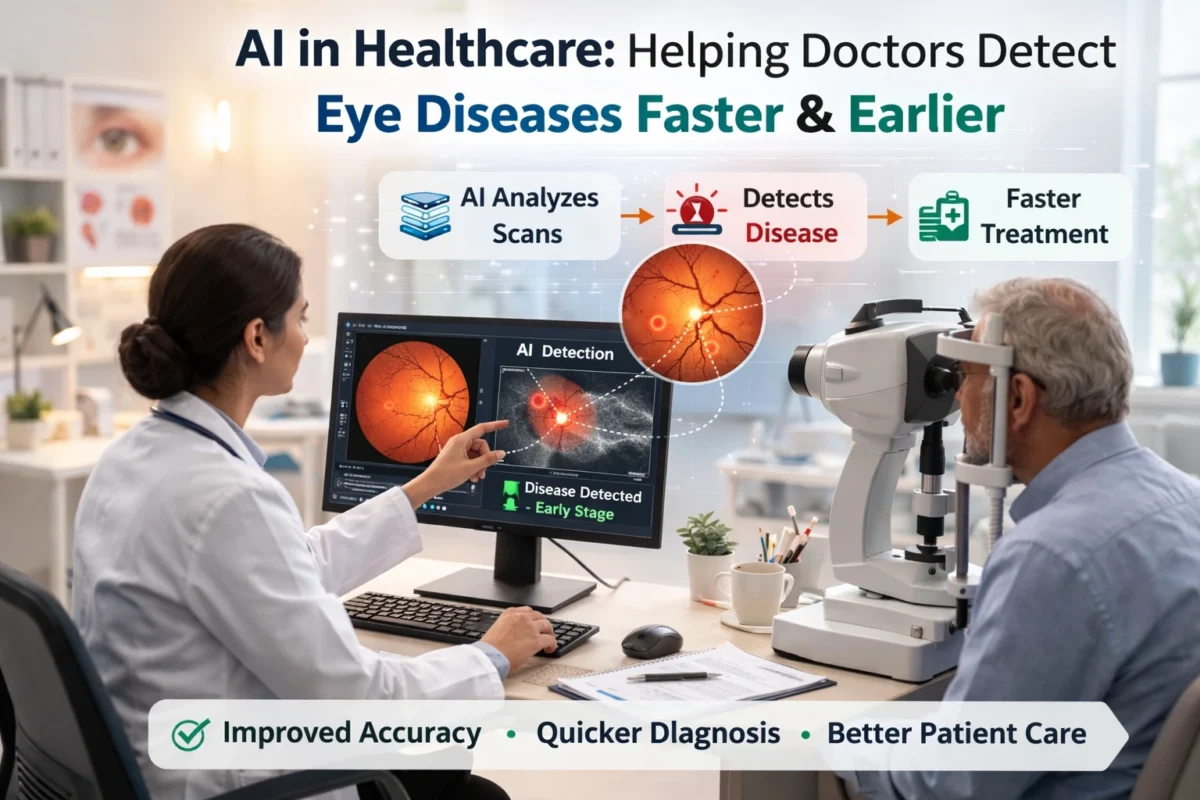
AI in Healthcare: Real-Life Example – Google DeepMind & Moorfield’s Eye Hospital
One of the most well-known real-world examples of AI in healthcare is the collaboration between Google DeepMind and Moorfields Eye Hospital in London.
The Problem
Doctors needed faster and more accurate ways to detect serious eye diseases such as age-related macular degeneration and diabetic retinopathy. Traditional diagnosis required specialist review of optical coherence tomography (OCT) scans, which could be time-consuming.
The AI Solution
DeepMind developed an AI system trained on thousands of anonymized eye scans. The model was designed to:
- Analyze 3D retinal scans
- Detect over 50 different eye diseases
- Recommend appropriate referral urgency
- Match expert-level diagnostic accuracy
The Results
- The AI system achieved accuracy comparable to top eye specialists.
- It helped prioritize urgent cases faster.
- Reduced waiting times for patients.
- Supported doctors in making faster treatment decisions.
This real-life example shows how AI can assist medical professionals without replacing them. By improving diagnostic speed and precision, AI helps save vision and improve patient outcomes while optimizing hospital efficiency.
2. AI in Finance
Fraud Detection and Prevention
AI monitors millions of transactions in real time, detecting suspicious patterns and preventing fraud before financial damage occurs.
Benefits:
- Real-time risk assessment
- Reduced financial losses
- Enhanced customer trust
AI-Driven Risk Assessment
- Banks use machine learning to assess credit risk.
- AI analyzes customer spending patterns
- Behavioral data is evaluated for financial reliability
- Financial history is processed for accurate scoring
Algorithmic Trading
- Investment firms use AI to analyze large volumes of market data.
- Algorithms identify patterns and emerging trends.
- AI predicts potential price movements.
- Trades are executed at optimal times automatically.
- This improves speed, accuracy and overall profitability.
AI Chatbots in Banking
- Financial institutions use AI virtual assistants for 24/7 customer support.
- These tools provide personalized financial guidance.
- AI improves transaction accuracy and security.
- The finance sector leads in AI adoption due to its data-driven nature.
AI in Finance: Comparison of Key Use Cases
| AI Application | Primary Purpose | How It Works | Key Benefits | Business Impact |
| Fraud Detection & Prevention | Prevent financial fraud | Monitors transactions in real time and flags suspicious patterns | Real-time risk alerts, reduced fraud losses | Protects customer accounts and strengthens trust |
| AI-Driven Risk Assessment | Evaluate creditworthiness | Analyzes spending habits, behavioral data, and financial history | More accurate credit scoring, lower default risk | Smarter lending decisions and reduced financial risk |
| Algorithmic Trading | Optimize investment strategies | Uses AI models to analyze market data and execute trades automatically | Faster trade execution, data-driven predictions | Increased profitability and competitive advantage |
| AI Chatbots in Banking | Improve customer support | Virtual assistants provide instant responses and financial guidance | 24/7 availability, personalized service | Higher customer satisfaction and reduced operational costs |
3. AI in Retail
Retail is undergoing rapid digital transformation powered by AI technologies.
Retail innovation secures its place among the Industries Using AI the Most in 2026 through personalized customer experiences and operational optimization.
Personalized Recommendations
E-commerce platforms use AI algorithms to analyze customer behavior and suggest relevant products, increasing conversion rates and revenue.
Demand Forecasting
Predictive analytics helps retailers anticipate seasonal trends, reducing overstock and stock shortages.
Dynamic Pricing
AI systems adjust product prices in real time based on demand, competitor pricing, and purchasing behavior.
Smart Checkout and Visual Recognition
Computer vision enables cashier-less stores, improving customer convenience and operational efficiency.
4. AI in Manufacturing
Manufacturing has embraced AI to create smarter production environments and stands firmly among the Industries Using AI the Most in 2026.
Predictive Maintenance
AI analyzes equipment data to predict failures before they happen, reducing downtime and maintenance costs.
Quality Control with Computer Vision
AI-powered inspection systems detect defects faster and more accurately than manual inspections.
Robotics and Automation
Smart robots perform repetitive and precision tasks, increasing production speed and workplace safety.
Manufacturers that integrate AI report higher productivity and reduced operational waste.
5. AI in Logistics and Supply Chain
Global logistics networks rely on intelligent systems for optimization and efficiency, making logistics one of the Industries Using AI the Most in 2026.
Route Optimization
AI calculates the fastest and most fuel-efficient delivery routes by analyzing traffic and weather patterns.
Warehouse Automation
Robotics powered by AI manage inventory, pick products, and optimize storage layouts.
Real-Time Tracking and Forecasting
AI systems provide predictive delivery timelines and supply chain risk assessments.
6. AI in Marketing and Advertising
Marketing teams increasingly rely on AI to enhance personalization and campaign effectiveness.
Marketing’s dependence on automation and personalization positions it among the Industries Using AI the Most in 2026.
Customer Segmentation
AI analyzes consumer behavior to create highly targeted audience segments.
Predictive Campaign Performance
Machine learning models forecast marketing outcomes before campaigns launch.
AI Content Generation
AI tools assist in generating product descriptions, blog content, email campaigns and ad copy efficiently.
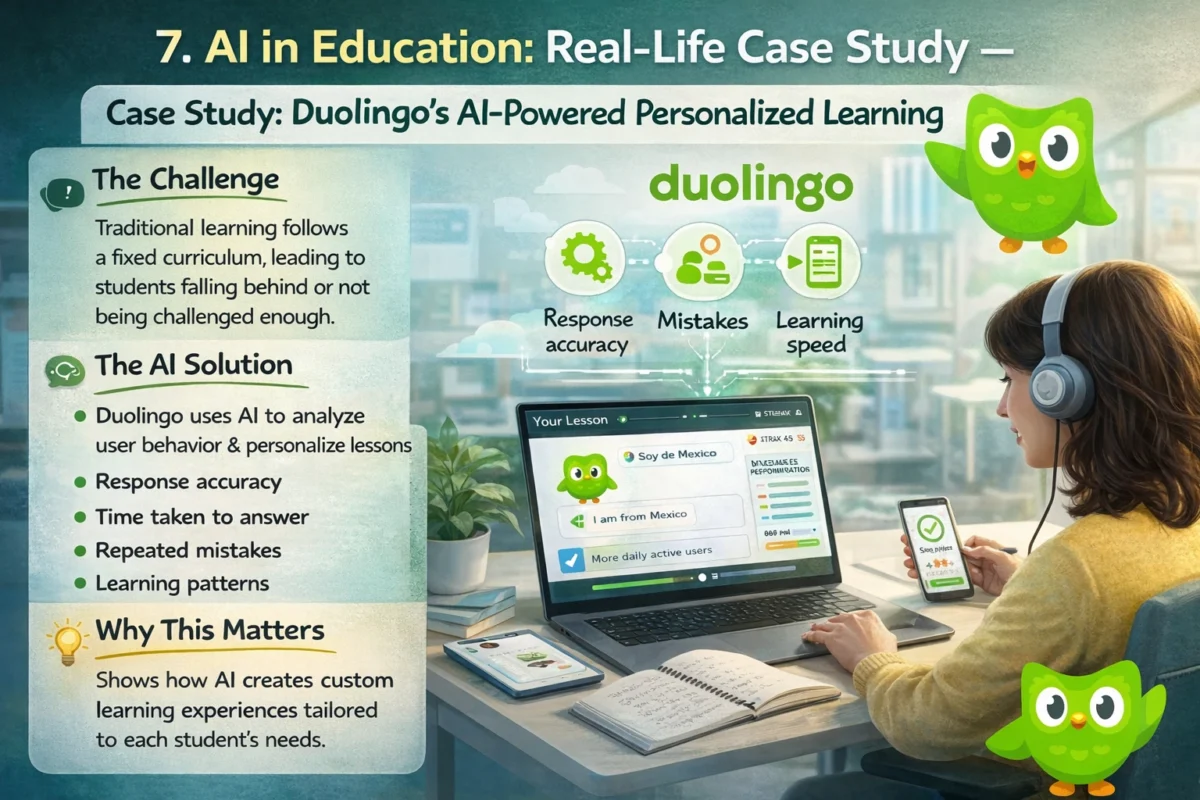
7. AI in Education
Education technology platforms are integrating AI to improve learning experiences and join the Industries Using AI the Most in 2026.
Personalized Learning Platforms
AI adapts educational content based on student performance and learning pace.
Automated Grading Systems
Teachers use AI tools to reduce grading workloads and focus more on student engagement.
Virtual Tutors and Assistants
AI-powered tutoring systems provide instant feedback and customized support.
Key Benefits of AI Across Industries
Across the Industries Using AI the Most in 2026, adoption delivers consistent advantages:
- Increased operational efficiency
- Enhanced decision-making accuracy
- Reduced human error
- Improved customer satisfaction
- Scalable business growth
Conclusion
Artificial intelligence is redefining modern business operations. Healthcare enhances patient care through AI diagnostics. Finance improves fraud detection and risk management. Retail personalizes customer experiences. Manufacturing and logistics optimize production and distribution. Marketing and education leverage AI for smarter engagement and improved outcomes.
The rapid expansion of Industries Using AI the Most in 2026 proves that AI is no longer experimental, it is foundational to competitive success. Organizations that invest in AI strategically today will define tomorrow’s digital economy.
FAQs
1) Which industries are using AI the most in 2026?
The top AI-adopting sectors in 2026 include healthcare, finance, retail, manufacturing, logistics/supply chain, marketing/advertising, and education.
2) Why is AI adoption increasing so fast across industries?
AI adoption is growing due to more available data, better machine learning models, affordable cloud infrastructure, and the need to reduce costs while improving speed and accuracy.
3) How is AI used in healthcare in 2026?
Healthcare uses AI for medical imaging analysis (MRI/CT/X-ray), early disease detection, predictive patient monitoring, drug discovery, and automating admin tasks like scheduling and billing.
4) How is AI used in finance in 2026?
Finance uses AI for fraud detection, risk scoring, credit assessment, algorithmic trading, and AI chatbots that provide 24/7 customer support and personalized guidance.
5) How is AI transforming retail businesses?
Retail uses AI for personalized product recommendations, demand forecasting, dynamic pricing, and computer-vision-based checkout systems to improve customer experience and efficiency.
Call To Action
The finance sector continues to dominate AI adoption, setting new standards for security, automation, and performance. As industries evolve, high-quality content becomes essential to stay competitive.
Start creating powerful, SEO-optimized content today with Writac and turn insights into impact.