The Pros and Cons of Artificial Intelligence: A Comprehensive Guide

AI is no longer a thing that belongs to the future, and as you can see today, AI is changing the way we interact with computers and other devices. Some examples of AI have helped improve or change the way we work in different industries through Machine Learning algorithms, Voice Recognition, and Driverless Vehicles.
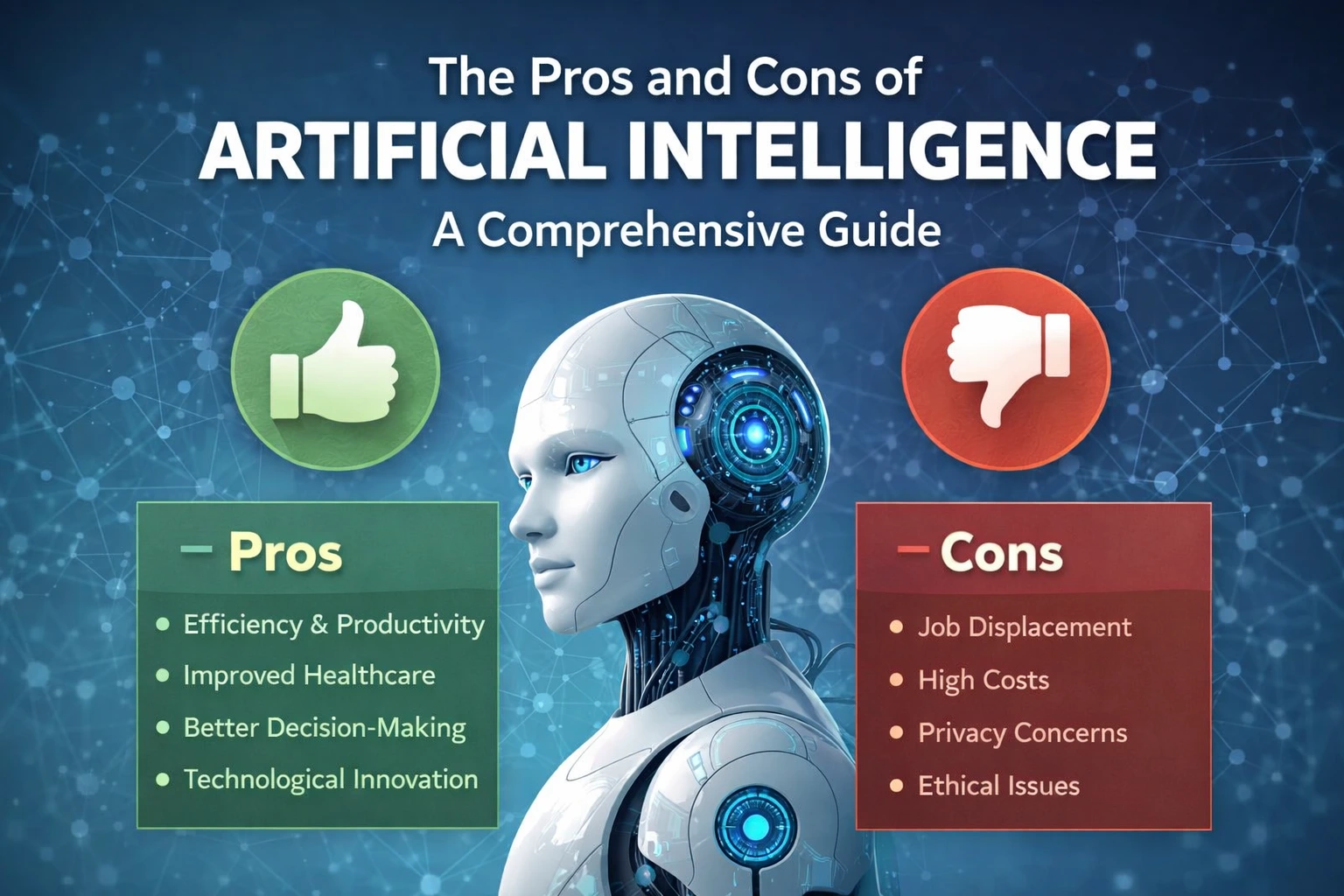
Like all new technologies, there are Pros & Cons of implementing this type of technology in our daily lives. One of the biggest advantages of using AI is that it increases Productivity & Efficiency, but there are also some Drawbacks, such as Personal Privacy Concerns.
Before everyone decides to incorporate AI technology into their business or personal life, it is important for them to educate themselves on the pros and cons of using the technology so that they can make an informed decision.
What Is Artificial Intelligence?
Artificial intelligence describes computer systems that perform tasks requiring human intelligence. Tasks generally referred to as human capabilities itself such as learning, reasoning, making good decisions, language use, etc.
Key Types of Artificial Intelligence
These kinds of AI fall into three main categories: Super AI, General AI (Strong AI), and Narrow AI (Weak AI).
1. Weak AI, also known as Narrow AI, is made expressly to carry out a single kind of task; examples include Google search engines, chatbots, and facial recognition software.
2. Any intellectual task that a human can perform could be accomplished by General AI (Strong AI). This kind of AI is still being developed and is only in the theoretical stage.
3. Super AI is more intelligent than humans. At this point, super AI is only possible through research concepts and as a subject covered in science fiction.
Pros of Artificial Intelligence
There are many benefits associated with artificial intelligence that improve how efficiently, accurately and innovatively we operate in multiple industries.
1. Enhanced productivity and efficiency
AI systems do not tire like humans do so they can produce the same quality of output around the clock.
The primary advantages of having an AI system include:
- Eliminating repetitive tasks through automation
- Minimizing human error
- Decreasing time associated with complex processes
Improving the efficiency of workflows across various industries, such as finance, manufacturing and customer support.
2. Enhanced Decision-Making
Artificial Intelligence analyzes enormous quantities of data rapidly, allowing businesses to make better-informed decisions.
Examples of AI’s contribution to decision-making:
- datasets that provide insight to support decisions
- Predictive analytics
- Rapid identification of potential problems
- Better Risk Assessment
For Financial Companies, AI is utilized to identify fraudulent activity patterns that might otherwise go unnoticed by analysts.
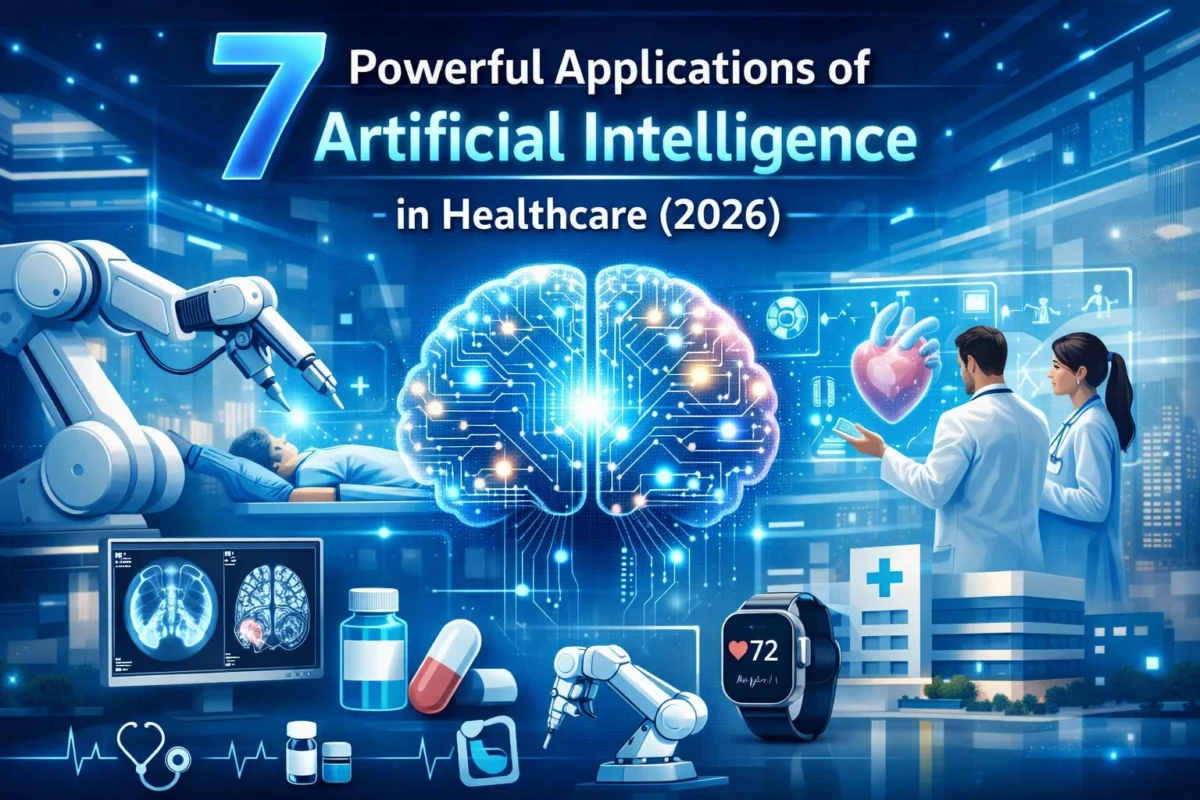
3. Making Progress in the Healthcare Industry
AI is changing the face of medicine by changing how doctors diagnose, treat and provide healthcare.
The Way AI Is Helping Healthcare:
- Early Detection of Disease
- Analysing Medical Image Data
- Personalised Treatment Plans
- Electronic Health Assistants.
Through these advances, many people are able to survive and decrease the cost of providing healthcare.
4. Enhanced Customer Experience
Through AI businesses have been able to enhance their customer experience by providing responsive and personalized interactions with customers.
These include:
- Chatbots for immediate assistance
- Product recommendations made for individual customers
- Customized marketing campaigns directed toward an individual customer
- Voice recognition technology
Businesses utilize AI as a way to strengthen their relationship with consumers.
5. Innovation and Growth from Technology
AI has opened up avenues of innovative ideas throughout every business sector; enabling businesses to create new technology and establish new ways of doing things within their market.
As an example, AI has created opportunities for:
- Self driving automobiles
- Smart cities
- Robotics
- significant advancements in the field of scientific research.
Innovation generated by AI has generated economic growth and enabled businesses to be more competitive.
Cons of Artificial Intelligence
Despite its advantages, AI also presents significant concerns that must be addressed.
1.Job Losses and Unemployment
AI has raised serious concerns related to job loss and unemployment.
The major challenges are with:
- Technology replacing low-skilled workers
- Less need for low-skilled workers
- Those who need to learn new skills
Though there will be an increase in job opportunities created by AI, the transition to these new positions will be challenging for some workers.
2.High Costs of Developing and Maintaining AI Systems
Developing and maintaining AI systems takes a large financial investment.
Some of the financial concerns around AI systems are:
- Cost of maintaining infrastructure
- Lack of qualified workers
- Having to continuously update systems
- High rates of energy consumption
Small businesses may find difficulty in implementing AI systems due to the costs associated with these systems.
3. AI does not possess genuine creativity or emotional intelligence
Some of the limitations include:
- AI does not demonstrate empathy or moral reasoning.
- AI cannot fully comprehend human emotion.
- AI depends on data patterns to generate desired outputs.
Because of these limitations, AI is generally not appropriate in tasks that require empathy or ethical judgement.
4. Privacy Risks and Security of Data
Documents on Artificial Intelligence contain sensitive data, and their collection allows individuals to suspect that their privacy is being compromised or threatened.
Examples of possible risks include:
- Data Breaches
- Improper Use of Personal Information
- Utilization of Surveillance Equipment
- Data Handling Discrimination
The development of comprehensive regulations and the establishment of best practices is needed to alleviate any problem arising from these types of risks.
5. Biases and Ethics
AI systems learn from their training data, which can carry those same biases contained within them.
Ethical challenges associated with AI include:
- Dishonest or Biased Recruiting Algorithm
- Facial Recognition/Profiling Bias
- Unfair or Discriminatory Practices
- A Lack of Transparency
Maintaining AI’s Fairness and Accountability Is Still a Big Challenge
The responsible development of AI systems, ethical usage guidelines, and upholding a close relationship between humans and machines will determine the future of AI, which will continue to advance into our daily lives.
Significant Upcoming Developments Include:
- AI as a Collaborator (instead of a Substitute)
- AI’s Ethical Development (with Fairness and Transparency in Algorithms)
- The establishment of AI regulations (mandated by the government to ensure the safe application of AI)
- AI in Education (offering Tailored Learning Opportunities)
Promoting human welfare while reducing the risks related to AI use is the ultimate goal.
Conclusion
Artificial intelligence is a potent instrument that has the capacity to improve the world. It is indisputable that it can boost decision-making, increase productivity, and spur innovation. But issues like data privacy, ethical dilemmas, and job displacement cannot be disregarded.
People and organizations can use AI responsibly and strategically if they are aware of its advantages and disadvantages. The key to the future is to use AI responsibly, with people at the center of innovation, rather than to be afraid of it.
FAQs
1. What are the main advantages of artificial intelligence?
AI improves efficiency, reduces errors, enhances decision-making, automates tasks, and drives innovation across industries.
2. What are the biggest disadvantages of AI?
Job displacement, high costs, data privacy risks, ethical issues, and lack of emotional intelligence are major concerns.
3. Will artificial intelligence replace human jobs?
AI will replace some jobs but also create new opportunities. Reskilling and adaptation are key to staying relevant.
4. Is artificial intelligence safe to use?
AI is safe when developed and used responsibly, with strong security measures and ethical guidelines in place.
5. How can businesses benefit from artificial intelligence?
Businesses can use AI to improve customer experience, optimize operations, reduce costs, and gain data-driven insights.
One thought on “The Pros and Cons of Artificial Intelligence: A Comprehensive Guide”