AI in Oncology: How AI is Transforming Early Cancer Detection and Prevention

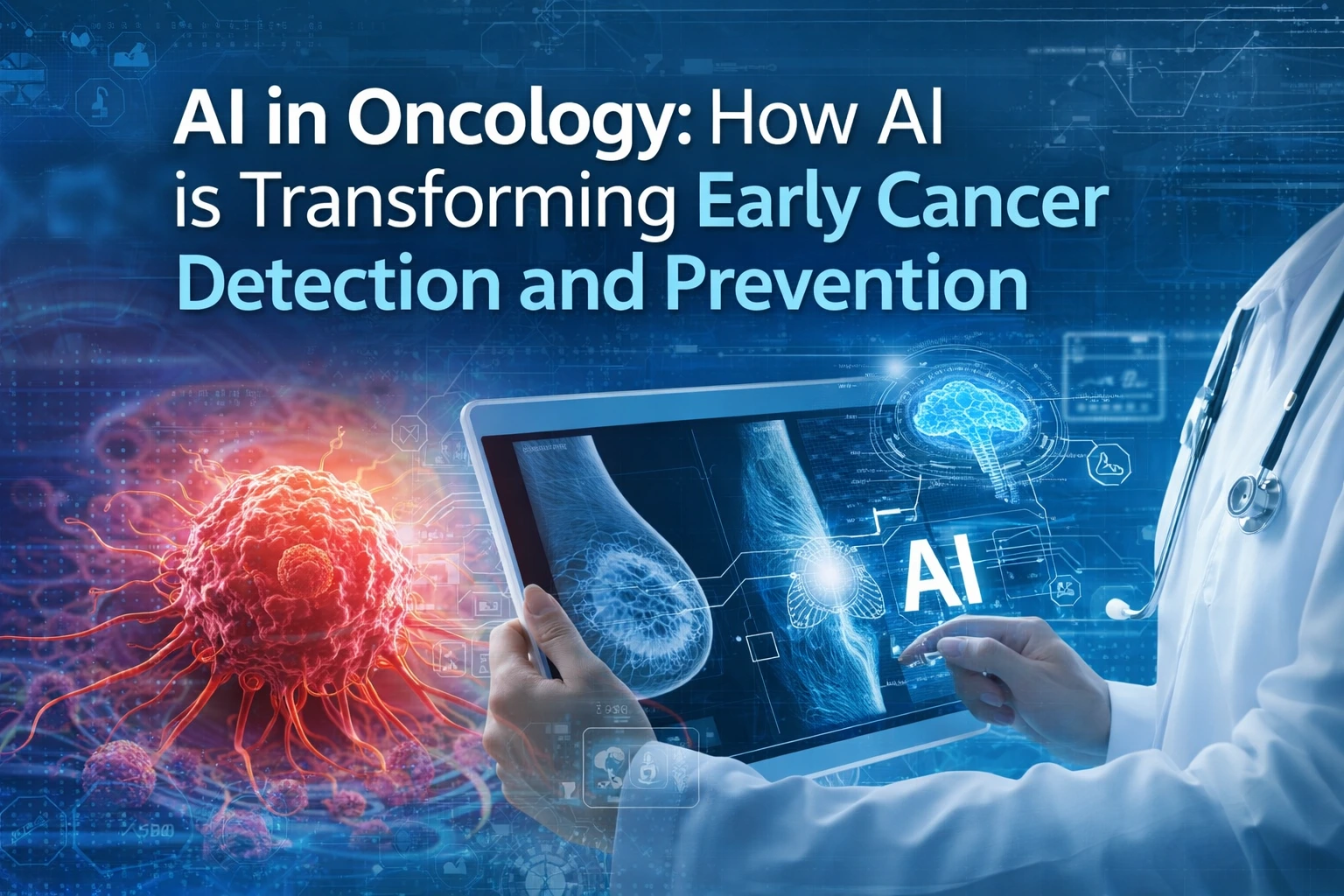
Can artificial intelligence truly change the way we detect and prevent cancer before it becomes life-threatening? In the UK, where cancer continues to impact millions of lives, early diagnosis remains the most powerful tool for survival. The emergence of AI in Oncology is not just a technological trend, it’s a major shift in how healthcare professionals approach cancer detection, diagnosis and prevention.
From analyzing complex medical images to predicting cancer risks before symptoms appear, AI is transforming oncology into a faster, smarter and more proactive field. Let’s explore how this innovation is reshaping the future of cancer care.
Understanding AI in Oncology
AI in Oncology refers to the use of artificial intelligence technologies, such as machine learning, deep learning and data analytics, to assist in cancer care. These systems are designed to process massive datasets, identify patterns and provide insights that support clinical decisions.
In the UK, the NHS is actively investing in AI-driven healthcare solutions. From pilot programmers in hospitals to nationwide screening improvements, AI is becoming an integral part of modern oncology.
Unlike traditional methods, AI doesn’t rely solely on human observation. It learns from data continuously, improving accuracy and efficiency over time.
How AI is Revolutionising Early Cancer Detection
Early detection is critical because it significantly increases survival rates. AI-powered cancer detection tools are making this process faster, more accurate and more accessible.
1. Advanced Imaging and Scan Analysis
AI can analyze imaging data with exceptional precision. This includes:
- Mammograms for breast cancer
- CT scans for lung cancer
- MRIs for brain and prostate cancers
AI systems can detect even the smallest abnormalities that may go unnoticed by the human eye. In the UK, studies have shown that AI-assisted breast cancer screening improves detection rates while reducing unnecessary recalls.
2. Reducing Diagnostic Errors
Human error is inevitable, especially under pressure. AI acts as a second set of eyes, helping clinicians:
- Double-check scan results
- Highlight suspicious areas
- Reduce false positives and negatives
This improves confidence in diagnosis and ensures patients receive timely treatment.
3. Speeding Up Diagnosis
AI significantly reduces the time it takes to analyze medical data. Instead of waiting days for results, AI can process information in minutes, allowing for:
- Faster referrals
- Quicker treatment decisions
- Reduced patient anxiety
For the NHS, this efficiency helps manage growing patient demand.
Predictive Power: AI in Cancer Risk Assessment
One of the most exciting aspects of AI in Oncology is its ability to predict cancer risk before it develops.
Data-Driven Risk Analysis
AI systems can analyze multiple factors, including:
- Genetic information
- Lifestyle habits
- Medical history
- Environmental exposure
By combining these data points, AI can identify individuals at higher risk and recommend early screening.
Personalised Screening Programmes
Instead of a one-size-fits-all approach, AI enables tailored screening schedules. For example:
- High-risk individuals may receive earlier or more frequent screenings
- Low-risk individuals avoid unnecessary procedures
This approach not only improves outcomes but also optimizes NHS resources.
AI in Cancer Prevention
Prevention is the ultimate goal and AI is helping shift healthcare from reactive to proactive.
Lifestyle and Behaviour Monitoring
AI-powered apps and wearable devices can track:
- Physical activity
- Diet patterns
- Sleep quality
- Vital signs
These tools provide insights that help individuals make healthier choices, reducing cancer risk.
Early Warning Systems
AI can detect subtle changes in health data that may indicate early signs of disease. This allows for:
- Timely medical intervention
- Continuous health monitoring
- Improved patient awareness
Benefits of AI in Oncology for Patients and Healthcare Systems
The impact of AI in oncology gout directly improves patient care.
Key Advantages
- Higher Accuracy: AI reduces misdiagnosis and improves detection rates
- Faster Results: Speeds up the entire diagnostic process
- Cost Efficiency: Helps the NHS allocate resources more effectively
- Personalized Care: Tailors treatment and prevention plans
- Better Outcomes: Early detection leads to higher survival rates
For patients in the UK, this means quicker diagnoses, less uncertainty and more effective treatment options.
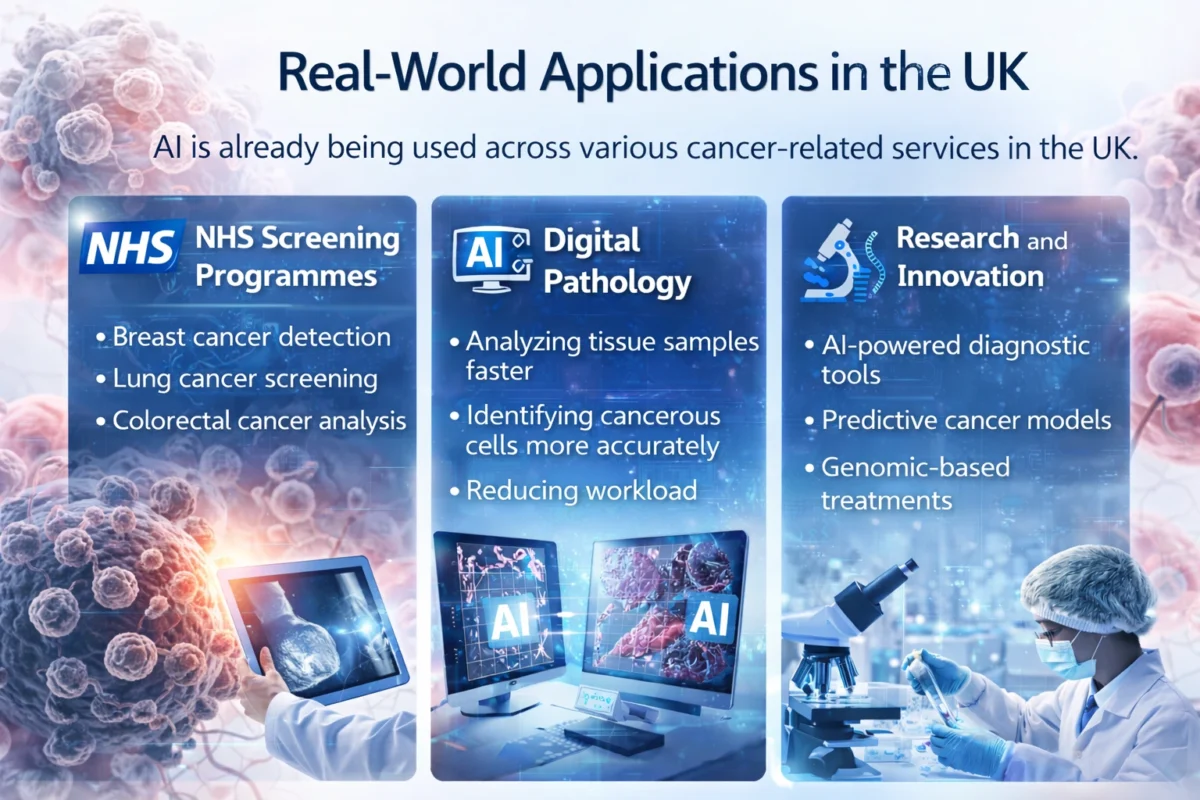
Real-World Applications in the UK
AI is already being used across various cancer-related services in the UK.
NHS Screening Programmes
AI tools are helping improve screening accuracy in:
- Breast cancer detection
- Lung cancer screening
- Colorectal cancer analysis
Digital Pathology
AI is assisting pathologists by:
- Analyzing tissue samples faster
- Identifying cancerous cells more accurately
- Reducing workload
Research and Innovation
UK-based research institutions are leading global advancements in:
- AI-powered diagnostic tools
- Predictive cancer models
- Genomic-based treatments
Challenges and Limitations of AI in Oncology
Despite its potential, AI in oncology comes with challenges that must be addressed.
Data Privacy and Security
Handling sensitive patient data requires strict compliance with UK regulations such as GDPR. Maintaining trust is essential.
Bias in AI Systems
If AI models are trained on limited or biased data, they may produce inaccurate results. Ensuring diverse and high-quality datasets is critical.
Need for Human Oversight
AI is a powerful tool, but it cannot replace human judgement. Clinicians must interpret AI findings and make final decisions.
The Future of AI in Oncology
The future of AI in Oncology is incredibly promising. Emerging technologies are expected to take cancer care to the next level.
Upcoming Innovations
- AI-driven liquid biopsies for early detection
- Integration with genomic medicine for personalized treatments
- Real-time monitoring of tumor progression
- Automated clinical decision support systems
As these technologies evolve, they will make cancer detection earlier, treatment more precise and prevention more effective.
Why AI in Oncology Matters More Than Ever
Cancer cases in the UK are rising, putting pressure on healthcare systems. AI offers a scalable solution that can:
- Handle increasing patient volumes
- Improve diagnostic efficiency
- Reduce waiting times
- Enhance patient outcomes
This makes AI not just an innovation, but a necessity for the future of healthcare.
Conclusion
AI in Oncology is transforming the way we approach cancer, from early detection to prevention and treatment. By combining advanced technology with medical expertise, AI is helping clinicians detect cancer earlier, predict risks more accurately and provide personalized care.
For patients in the UK, this means better chances of survival, faster diagnoses and a more proactive approach to health. While challenges remain, the potential of AI in oncology is undeniable and its impact will only continue to grow.
FAQs
1. What is AI in Oncology?
AI in Oncology refers to the use of artificial intelligence to improve cancer detection, diagnosis, treatment and prevention.
2. How does AI detect cancer early?
AI analyses medical images and patient data to identify early signs of cancer that may not be visible to the human eye.
3. Is AI used in the UK healthcare system?
Yes, the NHS is actively using AI tools in cancer screening and diagnostics.
4. Can AI prevent cancer completely?
No, but it helps identify risk factors and supports early intervention to reduce the chances of developing cancer.
5. Is AI safe for patient data?
Yes, in the UK, strict data protection laws like GDPR ensure patient data is handled securely.
Call to Action
Want to stay updated on the latest breakthroughs in AI in Oncology and emerging technologies? Visit Writac.com today and explore expert insights that keep you ahead in the future of healthcare.