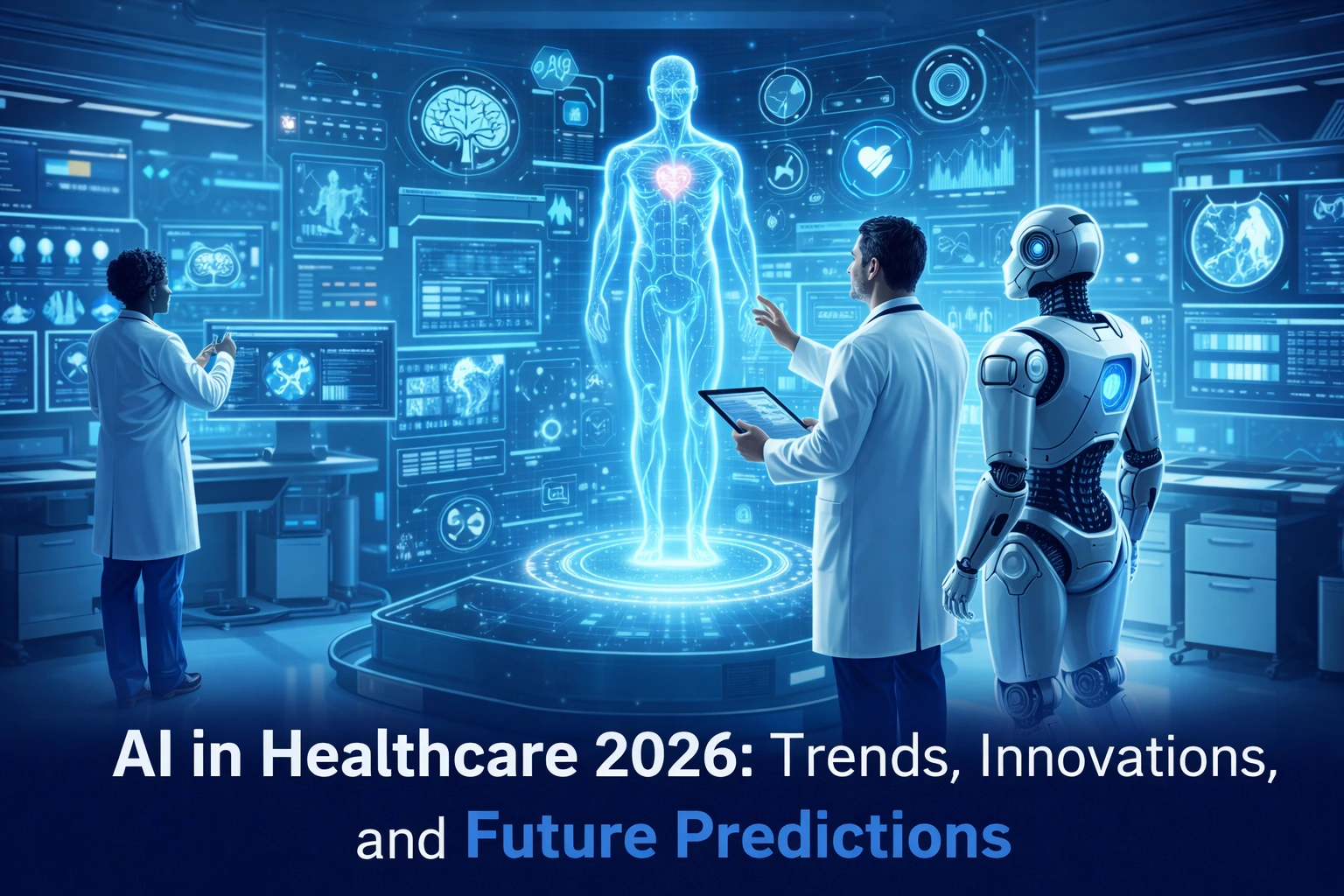

If you are connected to any healthcare department or closely following healthcare technology, you’ve probably noticed one thing: AI is no longer something of the future , it has become a part of everyday life today. By 2026, when we visit a doctor, they often work alongside AI to make life-changing decisions that truly surprise us.
Think about it. Faster diagnoses. Smarter treatment plans. Care that feels more personal instead of one-size-fits-all.AI in Healthcare 2026 is driving a shift toward a system that is more data-driven, more proactive, and more focused on patients than ever before.
After years of writing about digital health and technology trends, I can say this with confidence: this wave feels different. This isn’t hype. AI is already delivering real, measurable impact in hospitals, clinics, and patient care.
In this blog, I’ll share the most important AI-powered healthcare trends of 2026, the practical innovations already being used today, and honest predictions about the future of healthcare. No flashy buzzwords or empty promises , just practical, real-world insights you can actually use, whether you work in healthcare, love technology, or are simply curious about the future of medicine.
Why AI in Healthcare Matters in 2026
Healthcare systems worldwide are under pressure:
- Growing patient numbers
- Shortage of medical professionals
- Rising costs
- Increasing complexity of diseases
This is where AI steps in, not to replace doctors, but to support better decisions.
When people ask me how AI is transforming healthcare, I usually explain it this way:
AI helps clinicians see patterns humans simply can’t spot fast enough.
By 2026, AI is helping healthcare move from:
- Reactive care → Preventive care
- One-size-fits-all → Personalized medicine
- Manual processes → Intelligent automation
Example: Why AI in Healthcare 2026
Imagine a busy hospital in 2026. The emergency room is full, doctors are moving fast, and every decision matters. A patient arrives with chest pain. Instead of waiting for multiple tests to be reviewed manually, an AI system quickly analyzes the patient’s symptoms, medical history, and vital signs. Within seconds, it flags the case as high risk.
The doctor gets an alert and acts immediately. Treatment starts earlier, complications are avoided, and the patient has a better chance of recovery.
At the same time, AI is working quietly in the background. It updates patient records, schedules follow-up tests, and even reminds the care team about medication timings. The doctor spends less time on paperwork and more time with the patient.
This is why AI in healthcare matters in 2026. It doesn’t replace human judgment , it supports it, helping healthcare teams respond faster, work smarter, and provide better care when it matters most.
Key AI in Healthcare Trends 2026 You Should Know
Let’s break down the most important trends shaping the future right now.
1. AI-Powered Diagnostics Are Becoming Standard
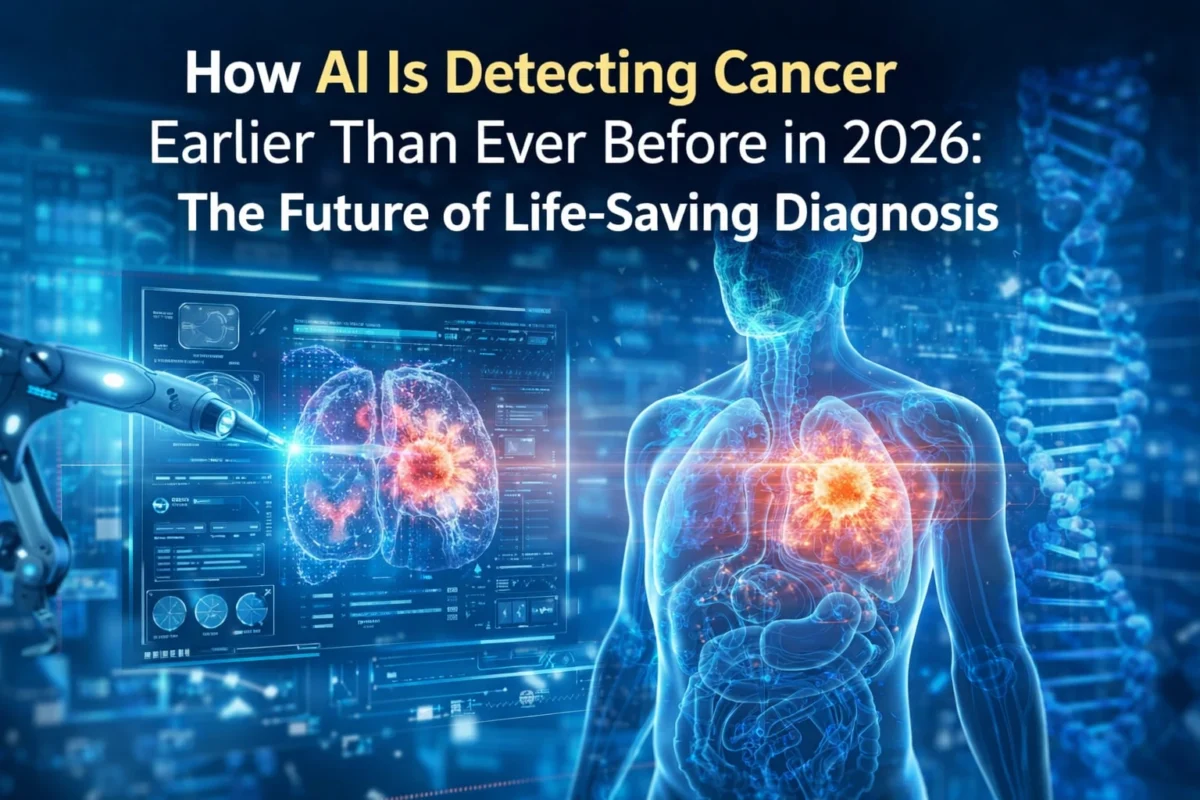
Medical imaging is one of the strongest AI applications in healthcare, and by AI in Healthcare 2026, it’s no longer optional, it’s becoming standard practice in many hospitals.
AI tools are now widely used for:
- Detecting cancer in X-rays and MRIs
- Identifying early heart disease risks
- Spotting early signs of neurological disorders
What’s truly impressive is accuracy. In many cases, AI systems can detect abnormalities earlier than the human eye, giving doctors a critical head start on treatment.
Real insight:
Hospitals using AI-assisted imaging in AI in Healthcare 2026 are reporting faster diagnosis times and fewer errors, which directly leads to better patient outcomes and more confident clinical decisions. patient outcomes.
2. Predictive Analytics for Early Disease Detection
One of the most exciting AI innovations in healthcare is predictive analytics.
Instead of waiting for symptoms, AI systems analyze:
- Patient history
- Genetic data
- Lifestyle patterns
- Wearable device data
This allows healthcare providers to predict:
- Risk of chronic diseases
- Potential complications
- Hospital readmission chances
By 2026, predictive AI is becoming a core tool in preventive healthcare.
3. Personalized Medicine Powered by AI
This is where AI really shines.
Traditional treatment plans are often based on averages. AI changes that by tailoring treatment to individual patients.
AI helps with:
- Drug recommendations based on genetics
- Personalized cancer therapies
- Customized mental health treatment plans
This approach improves effectiveness and reduces side effects , a clear example of the benefits of AI in healthcare that patients actually feel.
How AI Is Transforming Healthcare Operations
AI isn’t just helping doctors, it’s also fixing behind-the-scenes problems that most patients never see.
4. Smarter Hospital Operations and Automation
Administrative tasks eat up a shocking amount of time.
In 2026, AI is widely used for:
- Automating appointment scheduling
- Managing hospital resources
- Handling billing and insurance claims
- Optimizing staff workloads
Personal observation:
Healthcare professionals consistently say automation gives them more time for patient care ,which is exactly where human expertise matters most.
5. AI Virtual Assistants and Remote Patient Care
Virtual health assistants have matured a lot.
They now:
- Answer patient questions
- Monitor chronic conditions
- Send medication reminders
- Flag concerning symptoms
Combined with remote monitoring devices, AI allows doctors to care for patients outside hospital walls, a trend that’s only growing.
Table 1: Traditional Healthcare vs AI-Driven Healthcare (2026)
| Aspect | Traditional Healthcare | AI in Healthcare 2026 |
| Diagnosis speed | Slower, manual review | Faster with AI-assisted analysis |
| Accuracy | Depends on human judgment | Higher accuracy with data-driven insights |
| Treatment approach | One-size-fits-all | Personalized treatment plans |
| Preventive care | Limited and reactive | Predictive and preventive |
| Administrative work | Time-consuming paperwork | Automated scheduling & documentation |
| Patient experience | Longer wait times | Faster, more efficient care |
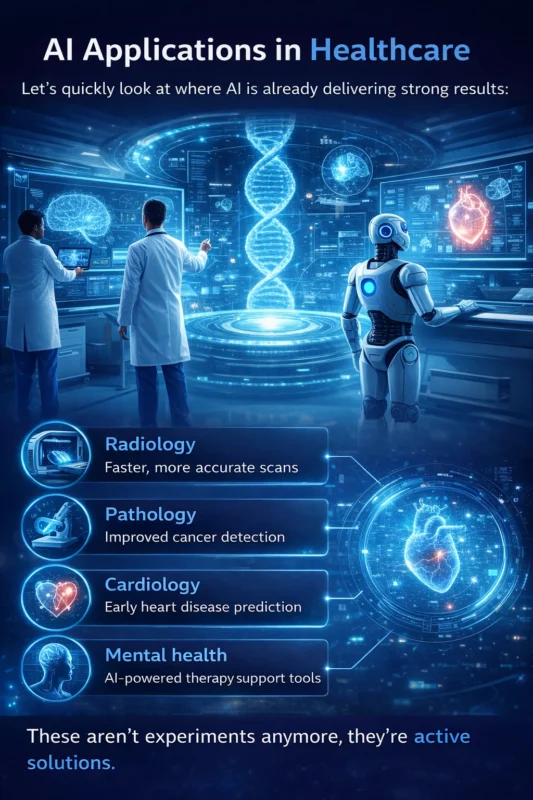
AI Applications in Healthcare
Let’s quickly look at where AI is already delivering strong results:
- Radiology: Faster, more accurate scans
- Pathology: Improved cancer detection
- Cardiology: Early heart disease prediction
- Mental health: AI-powered therapy support tools
- Drug discovery: Faster research and development
These aren’t experiments anymore , they’re active solutions.
Benefits of AI in Healthcare
After years of covering this space, these are the biggest advantages I see:
- Faster diagnosis and treatment
- Reduced human error
- Lower healthcare costs over time
- Better patient engagement
- Improved access to care in remote areas
When used responsibly, AI helps healthcare become more human, not less.
Challenges Still Facing AI in Healthcare
- Data privacy and security concern
- Bias in training data
- Regulatory approval delays
- Integration with legacy systems
That said, healthcare organizations are addressing these issues faster than many expected. Ethical frameworks and regulations are improving alongside the technology.
Future of Artificial Intelligence in Healthcare: What to Expect Beyond 2026
Looking ahead, here’s what I believe is coming next:
- AI will act as a trusted clinical partner, not just a tool
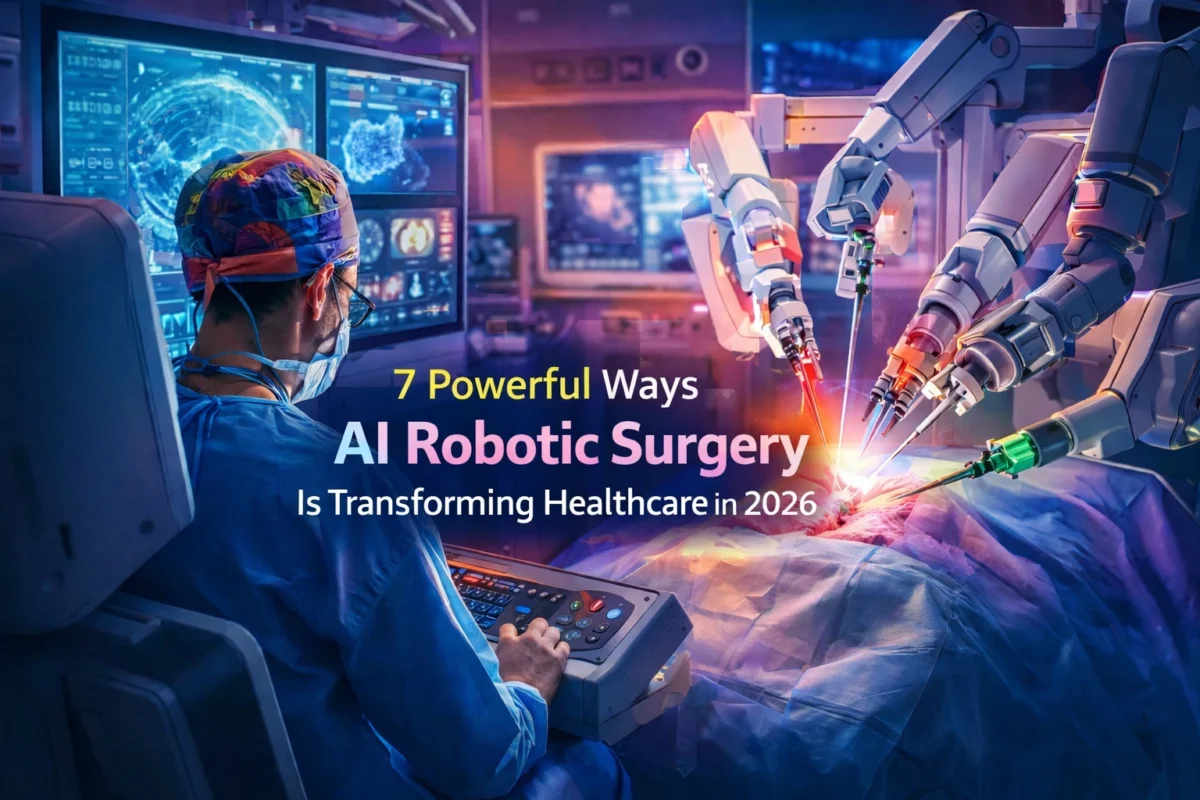
- Real-time AI decision support during surgeries
- Wider use of generative AI for clinical documentation
- Stronger focus on ethical and transparent AI models
The future of artificial intelligence in healthcare isn’t about replacing professionals, it’s about amplifying their expertise.
Final Thoughts: AI in Healthcare 2026 Is Just the Beginning
AI in Healthcare 2026 marks a turning point. We’ve moved past experimentation into meaningful adoption. The technology is improving outcomes, reducing strain on healthcare workers, and opening doors to smarter, more personalized care.
From diagnostics to operations, from prevention to treatment, AI is quietly reshaping healthcare in ways that truly matter. And honestly, this is one of the most exciting areas to watch over the next few years.
Want to stay ahead of AI and healthcare trends?
Explore more expert-written insights, practical guides, and future-focused content on Writac, where technology meets real-world impact.
FAQs: AI in Healthcare 2026
1. What is AI in healthcare?
AI in healthcare refers to using artificial intelligence technologies to assist in diagnosis, treatment, patient care, and healthcare management.
2. How is AI transforming healthcare in 2026?
AI is improving diagnostics, enabling personalized medicine, automating operations, and supporting remote patient monitoring.
3. What are the main benefits of AI in healthcare?
Key benefits include faster diagnosis, reduced errors, cost efficiency, personalized treatments, and better patient outcomes.
4. Is AI replacing doctors in healthcare?
No. AI supports doctors by providing insights and automation, but human expertise remains essential.
5. What is the future of AI in healthcare?
The future includes more predictive care, ethical AI frameworks, advanced decision support, and deeper integration into daily healthcare workflows.