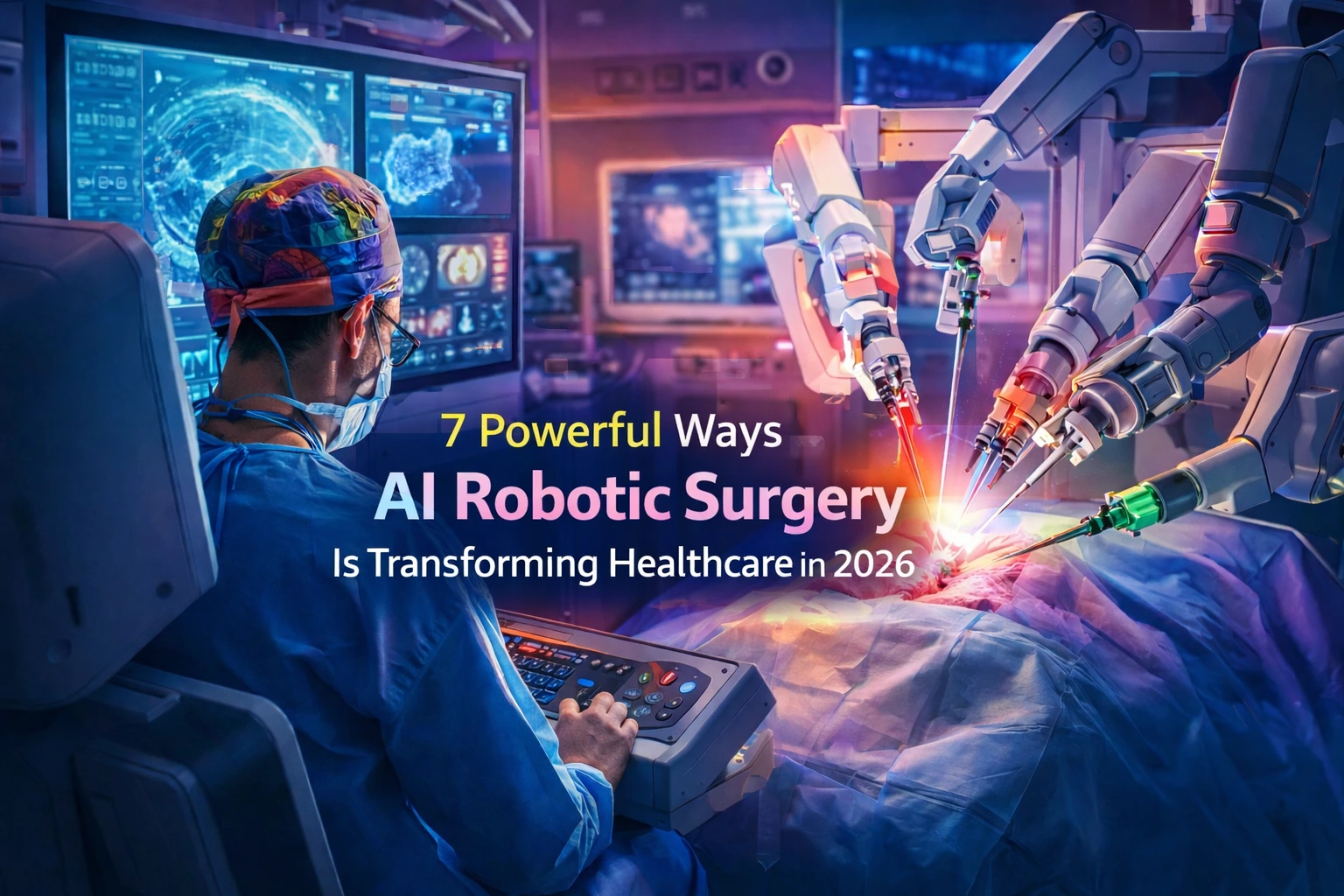
7 Powerful Ways AI Robotic Surgery Is Transforming Healthcare in 2026

Walk into a modern hospital in 2026, and it’s clear that surgery has entered a new era. Skilled surgeons are still at the center of every procedure, but they are now supported by intelligent systems designed to improve precision and reduce risk. At the heart of this transformation is AI Robotic Surgery, one of the most important advances in AI in healthcare today. Over the past decade, rapid progress in robotics and machine learning in surgery has quietly reshaped operating rooms worldwide. As AI surgical robots become more advanced, one question remains: replacement or smarter collaboration?
What Is AI Robotic Surgery?
At its core, AI Robotic Surgery combines advanced robotic tools with intelligent software that assists surgeons during medical procedures. The robot does not replace the doctor. Instead, it translates the surgeon’s hand movements into smaller, steadier, and more controlled actions.
Unlike early robotic platforms that functioned only as mechanical tools, modern systems use machine learning in surgery to analyze data in real time. They can recognize patterns, provide visual guidance and even alert the surgical team to potential risks.
These systems typically include:
- High-definition 3D imaging
- Precision robotic arms
- Data-driven surgical planning software
- Real-time monitoring tools
The result is a surgical environment that feels less reactive and more proactive.
Comparison: Traditional Surgery vs AI Robotic Surgery in 2026
| Feature | Traditional Surgery | AI Robotic Surgery in 2026 |
|---|---|---|
| Precision | Depends entirely on surgeon’s hand stability | Robotic arms reduce tremors and allow micro-level precision |
| Visualization | Standard 2D or limited magnification | High-definition 3D imaging with enhanced magnification |
| Error Detection | Manual monitoring by surgical team | Real-time alerts and predictive risk detection |
| Recovery Time | Often longer due to larger incisions | Shorter recovery with minimally invasive techniques |
| Fatigue Impact | Surgeon performance may decline during long procedures | Robotic systems maintain steady performance throughout |
| Data Usage | Based on surgeon’s past experience | Uses machine learning to analyze thousands of previous cases |
| Remote Capability | Rare and limited | Supports remote guidance and tele-assisted surgery |
| Consistency | Varies by individual skill | Highly consistent instrument control and movement |
The Rise of Smart Operating Rooms
Operating rooms today are evolving into fully connected ecosystems. With AI Robotic Surgery, it’s no longer just about robotic arms, it’s about smart surgical environments built to improve safety, precision, and patient outcomes.
Clearer Surgical Vision
- Surgeons can now see inside the body in sharp 3D detail.
- Small nerves and blood vessels that were once hard to spot are much clearer.
- Better visibility helps doctors work more carefully and confidently.
- Clear images often mean fewer mistakes and smoother procedures.
Real-Time Monitoring
- The system keeps checking the patient’s vital signs throughout the surgery.
- If something changes suddenly, the team is informed right away.
- Quick alerts allow doctors to act without delay.
- This helps prevent small issues from becoming serious problems.
Predictive Risk Detection
- The system looks at live data and compares it with past surgeries.
- If something unusual shows up, it warns the surgical team early.
- Doctors can adjust their approach before complications grow.
- Surgery becomes more about prevention than emergency reaction.
1. Precision That Protects Patients
Reduces natural hand tremors for smoother and steadier movements.
Converts hand motions into highly precise micro-level actions.
Minimizes unintended tissue damage during delicate procedures.
Improves overall surgical accuracy and patient safety.
Case Study: Precision in Cardiac Surgery at a UK Hospital
At a leading NHS hospital in London, a 58-year-old patient underwent a complex heart valve repair requiring extreme precision.
Surgeons used an AI-assisted robotic system to improve stability during the procedure.
The technology reduced natural hand tremors and allowed more controlled movements around delicate cardiac tissue.
The operation was completed with minimal tissue damage and lower blood loss.
The patient recovered smoothly and was discharged earlier than expected.
This case highlights how robotic-assisted precision can enhance surgical safety and improve patient outcomes within the UK healthcare system.
2. Fewer Errors During Long Operations
- Long surgeries can lead to fatigue.
- Robots maintain steady performance.
- Movement stabilization reduces tremors.
- Real-time alerts warn of risks.
- This helps prevent avoidable errors.
If you want slightly stronger wording, I can adjust it..
3. Faster Recovery Through Minimally Invasive Surgery
One of the strongest AI-assisted surgery benefits is its role in minimally invasive surgery. Smaller incisions typically lead to:
- Less bleeding
- Reduced pain
- Lower infection risk
- Shorter hospital stays
Patients often return to normal routines faster compared to traditional open surgery. For many families, that shorter recovery time is life-changing.
4. Smarter Decision Support
- Modern systems analyze large amounts of medical data within seconds.
- They compare ongoing procedures with past surgical outcomes.
- AI tools provide insights to support better decision-making.
Example:
- Analyzes the patient’s unique anatomy in real time.
- Compares the current procedure with thousands of similar past cases.
- Identifies patterns from successful surgical outcomes.
- Suggests the safest and most precise incision path.
- Reduces the risk of damaging nearby nerves or blood vessels.
- Displays recommendations on screen while the surgeon makes the final decision.
Case Study:
At a hospital in Manchester, a patient undergoing kidney surgery had an unusually positioned blood vessel near the treatment area. The AI-supported system flagged a safer incision route based on similar past cases. The surgeon adjusted the approach accordingly, avoiding complications and completing the procedure smoothly. The patient recovered without any unexpected issues.
5. Expanding Global Access to Expert Care
Remote assistance makes complex procedures safer and more accessible.
AI Robotic Surgery in 2026 includes advanced remote capabilities.
Specialists can guide procedures through secure and stable networks.
The primary surgeon remains beside the patient during the operation.
6. Transforming Surgical Education
The way young surgeons are trained is changing rapidly.
Realistic simulation systems now let trainees practice in lifelike surgical settings.
They can repeat complex procedures safely, without putting real patients at risk.
The system gives clear feedback on what went well and what needs improvement.
7. Continuous Learning and Improvement
Every surgery generates valuable data.
Over time, patterns help improve best practices.
Hospitals use trends to enhance patient outcomes.
AI Robotic Surgery systems improve through updates and larger datasets.
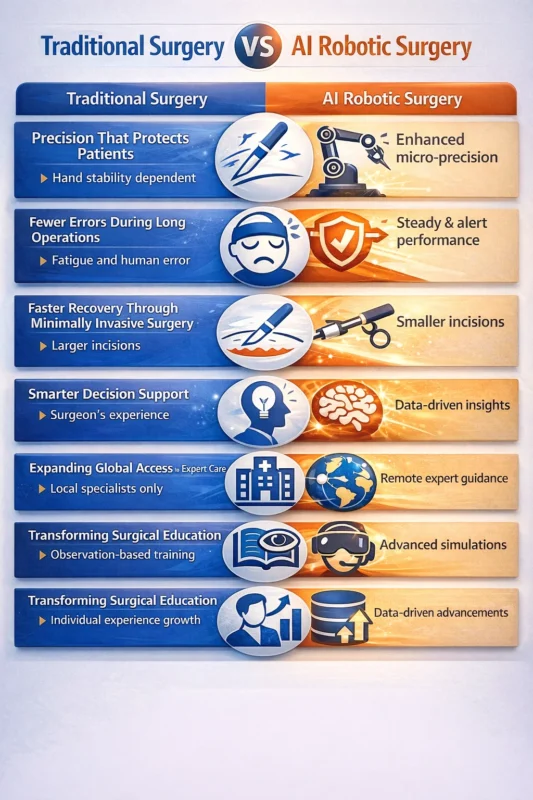
Comparison: Traditional Surgery vs AI Robotic Surgery
| Key Area | Traditional Surgery | AI Robotic Surgery |
| 1. Precision That Protects Patients | Depends fully on surgeon’s hand stability | Robotic systems reduce tremors and enhance micro-precision |
| 2. Fewer Errors During Long Operations | Fatigue may affect performance over time | Consistent performance with movement stabilization and alerts |
| 3. Faster Recovery Through Minimally Invasive Surgery | Larger incisions often required | Smaller incisions with reduced tissue damage |
| 4. Smarter Decision Support | Based mainly on surgeon’s experience | Data-driven insights using machine learning |
| 5. Expanding Global Access to Expert Care | Limited to local specialist availability | Remote guidance through secure robotic systems |
| 6. Transforming Surgical Education | Learning through observation and practice | AI-powered simulations with performance tracking |
| 7. Continuous Learning and Improvement | Improvement depends on individual experience | Systems improve through data updates and software learning |
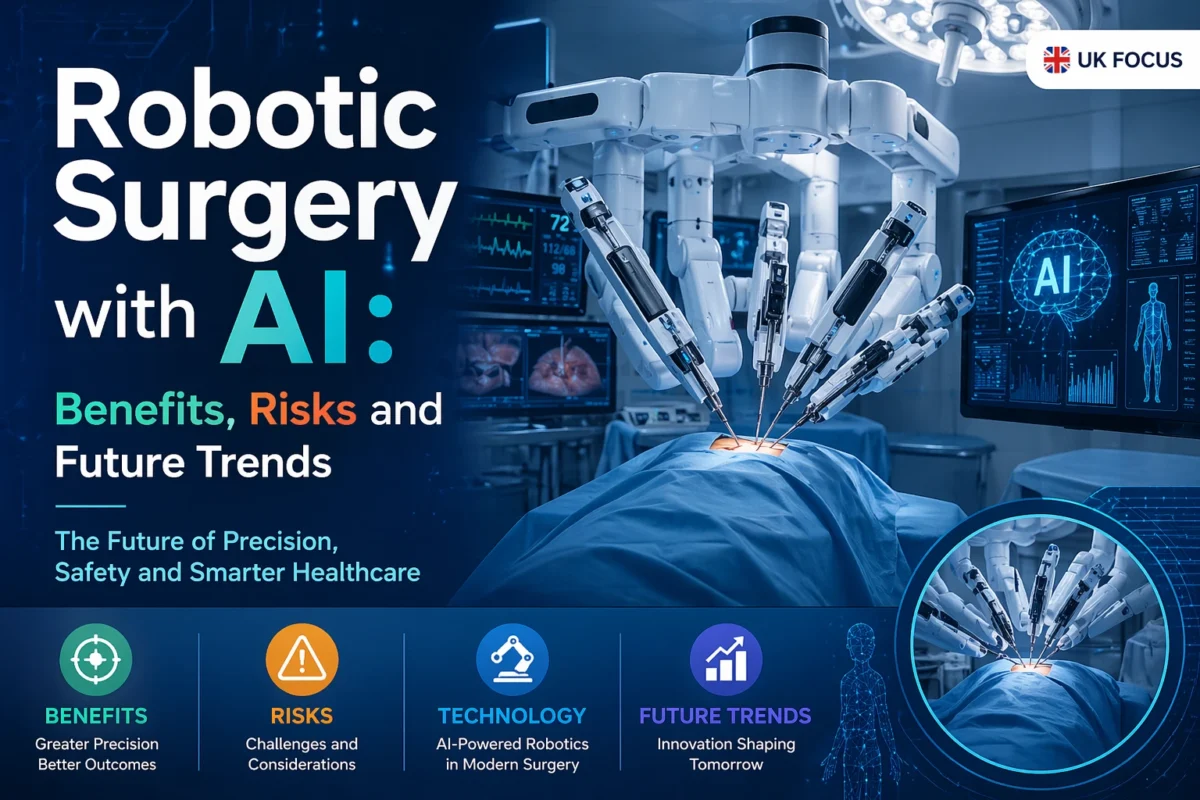
Economic Growth and Industry Expansion
About 10 to 15 years ago, AI robotic surgery was not very common. Doctors and hospitals that are now using AI robotic surgery to treat patients have seen significant improvements in patient outcomes.
Although this technology is more expensive, treatment is often faster, recovery time is shorter, and less of the patient’s time is wasted. Many people prefer surgeries with minimal or no large cuts, and because AI robotic surgery supports minimally invasive procedures, its demand is increasing rapidly.
Will AI Replace Surgeons?
It’s a common concern , but the answer is NO. Surgery requires judgment, empathy, and adaptability. Unexpected complications demand creative thinking. Ethical decisions require human understanding. AI surgical robots enhance performance. They do not replace responsibility. The future lies in partnership , not replacement.
Conclusion
AI Robotic Surgery Over time, AI has begun to play a very important role in our lives. There are many tasks that take humans a lot of time to complete, but robots can perform those same tasks faster and more efficiently.
The issue is not about robots replacing humans; rather, it is about progress and advancement.
FAQs
1. What is AI Robotic Surgery?
AI Robotic Surgery is a medical procedure that combines artificial intelligence with robotic systems to assist surgeons during operations. These systems enhance precision, provide real-time data analysis, and support safer minimally invasive procedures.
2. Is AI Robotic Surgery safe for patients?
Yes. When supervised by trained surgeons, AI-powered robotic systems improve accuracy, reduce human error, and lower complication rates. Safety protocols and real-time monitoring further enhance patient protection.
3. Will AI replace human surgeons in the future?
No. AI is designed to assist, not replace, surgeons. While AI can analyze data and improve precision, human judgment, ethical decision-making, and experience remain essential in surgical care.
4. What are the main benefits of AI-assisted surgery?
Key benefits include greater precision, reduced blood loss, faster recovery times, smaller incisions, lower infection risk, and continuous improvement through machine learning technology.
5. How is robotic surgery expected to evolve by 2026?
By 2026, robotic surgery is expected to become more intelligent, data-driven, and connected. Advances may include remote surgery capabilities, improved real-time imaging, and smarter decision-support systems in operating rooms.
Call To Action
At Writac, we explore the future of healthcare, technology, and innovation in depth. If you enjoyed this article on AI Robotic Surgery, stay connected for more insightful content on emerging medical trends.











One thought on “7 Powerful Ways AI Robotic Surgery Is Transforming Healthcare in 2026”