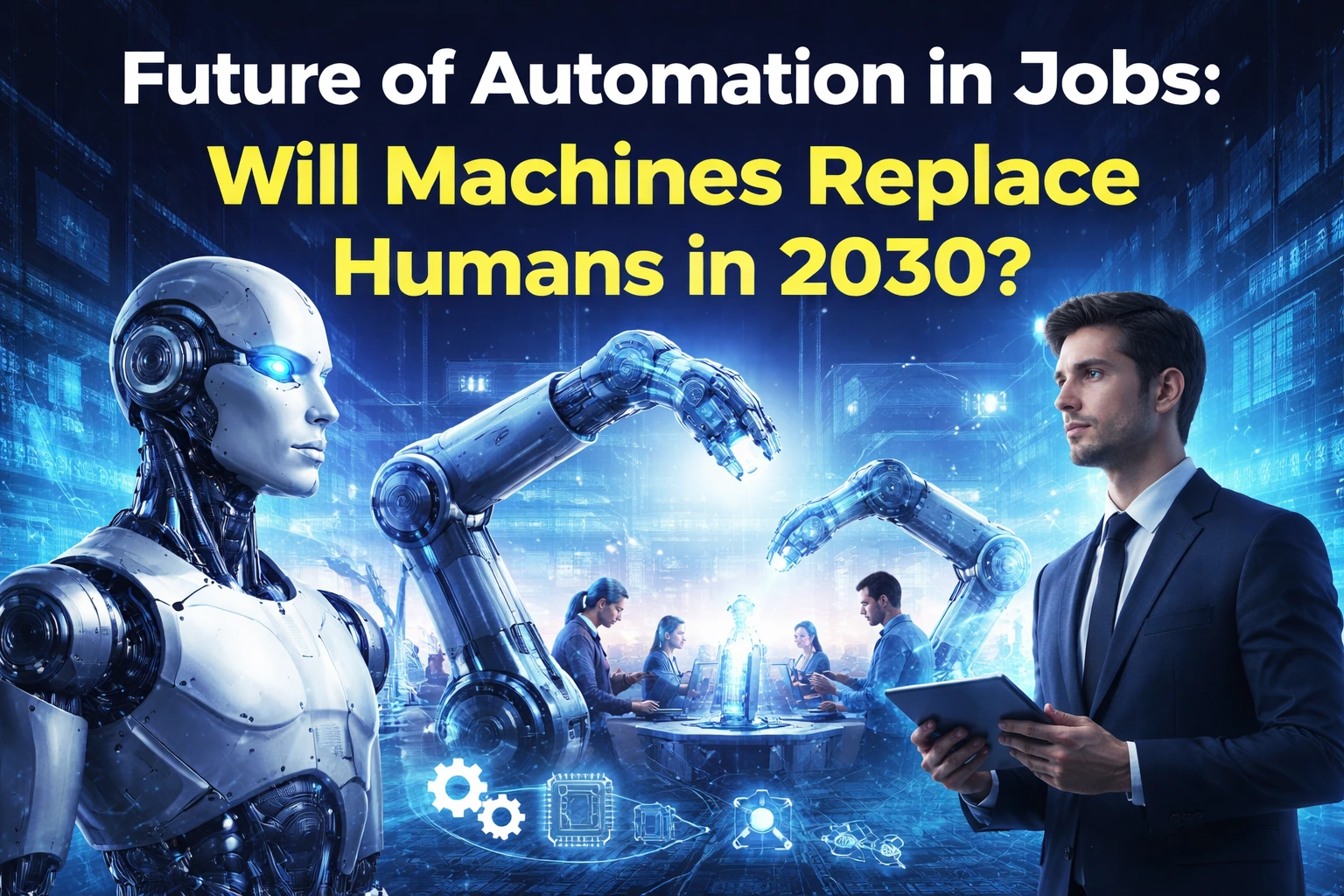
Future of Automation in Jobs: Will Machines Replace Humans or Create Opportunities in 2030?

The rapid advancement of technology has sparked one of the most important debates of our time, what is the Future of Automation in Jobs, and will machines eventually replace humans? With artificial intelligence (AI), robotics and automation evolving at an unprecedented pace, industries across the globe are undergoing massive transformation.
From self-checkout systems in retail stores to AI-powered chatbots in customer service, automation is already reshaping the way we work. As we approach 2030, many experts predict that automation will continue to disrupt traditional job roles while also creating new opportunities. But the big question remains, will machines fully replace humans or will the future be about collaboration?
In this blog, we will explore the impact of automation on jobs, industries at risk, opportunities ahead and what the future workforce might look like.
What is Automation in Jobs?
Automation in jobs refers to the use of technology, including AI and robotics, to perform tasks that were previously carried out by humans. These systems can operate faster, more accurately and without fatigue.
Common Examples of Automation:
- AI chatbots handling customer support
- Robots assembling products in factories
- Software automating data analysis
Automation has existed for decades, but modern AI has made it far more intelligent and adaptable.
How Automation is Changing the Job Market
The Future of Automation in Jobs is already visible in today’s workforce. Businesses are increasingly adopting automation to improve efficiency and reduce operational costs.
Key Changes in the Job Market:
- Decline in repetitive and manual jobs
- Rise in demand for technical and digital skills
- Growth of remote and AI-assisted work
Example:
Many companies now use AI tools to analyze data instead of hiring large teams of analysts.
Automation is not just replacing jobs, it is transforming how work is done.
Jobs Most at Risk of Automation
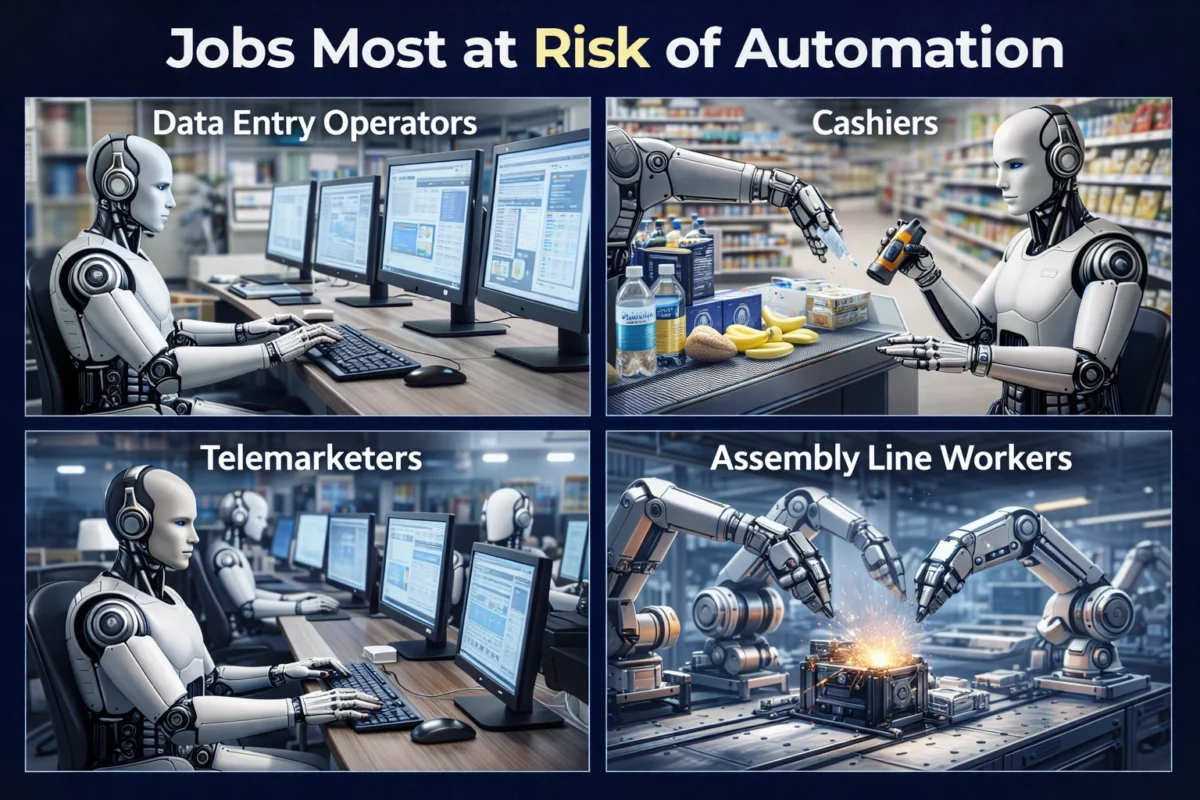
In the Future of Automation in Jobs , certain roles are more vulnerable to automation, especially those involving repetitive tasks.
High-Risk Jobs:
- Data entry operators
- Cashiers
- Telemarketers
- Customer service agents
- Assembly line workers
Example:
Supermarkets are replacing cashiers with self-checkout machines, reducing the need for human workers.
These roles are easier to automate because they follow predictable patterns.
Jobs That Are Safer from Automation
Not all jobs are at risk. Roles that require creativity, emotional intelligence and complex decision-making are less likely to be replaced.
Safer Jobs:
- Creative professionals (writers, designers, artists)
- Healthcare workers (doctors, nurses)
- Teachers and educators
- Managers and leaders
Example:
A teacher not only delivers information but also understands student emotions and adapts teaching methods accordingly.
Human skills remain irreplaceable in many fields.
Benefits of Automation in Jobs
The Future of Automation in Jobs offers several advantages for businesses and the workforce, improving efficiency and productivity.
Key Benefits:
- Increased productivity
- Reduced human error
- Cost savings
- Faster processes
Example:
AI can process large datasets in seconds, helping companies make quick and accurate decisions.
Automation allows businesses to scale operations efficiently.
Challenges and Risks of Automation
While the Future of Automation in Jobs offers many benefits, it also comes with challenges that businesses and workers must address.
Major Concerns:
- Job displacement
- Skill gaps
- Economic inequality
- Dependence on technology
Example:
Workers in traditional industries may struggle to adapt to new technologies without proper training.
Governments and organizations must address these challenges to ensure a smooth transition.
Industries Most Impacted by Automation
Automation is affecting nearly every industry, but some sectors are more impacted than others.
Key Industries:
- Manufacturing
- Retail
- Finance
- Transportation
- Customer service
Example:
Autonomous vehicles are being developed, which could impact jobs like truck driving and taxi services.
These changes highlight the growing influence of automation across sectors.
The Rise of New Job Opportunities
While automation may replace some jobs, the Future of Automation in Jobs will also create new opportunities and roles for the workforce.
Emerging Job Roles:
- AI specialists
- Data scientists
- Robotics engineers
- Digital marketers
- Cybersecurity experts
Example:
The rise of AI has created demand for professionals who can develop and manage intelligent systems.
The future job market will focus more on skills than traditional roles.
Human + AI Collaboration: The Future of Work
The Future of Automation in Jobs is not about humans vs machines, it is about collaboration.
How Humans and AI Work Together:
- AI handles repetitive tasks
- Humans focus on creativity and strategy
- AI provides insights, humans make decisions
Example:
Doctors use AI tools to assist in diagnosis, improving accuracy and efficiency.
This partnership will define the future workplace.
Skills Needed for the Future Workforce
To stay relevant in the age of automation, workers must develop new skills.
Essential Skills:
- Digital literacy
- Critical thinking
- Creativity
- Emotional intelligence
- Problem-solving
Example:
Learning how to use AI tools can give professionals a competitive advantage.
Upskilling is key to surviving and thriving in the future job market.
Will Machines Fully Replace Humans?
The idea that machines will completely replace humans is unlikely.
Reasons Why Humans Will Always Be Needed:
- Humans possess emotional intelligence
- Creativity cannot be fully replicated
- Ethical and moral decision-making requires human judgment
- Complex problem-solving requires human insight
Example:
AI can generate content, but human creativity adds meaning and originality.
Machines will complement humans, not replace them entirely.
Comparison Table: Humans vs Automation
| Feature | Humans | Automation |
| Creativity | High | Limited |
| Speed | Moderate | Very fast |
| Accuracy | Variable | High |
| Emotion | Present | Absent |
| Adaptability | Strong | Moderate |
Real-World Examples of Automation
Automation is already shaping the modern world.
Examples:
- Amazon uses AI for logistics and delivery optimization
- Tesla uses robots in manufacturing
- Banks use AI for fraud detection
These examples show how automation is becoming essential in business operations.
The Future Outlook for 2030
By 2030, automation will become even more advanced and widespread.
What to Expect:
- Fully automated workflows
- AI-driven decision-making
- New industries and job roles
- Greater efficiency and productivity
The Future of Automation in Jobs will redefine work, not eliminate it.
FAQs
1. Will automation replace all jobs by 2030?
No, automation will replace some jobs but also create new opportunities.
2. Which jobs are most at risk?
Jobs involving repetitive tasks are most likely to be automated.
3. What jobs are safe from automation?
Creative, emotional, and leadership roles are less likely to be replaced.
4. How can workers prepare for automation?
By learning new skills and adapting to technological changes.
5. What is the future of work?
The future will involve collaboration between humans and AI.
Conclusion
The Future of Automation in Jobs is both exciting and challenging. While machines will take over repetitive and routine tasks, humans will continue to play a vital role in creativity, innovation, and decision-making.
Instead of fearing automation, individuals and businesses should embrace it as an opportunity for growth. By adapting to new technologies and developing relevant skills, people can thrive in the evolving job market.
Automation is not the end of human work, it is the beginning of a smarter, more efficient future.
Call to Action
Ready to stay ahead in the future of work?
Explore more expert insights on Writac and discover how technology is shaping the world. Stay informed, upgrade your skills and prepare yourself for the future of automation.