Robotic Surgery with AI: Benefits, Risks and Future Trends

Can robots really assist surgeons in performing safer and more precise operations? It might sound like something out of science fiction, but in the UK, robotic surgery with AI is already transforming operating theatres. From improving surgical precision to reducing recovery times, artificial intelligence is reshaping how procedures are performed across NHS hospitals and private healthcare facilities.
If you’re curious about how this technology works and whether it’s safe, you’re in the right place. Let’s break down the benefits, risks and future trends of AI-powered robotic surgery in a clear, practical way.
What is Robotic Surgery with AI?
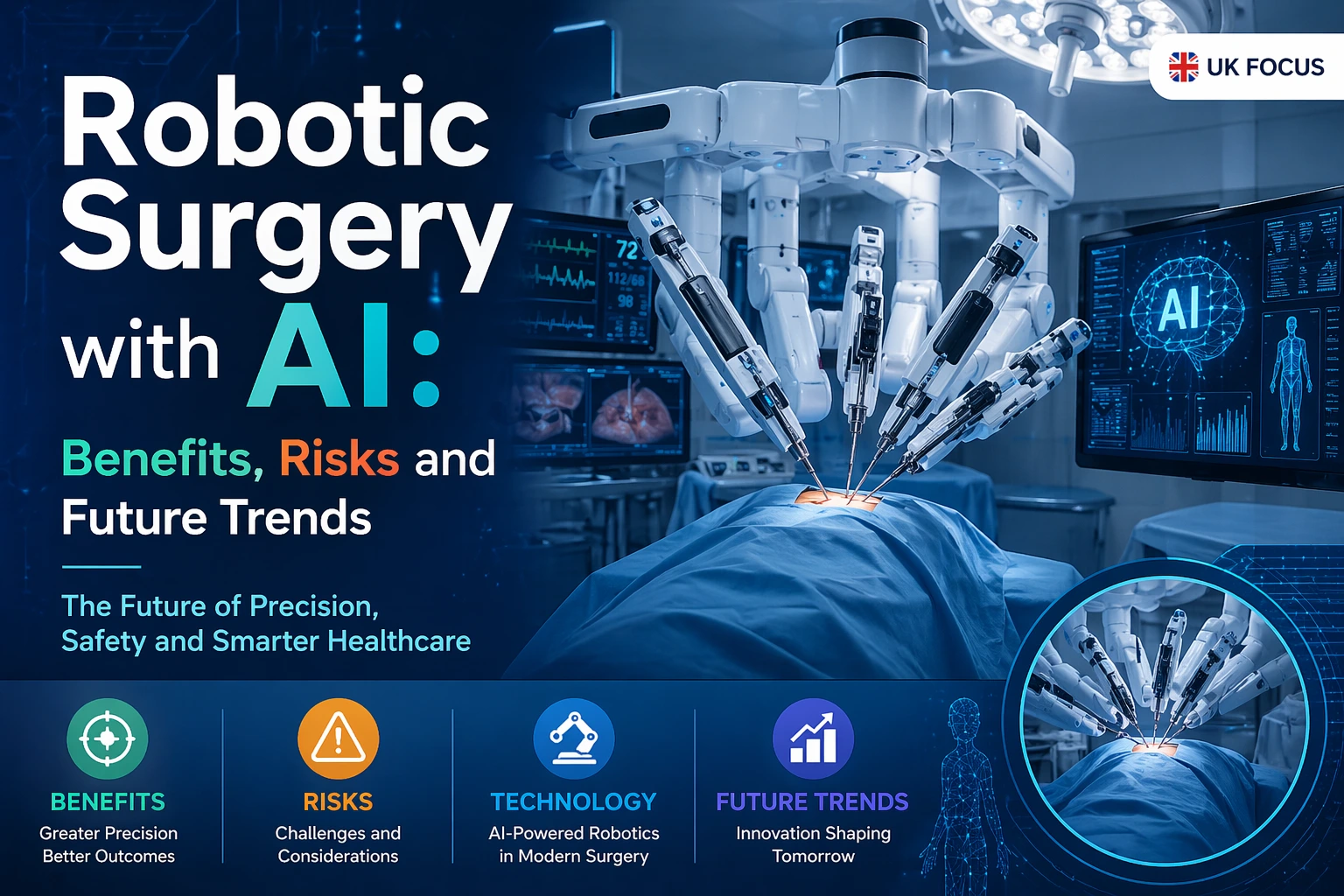
Robotic surgery with AI combines advanced robotic systems with artificial intelligence to assist surgeons during medical procedures. These systems don’t replace surgeons instead, they enhance their capabilities.
AI helps by:
- Analyzing real-time surgical data
- Providing visual guidance during procedures
- Improving precision through robotic instruments
In the UK, systems like the da Vinci Surgical System are already being used for procedures such as prostate surgery, gynecology’s and colorectal operations.
How AI Enhances Robotic Surgery
AI plays a crucial role in making robotic surgery smarter and more efficient.
1. Real-Time Decision Support
AI systems can analyze patient data during surgery and provide insights to surgeons. This includes:
- Identifying critical structures (nerves, tissues)
- Suggesting optimal surgical paths
- Reducing the risk of complications
2. Improved Visualisation
AI-powered imaging allows surgeons to see:
- High-definition 3D views
- Enhanced tissue differentiation
- Real-time overlays of patient anatomy
This level of clarity is far beyond traditional surgical methods.
3. Precision and Stability
Robotic arms eliminate hand tremors and allow for:
- Micro-level precision
- Consistent movements
- Access to hard-to-reach areas
Key Benefits of Robotic Surgery with AI
The growing adoption of AI in surgery is driven by clear patient and clinical benefits.
1. Greater Surgical Accuracy
AI-assisted robotic systems can perform highly precise movements, reducing the chances of human error.
2. Minimally Invasive Procedures
Robotic surgery typically involves smaller incisions, which means:
- Less pain
- Reduced scarring
- Lower risk of infection
3. Faster Recovery Time
Patients often recover more quickly compared to traditional surgery, leading to:
- Shorter hospital stays
- Faster return to daily activities
4. Reduced Blood Loss
Precise movements result in less tissue damage and minimal bleeding.
5. Better Patient Outcomes
Studies in the UK have shown improved outcomes in procedures like prostate and cardiac surgeries when robotic systems are used.
Risks and Challenges of AI Robotic Surgery
While the benefits are impressive, it’s important to understand the limitations and risks.
1. High Costs
Robotic surgical systems are expensive to purchase and maintain. This can limit availability in some NHS hospitals.
2. Technical Failures
Like any technology, robotic systems can experience glitches or malfunctions, although rare.
3. Learning Curve for Surgeons
Surgeons require specialised training to operate these systems effectively.
4. Limited Accessibility
Not all hospitals in the UK currently offer AI-assisted robotic surgery, which may affect patient access.
5. Ethical and Legal Concerns
Questions around responsibility and accountability in case of errors still need clear frameworks.
Robotic Surgery with AI in the UK
The UK is actively adopting robotic surgery technologies, particularly within the NHS.
NHS Adoption
- Increasing use in urology, oncology and cardiology
- Investment in AI-driven healthcare innovation
- Training programmers for surgeons
Private Healthcare Growth
Private hospitals are also expanding robotic surgery services, offering patients more options for advanced procedures.
Future Trends in AI-Powered Robotic Surgery
The future of robotic surgery with AI is incredibly promising. Several innovations are expected to reshape healthcare in the coming years.
1. Autonomous Surgical Assistance
AI systems may eventually assist with certain parts of procedures independently, under human supervision.
2. Personalised Surgery
AI will tailor surgical approaches based on:
- Patient genetics
- Medical history
- Real-time health data
3. Remote Surgery (Telesurgery)
Surgeons could perform operations remotely using robotic systems, especially useful for rural or underserved areas.
4. Predictive Analytics
AI will help predict complications before they occur, improving patient safety.
5. Integration with Other Technologies
Combining AI with:
- Augmented reality (AR)
- Virtual reality (VR)
- Wearable health devices
will further enhance surgical outcomes.
Why Robotic Surgery with AI Matters
Healthcare in the UK is under increasing pressure due to rising patient demand. AI-powered robotic surgery offers a scalable solution by:
- Improving efficiency in operating rooms
- Reducing recovery times
- Enhancing patient care quality
It represents a shift from traditional surgery to a more advanced, data-driven approach.
Conclusion
Robotic surgery with AI is no longer a future concept, it’s a present-day reality transforming healthcare in the UK. With its ability to improve precision, reduce recovery time and enhance patient outcomes, it is redefining modern surgical practices.
However, like any innovation, it comes with challenges, including cost and accessibility. As technology continues to evolve, these barriers are expected to decrease, making AI-assisted surgery more widely available.
The future of surgery is not about replacing surgeons, it’s about empowering them with smarter tools to deliver better care.
FAQs
1. What is robotic surgery with AI?
It is a surgical method where AI-powered robotic systems assist surgeons in performing precise procedures.
2. Is robotic surgery safe in the UK?
Yes, it is widely used and regulated within NHS and private healthcare systems.
3. Does AI replace surgeons?
No, AI supports surgeons but does not replace human expertise.
4. What are the benefits of robotic surgery?
It offers higher precision, smaller incisions and faster recovery times.
5. Is robotic surgery expensive?
Yes, it can be costly, but it may reduce long-term healthcare expenses due to quicker recovery.
Call to Action
Want to stay updated on the latest trends in robotic surgery with AI and healthcare innovation? Visit Writac.com today and explore expert insights shaping the future of medicine.